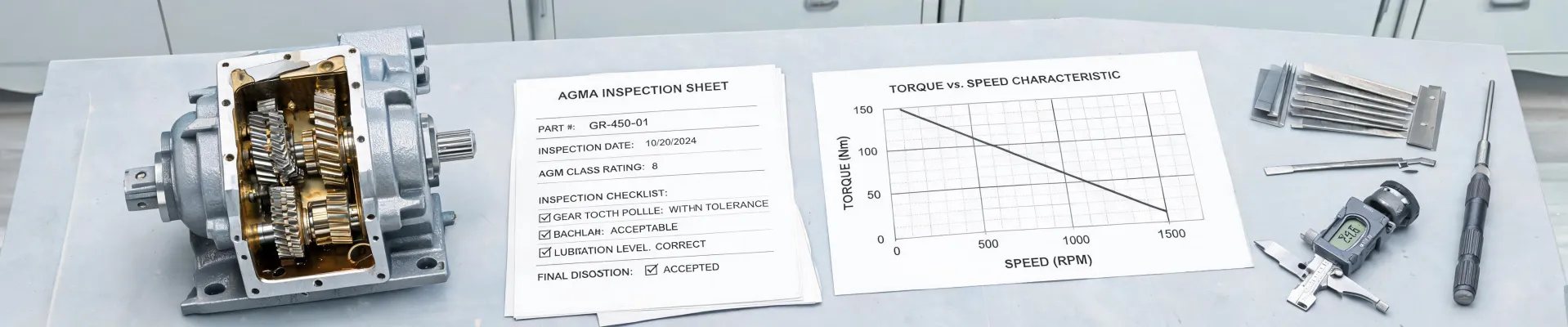
If you’re here because you typed “Boston Marathon gear 2025” into a search bar, let me save you a few clicks: that’s running shoes, bib numbers, and race-day weather gear. This page is about Boston Gear—the industrial motion-control brand—and the parts people need when a machine is down. If you need a Boston Gear 300 series speed reducer, a servo motor, a stepper motor with encoder, or a universal joint for a car, keep reading. The short, honest answer is: stop what you’re doing and find the model number and nameplate data on the old part. A rush replacement only goes fast if you know exactly what you’re replacing.
I’m a procurement coordinator at a motion-control distributor. In the last eight years, I’ve processed more than 200 rush orders—same-day, overnight, and “please don’t fail me” deliveries. When a customer calls in a panic, the conversation always starts the same way. “I need a Boston Gear reducer.” Okay. Which series? Which ratio? What’s the center distance? What’s your input shaft diameter? If they have that information, I can check inventory in minutes. If not, I have to put them on hold while I cross-reference photos and old catalogs. Time is the one thing a rush order never has.
Here’s a quick example. In March 2024, a client called at 3 PM needing a Boston Gear 300 series reducer for a packaging line that had to run the next morning. Normal lead time was five days. We found one in a distributor’s stock, paid a $150 expedite fee on top of the $800 unit cost, and got it delivered by 9 AM. Missing that deadline would have meant a $50,000 penalty clause. There’s something satisfying about a perfectly executed rush order—after the stress and the coffee, seeing the line start back up is the payoff.
Start With the Nameplate, Not the Sales Rep
Here’s the detail that makes or breaks an emergency order: a Boston Gear 300 series reducer is not one thing. That family covers many frame sizes, ratios, and mounting positions. I’ve seen a customer order a “300 series” and accidentally specify the wrong shaft configuration. We shipped it overnight, and it didn’t fit. It cost them $180 in extra freight plus another 24 hours of downtime.
Before you call, get these numbers from the nameplate:
- Series (for example, 300 series, 700 series)
- Size or model designation (the frame size, not just the series)
- Ratio (like 10:1 or 30:1)
- Input and output shaft dimensions and orientation
- Mounting position (foot, flange, or face mount)
If the nameplate is worn, take a clear photo with your phone. Don’t rely on memory—trust me, that’s a mistake I made early in my career when I thought I remembered the ratio from a previous order. I didn’t. The vendor sent the right part for the wrong memory. (Not fun.)
And when you give the deadline, be explicit. I once told a supplier “as soon as possible” and they heard “whenever convenient.” The part arrived two weeks later, which was not what I meant. Now I always say “I need it by Friday” and confirm the shipping carrier.
Boston Gear 300 Series: A Compact Workhorse
The Boston Gear 300 series is a worm gear speed reducer, which means it uses a worm (like a screw) to turn a gear at a right angle. That design gives you a large reduction ratio in a compact package. It’s a workhorse in conveyor systems, packaging machinery, and material handling equipment. If you’re replacing one, the specs above matter, but also pay attention to the input and output shaft placement. Two 300 series reducers with the same ratio can look almost identical but rotate in opposite directions depending on the worm gear orientation.
For a small order—a single replacement—you might feel like you’re too small a fish for a distributor’s attention. I’ve heard that feeling. But in my experience, a supplier that won’t take a one-off order isn’t a supplier worth having. I’ve placed $200 orders and received the same-level application support as $20,000 orders. That’s the kind of partnership you want.
What’s a Servo Motor?
Now, the easy question that’s actually not so easy: “What’s a servo motor?” In simple terms, a servo motor is a motor with a closed-loop control system. It uses an encoder or resolver to report the motor’s actual position back to the drive. The drive compares that position to the commanded position and makes real-time corrections. That’s why servos are known for precise speed, position, and torque control. If you’re tuning a servo, even a little bit of resonance can cause issues; if you’re just replacing one, match the motor model to the existing drive, because the feedback type and commutation settings have to align.
A servo motor is not the same as a stepper motor. Steppers are usually open-loop: they move in discrete increments. If the load is too high or the speed is too fast, they can lose steps, and the controller won’t know. That’s why many people ask about a stepper motor with encoder. The encoder gives the stepper feedback, effectively turning it into a closed-loop stepper (sometimes called a hybrid stepper). You get position confirmation without paying full servo prices. But closed-loop steppers still have less high-speed torque than servos. If speed and rapid acceleration matter, go servo. If holding position at low speed matters more, a closed-loop stepper is often the pragmatic choice.
Stepper Motor with Encoder: Price vs. Performance
Let me give you a real-world example. We had a customer who ran a small labeling machine. The original motor was a NEMA 23 stepper with no encoder. Randomly, the label positions would shift by a few millimeters, and no one knew why. We recommended a stepper motor with encoder (still NEMA 23, but with a closed-loop driver). It cost about 40% more than the open-loop version—maybe $350 instead of $250. After the swap, the missed steps disappeared. They didn’t need a full servo system because the machine’s cycle speed was low. The encoder was enough.
There’s a temptation to just buy the cheapest stepper you can find online. I’d caution against relying on no-name sellers for critical parts. If you can, stick with a recognized brand and get the encoder variant if there’s any risk of lost steps. The incremental price is usually small compared to the cost of downtime.
Universal Joint in Car: Not the Same as an Industrial Coupling
“Universal joint in car” is a phrase that pulls in a different kind of search traffic. A car’s universal joint (or U-joint) lets the driveshaft transmit power through an angle while the suspension moves up and down. It’s a critical wear item. If you’re replacing a U-joint in a car, you need the exact make, model, and drive type—and probably a press to install it. That’s automotive, not industrial motion control.
In industrial machinery, a universal joint coupling does the same thing on a larger scale: it connects two shafts that aren’t in perfect alignment. They come in many designs, and they’re not rated like automotive U-joints. Don’t cross the two. Also, if a vendor claims a U-joint will last “forever” or “for 500,000 miles,” ask for the data. Per FTC guidelines (ftc.gov), advertising claims have to be true and substantiated. Any performance claim without a test report is simply a guess.
When a Small Order Is the Biggest Test
I want to be direct about something: small orders get treated poorly at some companies. I’ve had it happen to me when I was starting my own part-time repair business. I was buying a handful of bearings and a gearbox, and the distributor’s counter guy basically dismissed me. I walked out and took my business elsewhere. Later, when that same distributor’s territory manager called me looking for annual volume, I reminded him of that day. He didn’t have a response.
Small doesn’t mean unimportant—it means potential.
That’s why I run the service side of my own desk differently. Whether the order is $200 or $20,000, I treat it like a customer in a tough spot. And if you’re a small customer looking for a Boston Gear 300 series, a servo motor, or a stepper motor with encoder, you deserve a straight answer about specs, availability, and lead time. Don’t settle for less.
Boundaries: What I’m Not Telling You
This is the part where I don’t pretend to know everything. I’m not a registered professional engineer. I can’t tell you which exact universal joint fits your vehicle without the model and spec sheet. I can’t help you tune a servo motor from a blog post either. If you’re at that level of detail, your best move is to reach out to a manufacturer’s application engineer. They have the calculators, the test data, and the real-world experience.
Also, if you came to this page looking for Boston Marathon gear 2025—the race-day essentials, the singlet, the custom racing flats—this is not that article. That event has its own rules and deadlines. (And as of January 2025, USPS First-Class Mail is $0.73 for a letter, but I don’t think that helps you.)
For everyone else: find the nameplate, write down the model number, ask for a delivery date in writing, and if you’re not sure, ask an expert. That’s the fastest path to a replacement that actually works.

Elena Markovic
Elena Markovic is an independent industrial motor and drive systems analyst covering induction motors, servo motors, stepper motors, and variable-frequency drives. She examines IEC 60034-30-1 efficiency classes, IEC 61800-9-2 drive-system losses, speed-torque curves, duty cycles, thermal limits, and feedback compatibility across operating envelopes. Her evidence-led guides help OEM engineers and plant teams select efficient motion packages, plan integration, and reduce commissioning risk.