The Phone Call That Started It
When the phone rang at 6:14 AM, I wasn't ready for what was coming. It was the plant manager in Columbus, and he didn't bother with hello. 'East line's down. Indexing drive is grinding. We're going to miss the 7:00 run.'
That call changed how I think about every motor and gearbox in our facility. Over the next three days, I got a crash course in servo motors, induction motors, and why the Boston Gear catalog PDF can be a life raft when your whole Columbus operation depends on one timing belt.
The Noise We Should Have Listened To
Look, I'm in procurement. My job is budgets, not bearings. But I've kept detailed cost records for six years, and that discipline is how I know what this shutdown cost: $18,347 in repairs, overtime, and lost production. Actually, maybe $18,100. I'd have to check the final cost report. Either way, it was way more than the PM work would have been.
Here's what happened. Our PM log had a note: 'Gearbox noise, needs inspection.' We scheduled it for the following Thursday. The gearbox failed on Tuesday. The coupling was shattered, the timing belt had snapped, and the old 2 HP induction motor kept tripping thermal overload every time we powered it up. The timing belt replacement became an emergency, and emergency always costs way more than planning.
I remember typing 'columbus timing belt replacement' into the search bar from the warehouse floor. That phrase brought me to a local distributor five miles away, which started the chain of events that got us back up. But honestly, we should have been buying that belt a week before, not on an emergency call.
Induction Motor vs. Servo Motor: A Cost-Control Perspective
When we finally got the motor specs clear, the maintenance lead asked a question I'd heard before: 'Should we just put another induction motor on this, or are we going to do the indexing station properly?' That made me stop. What's a servo motor? I knew it cost more upfront, but I didn't fully understand why.
Here's my simplified cost-control translation: an induction motor is a workhorse. Give it power and it spins—constant speed, no feedback, simple. A servo motor is a precision player. It has an encoder or resolver that tells the drive exactly where the shaft is, so it can accelerate, decelerate, and hold position with very tight accuracy. For an indexing station that loads and unloads parts hundreds of times per shift, a servo motor is kind of a game-changer. For a basic conveyor move, an induction motor is usually fine.
The price gap was real. A straight induction motor replacement with a brake was about $420. The servo motor package with drive and cabling was $2,150. That's a big jump on paper. But the old setup had been losing position for two years. The brake was always failing, the indexing was getting sloppier, and we had already paid more than $1,700 in overtime trying to keep it aligned. The servo motor wasn't an upsell. It was the fix.
Finding the Right Boston Gear Gearbox—and the Catalog PDF
The original gearbox was a Boston Gear gearbox. The nameplate was almost unreadable, but the model number was stamped on a separate tag. The old paper catalog in our maintenance office was from the 1990s and missing half the pages. I almost called around and asked someone to guess. Instead, I found the Boston Gear catalog PDF online.
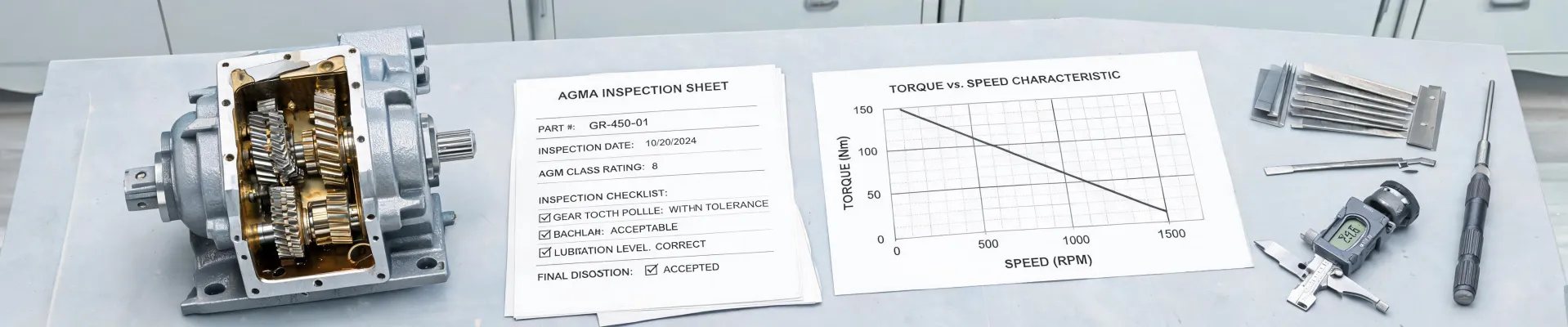
The Boston Gear catalog PDF is basically a treasure chest if you care about total cost. It lists mounting dimensions, ratios, service factors, and torque ratings for gearboxes and reducers in the 700 series and other lines. Without it, we'd have had to send someone to physically measure the old unit and hope the replacement bolt pattern matched. With it, I could verify the exact Boston Gear gearbox part number in about twenty minutes.
The price difference between a compatible gearbox and the correct Boston Gear gearbox was about $260. In a normal week, I'd probably have bought the cheaper unit. But I did the total cost math. The compatible unit came without dimensional data, would take six days longer to arrive, and the supplier couldn't tell me the exact service factor. The Boston Gear gearbox cost $260 more on the PO but came with all the numbers we needed and two-day delivery. Bottom line: the $260 'savings' wasn't a savings. It was a risk.
Choosing the Boston Gear gearbox became a no-brainer. If we guessed wrong on the bolt pattern, we'd have added $1,200 in rework and two more days of downtime. Instead, per the NEMA MG 1 standard (nema.org), motor frame dimensions are standardized, so the new C-face induction motor bolted directly to the same Boston Gear gearbox housing. That one standard saved us two days of engineering time.
The Timing Belt and the Hidden Cost of Waiting
The timing belt wasn't even on my radar until the gearbox failed. But it was in the photo from maintenance, with teeth missing and cracks in the backing. That was the most frustrating part of the whole shutdown. You'd think a PM schedule would catch a belt that looked like that. But because the gearbox inspection was postponed, the belt never got looked at either.
We found a local shop for the Columbus timing belt replacement through that distributor, and they had a belt in stock. If we had scheduled the PM the week before, we'd have replaced the belt in two hours and likely caught the gearbox wear before the coupling shattered. Instead, we paid expedited freight, overtime, and lost three days of production.
Looking back, I should have pushed the maintenance manager to do an immediate inspection instead of waiting for Thursday. At the time, the production schedule seemed more important than a minor noise. It wasn't.
The other hindsight moment came with the servo motor. We ordered the servo motor and the Boston Gear gearbox as separate line items, and I declined the pre-engineered motor cable because it was $140 and sounded like an upsell. Wrong call. The electrician spent four hours building a cable, testing the shield, and troubleshooting noise in the feedback signal. That labor cost more than the cable. If I could redo that decision, I'd buy the package. But given what I knew then—new to servo motor integration—my choice was understandable.
When the line restarted on Friday afternoon, there was a satisfying hum. The servo indexer found zero, the belt tracked true, and the new gearbox ran quiet. There's something satisfying about watching a line come back up after a disaster—especially when the procurement call was the one that got it right.
Bottom Line: Prevention Beats Cure
What I mean is that a motor's cost isn't just the PO. It's the installation labor, the integration time, the spare parts inventory, the downtime risk, and the learning curve for your team. The servo motor quote looked scary, but the real expense was the unplanned stop.
Five minutes of verification beats five days of correction. If you're looking at a Boston Gear gearbox or wondering what's a servo motor, open the Boston Gear catalog PDF, check the mounting dimensions, and ask the vendor for the service factor. Then schedule the PM before the noise gets louder. That's the cheapest part of the whole thing.

Elena Markovic
Elena Markovic is an independent industrial motor and drive systems analyst covering induction motors, servo motors, stepper motors, and variable-frequency drives. She examines IEC 60034-30-1 efficiency classes, IEC 61800-9-2 drive-system losses, speed-torque curves, duty cycles, thermal limits, and feedback compatibility across operating envelopes. Her evidence-led guides help OEM engineers and plant teams select efficient motion packages, plan integration, and reduce commissioning risk.