-
Who this checklist is for
-
Step 1: Get the application story, not just the part number
-
Step 2: Verify the exact part number against the current catalog
-
Step 3: Treat cylindrical roller bearings as a spec-driven purchase
-
Step 4: For stepper motors, don't ask 'how fast can a stepper motor turn?' in a vacuum
-
Step 5: Match universal joints to the shaft, not just the catalog page
-
Step 6: Get documentation and invoice capability before you commit
-
Step 7: Confirm lead time, freight, and total cost before promising a date
-
Common mistakes I see (and make)
If you're the person who turns a maintenance request into a purchase order—and you're not a mechanical engineer—this checklist is for you. I'm an office administrator for a 180-person company. I manage MRO and motion-control ordering—roughly $250k annually across 12 vendors. I report to both operations and finance. That means I get it from both sides when a part arrives wrong.
I'm not a mechanical engineer, so I can't tell you which cylindrical roller bearing will survive a specific duty cycle. What I can tell you is how to buy one without creating rework for the people who do know. This is the 7-step checklist I use before any Boston Gear part, universal joint, bearing, or stepper motor goes out on a PO.
Who this checklist is for
Use this if you're ordering transmission or motion-control components for a plant, shop, or OEM. It works for Boston Gear parts, Boston Gear JS125B universal joints, cylindrical roller bearings, steering shaft universal joints, stepper motors, and similar MRO items. It's not a substitute for engineering review. It's a way to make sure engineering review gets the right information the first time.
Step 1: Get the application story, not just the part number
A request that says 'order Boston Gear JS125B universal joint' looks simple. It usually isn't. I ask three questions before I open a catalog: What machine is this for? What failed? Is this a replacement or an upgrade?
Why does this matter? Because the same part number can be right for one shaft setup and wrong for another. If the request is for a steering shaft universal joint, I also ask whether it's safety-critical. If it is, I stop and loop in engineering. That's not something I'm qualified to approve. (And honestly, I don't want to be.)
Ask for a photo of the nameplate, the old part, and any measurements the maintenance tech already took. A close-up of a worn part has saved me from ordering the wrong bore size more than once.
Step 2: Verify the exact part number against the current catalog
Boston Gear has a long legacy, which is good for availability but bad for assumptions. Legacy numbers, catalog revisions, and distributor substitutions can all look similar. If the request says Boston Gear JS125B universal joint, I write that exact string on the PO and ask the distributor to confirm it against the current Boston Gear catalog (bostongear.com).
It's tempting to think that the same part number equals the same part. But a catalog update or a different revision can change dimensions, materials, or mounting details. I've learned to check the catalog cut, not just the part number on a quote.
Step 3: Treat cylindrical roller bearings as a spec-driven purchase
Cylindrical roller bearings are not a 'close enough' item. You need bore, outside diameter, width, radial internal clearance, cage type, and precision class. If someone sends a request for 'a cylindrical roller bearing' with no dimensions, I don't order it. I send it back with a request for the old bearing's markings or a measurement sheet.
This gets into bearing engineering territory, which isn't my expertise. I'd rather ask a maintenance engineer for the load and speed conditions than guess. For reference, ISO 281 is the standard that ties dynamic load rating to bearing life—so if someone says 'just match the dimensions,' they're ignoring the part that actually matters.
Step 4: For stepper motors, don't ask 'how fast can a stepper motor turn?' in a vacuum
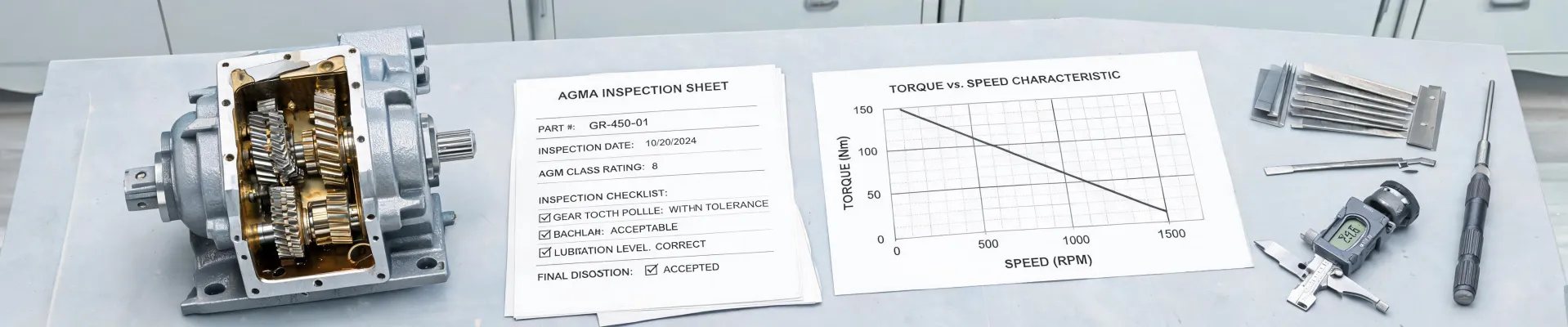
This is one of the most common questions I see from non-engineers: how fast can a stepper motor turn? The useful answer isn't a single RPM. It's a torque-speed curve. A stepper motor's usable speed depends on the driver voltage, current setting, motor inductance, microstepping, and the load attached to it.
So when someone asks me to order a stepper motor for a high-speed application, I ask: what speed do you need under what load, and what acceleration? If they don't know, I ask them to talk to engineering. I'm not a controls engineer, so I can't speak to resonance or driver tuning. What I can do is make sure the PO includes the required torque-speed data—not just a frame size.
The question everyone asks is 'what's the max RPM?' The question they should ask is 'what's the torque at the speed we need?' NEMA frame sizes standardize mounting dimensions, not performance.
Step 5: Match universal joints to the shaft, not just the catalog page
Universal joints—especially steering shaft universal joints—have a lot of variables: spline count, bore size, keyway, pin or ring retention, operating angle, and overall length. A Boston Gear JS125B universal joint might be the right family, but the specific configuration still has to match the shaft.
Most buyers focus on the part number and completely miss the mating details. I've seen a U-joint sit on a shelf for three weeks because the spline count was wrong. Now I ask for the shaft end photo and a measurement of the spline before I order.
If it's a steering application, I don't substitute. I ask engineering to approve the exact part. Steering is not a place for 'equivalent' guesses.
Step 6: Get documentation and invoice capability before you commit
This is the step that finance cares about. Before I place any order, I confirm the vendor can provide a proper invoice, packing slip, and traceable part number. I learned this the hard way. In 2022, I found a great price from a new vendor—about $1,800 cheaper than our regular supplier. I ordered a set of bearings and a U-joint. They couldn't provide a proper invoice, just a handwritten receipt. Finance rejected the expense report. I ate $2,400 out of the department budget. Now I verify invoicing capability before placing any order.
For Boston Gear parts, I also ask whether the distributor is authorized. That's not about attacking anyone. It's about warranty support and knowing the part is what the label says. If a quote looks too good, I check the return policy and restocking fees before I get excited.
Step 7: Confirm lead time, freight, and total cost before promising a date
The lowest unit price often isn't the lowest total cost. I add freight, expedite fees, potential restocking fees, and downtime cost. If a line is down, a $50 part with three-day freight can be cheaper than a $35 part with two-week lead time.
I get lead time in writing—email is fine—and I don't promise an internal customer a delivery date until the distributor confirms stock. 'Usually ships in 2-3 days' is not a commitment. If the request is urgent, I ask about drop-ship or local pickup. Then I update the requester with the real date, not the optimistic one.
Common mistakes I see (and make)
- Ordering from a generic description instead of the exact catalog number.
- Assuming universal joints are interchangeable because they look similar.
- Buying cylindrical roller bearings by dimensions alone when clearance and precision matter.
- Using a stepper motor's max RPM as a design point without checking torque at speed.
- Skipping invoice terms because the price is good. Finance will reject handwritten receipts.
- Not sending a final spec screenshot back to the requester before the PO goes out.
My rule is simple: if I can't explain the part back to the requester in one sentence, I don't order it yet. That one sentence might be 'This is the Boston Gear JS125B universal joint for the steering shaft, with the 3/4-inch bore and 16-spline shaft.' If I can't say that confidently, the request isn't ready.
None of this makes me an engineer. It makes me a better buyer. And for Boston Gear parts, bearings, U-joints, and stepper motors, that's usually enough to keep the order moving—and keep it from coming back.

Elena Markovic
Elena Markovic is an independent industrial motor and drive systems analyst covering induction motors, servo motors, stepper motors, and variable-frequency drives. She examines IEC 60034-30-1 efficiency classes, IEC 61800-9-2 drive-system losses, speed-torque curves, duty cycles, thermal limits, and feedback compatibility across operating envelopes. Her evidence-led guides help OEM engineers and plant teams select efficient motion packages, plan integration, and reduce commissioning risk.