-
1. How do I read a maxon motor datasheet without missing the specs that matter?
-
2. How do I find authorized maxon motor distributors—and does it really matter?
-
3. What do small DC motor datasheets leave out that affects batch consistency?
-
4. What should I test on a micro servo motor before approving a batch?
-
5. What size VFD for a 5hp motor—and where does the spec sheet mislead you?
-
6. Why do engineers keep specifying maxon motors when they cost 30–50% more?
I review every motor spec that leaves our building before it reaches a customer—roughly 200 unique items a year. I've rejected about 12% of first deliveries since 2022, mostly for spec drift and documentation gaps. Whether you're searching for a maxon-motor datasheet or comparing distributors, these are the questions I keep getting from engineers and buyers—answered the way I'd answer them over coffee.
What's in here:
- How to read a maxon motor datasheet without missing the specs that affect your design
- How to find authorized maxon motor distributors (and why the cheaper, faster channel is a trap)
- What small DC motor datasheets leave out
- What to test on a micro servo motor before signing off
- What size VFD for a 5hp motor—and where the spec sheet misleads you
- Why engineers keep paying 30–50% more for maxon motors
1. How do I read a maxon motor datasheet without missing the specs that matter?
Most people jump straight to the torque-speed curve. Fair enough—it's the most visually useful page. But the numbers that cause recalls are usually on page one and page three.
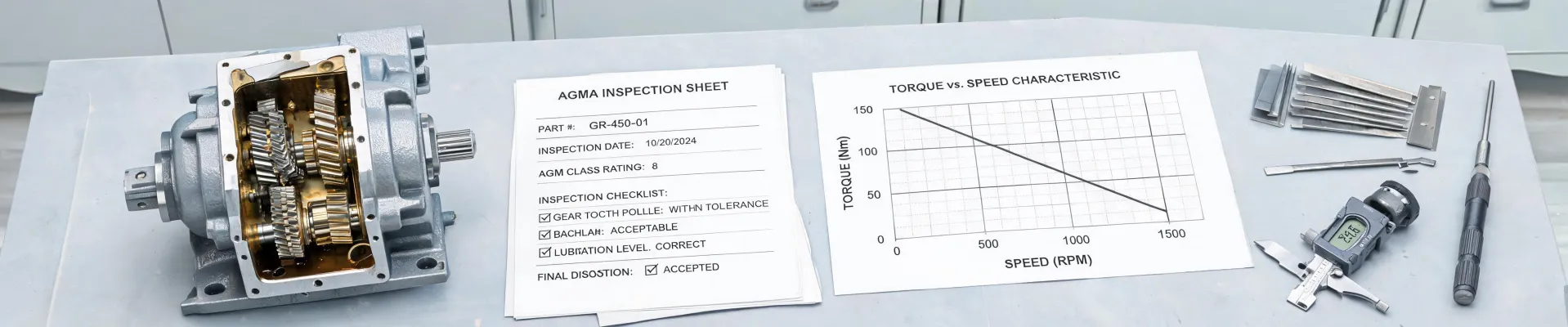
Here's what I check first: rated voltage, no-load speed, and stall torque tell you what the motor can do. What they don't tell you is what it will do after 500 hours. For that, you need the efficiency curve, the thermal time constant, and—if it's a gearmotor—the backlash spec. A maxon motor datasheet—whether it's for a brushed DC motor, a BLDC, or a servo—is more thorough than most. It usually gives you typical and minimum values separately. That distinction matters. A minimum value is what the supplier will commit to in a contract. A typical value is what you'll probably get. If your design only works at the typical number, you have a tolerance problem waiting to happen.
I want to say we learned this the expensive way in 2021—a gearmotor batch where backlash ran 0.3° over the typical value. Not a failure, technically. But our assembly couldn't hit the positioning repeatability we'd promised the customer. That was a $9,000 rework, if I remember correctly.
2. How do I find authorized maxon motor distributors—and does it really matter?
Yes, it matters. Not because non-authorized resellers are selling fake motors—that's rare. The problem is batch traceability and technical support.
Authorized maxon motor distributors can pull the factory batch record for a specific serial number. That means if you have a field failure, you can trace it back to a production lot and check whether other units are affected. A non-authorized channel usually can't do that. What they can do is sell you leftover inventory or mixed batches at a discount, and ship faster because they're not following the factory's allocation rules.
We used a non-authorized channel once in 2023 for a rush order. Delivery was 10 days faster. Then we had a drift issue on 40 units and couldn't trace the batch. The distributor shrugged. The factory couldn't help because the units weren't in their channel. We ended up replacing all 40 at our own cost—about $6,200, plus the customer conversation I'd rather not repeat.
The authorized list is on maxon's official site. Check it before you accept a quote that's 20% below everyone else's.
3. What do small DC motor datasheets leave out that affects batch consistency?
Three things, usually: thermal resistance, brush wear rate, and stall protection behavior.
The datasheet will tell you the rated current. It won't always tell you how the motor behaves at 120% of rated current for 30 seconds. That's the number that matters if your application has a jam condition—and most do. We had a batch of small DC motors where the stall protection threshold was 15% off from the previous batch. Same part number, same datasheet, different behavior. The motors passed incoming inspection because the no-load current was in spec. They failed in the field because the protection tripped too early and shut down the mechanism.
We caught it on a 50,000-unit annual order after 8,000 units had already shipped. The fix was a firmware threshold change on our end, but it cost us two weeks of production and a lot of explaining.
Now every purchase contract includes a clause requiring the stall current threshold to be verified per batch. It's a $150 test. Cheaper than the alternative.
4. What should I test on a micro servo motor before approving a batch?
Not just 'does it turn.' Position accuracy, backlash, dead band, and thermal drift. The four together tell you whether the servo will behave the same way in month six as it did on day one.
We ran a blind test in Q1 2024 with two batches of the same micro servo motor model. Our team couldn't tell them apart by hand. On the test rig, one batch had 40% more backlash after 1,000 cycles. The other held within spec. Same part number, same supplier, different production run. The difference was probably bearing preload—the datasheet didn't specify it, and the factory had changed a sub-supplier.
If you're not testing backlash after cycling, you're not testing the servo. You're testing the unboxing experience.
5. What size VFD for a 5hp motor—and where does the spec sheet mislead you?
Quick answer: size the VFD to the motor's full-load amps (FLA), not to the horsepower label. For a 5hp, 460V three-phase motor, NEC Table 430.250 lists 7.6A FLA. At 230V, it's 15.2A. A VFD rated for that current—with some margin for ambient temperature and carrier frequency—will work.
The misleading part is the VFD spec sheet itself. It usually lists 'heavy duty' and 'normal duty' current ratings. Heavy duty is for constant torque loads (conveyors, positive displacement pumps). Normal duty is for variable torque loads (centrifugal fans, centrifugal pumps). Pick the wrong one and you'll either oversize the drive or trip on overload during startup.
From the outside, it looks like a 5hp VFD is a 5hp VFD. The reality is that the current rating, overload capacity, and carrier frequency default all change the thermal picture. A drive rated at 7.5A continuous might only handle 6.8A at 8kHz carrier frequency in a 40°C panel. That's a 9% derate that the headline number doesn't show you.
Per IEC 60034-1, motor performance is rated at specific ambient and altitude conditions. VFDs have their own derating curves. If your panel runs hot, size up one frame. Your electrician will thank you.
6. Why do engineers keep specifying maxon motors when they cost 30–50% more?
Because the datasheet is honest, and the batch consistency is real. That's the short version.
The longer version: a maxon motor saves you verification time. When the datasheet says 'typical' and 'minimum' separately, you can design to the minimum and stop worrying about the typical. When the batch record is traceable, you can investigate a field failure in a day instead of a month. When the gearbox backlash is specified per unit, you don't have to build a test rig to find out what you actually bought.
That time has a cost. If your engineering team spends 40 hours a year chasing motor spec ambiguity across three projects, and their loaded rate is $85/hour, that's $3,400. If the maxon option costs $12 more per unit on a 1,000-unit run, that's $12,000. The math only works if the ambiguity would have cost you more than $12,000—which it often does, but not always.
To be fair, not every application needs a maxon motor. If you're building a prototype, a demo unit, or a product where the motor runs at 30% of rated load for 200 hours a year, a cheaper small DC motor will probably be fine. The efficiency argument is about reducing the cost of uncertainty, not about buying the most expensive part on the shelf.
I'd argue the real question isn't 'why pay more?' It's 'what does a spec failure cost you?' If the answer is 'a customer email and a replacement,' buy the cheaper motor. If the answer is 'a production line stoppage and a $22,000 redo,' the math changes.

Elena Markovic
Elena Markovic is an independent industrial motor and drive systems analyst covering induction motors, servo motors, stepper motors, and variable-frequency drives. She examines IEC 60034-30-1 efficiency classes, IEC 61800-9-2 drive-system losses, speed-torque curves, duty cycles, thermal limits, and feedback compatibility across operating envelopes. Her evidence-led guides help OEM engineers and plant teams select efficient motion packages, plan integration, and reduce commissioning risk.