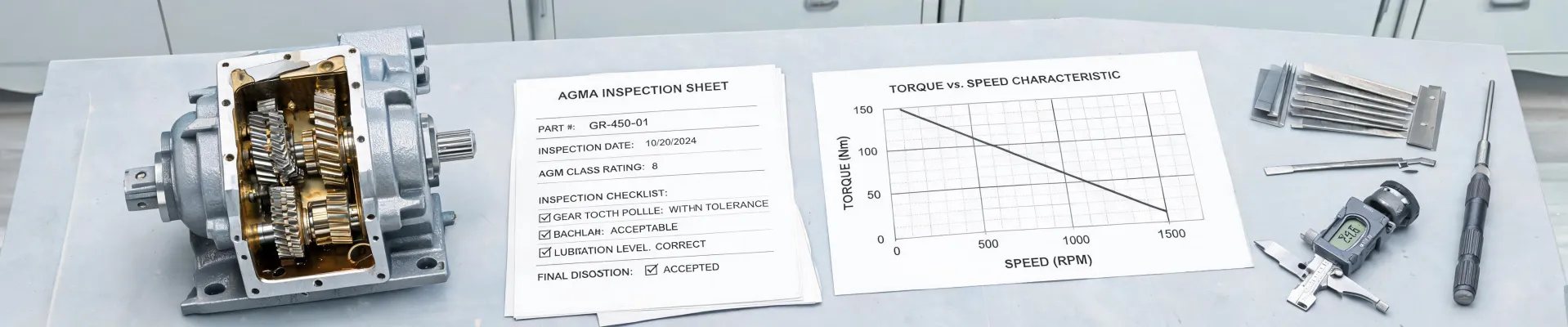
If you ask me, a 'rush order' is usually not a logistics problem. It's a specification problem that waited until the last minute to introduce itself. I've spent the last nine years handling breakdown and replacement orders for power transmission components, and I've made enough expensive mistakes to maintain a checklist so other people do not repeat them.
Here is the opinion I've landed on: when a deadline is real, certainty is worth paying for. Not because fast shipping is enjoyable, but because an uncertain order that arrives quickly can still be the wrong part.
Same word, different aisle: search terms are not specs
Look, I understand why people start with a search engine. Type '2025 boston marathon gear' and you'll get race shirts and running shoes. Type 'boston gear 700 series parts' and you'll get speed reducers, worm gears, and motion control components. Same word, different worlds. A search engine can get you to the right website, but it can't stand next to your equipment and confirm the part.
The same thing happens with belts. A plant person with a failed synchronous drive might search 'volvo timing belt replacement' because 'timing belt' feels close enough. But a Volvo timing belt is an engine component with automotive tensioning requirements. An industrial timing belt has a pitch, width, tooth profile, and a center distance that have to match the drive. The keyword got you to a category, not a configuration.
That also applies to motors. Search 'what's a stepper motor' and you'll get a clean definition: a brushless motor that rotates in discrete steps, typically 1.8 degrees per full step in common hybrid designs. That's a starting point, not an order. A usable motor order needs holding torque, current per phase, voltage, coil wiring, shaft style, and frame size. Saying 'stepper motor' tells a supplier almost nothing.
On the other side, I hear 'we need a three phase induction motor' without a nameplate or frame size. Three phase induction motors are everywhere in industrial plants. Common does not mean interchangeable. A NEMA Design B motor, an IEC metric motor, and an inverter-duty motor can all be called three phase induction motors while still being physically and electrically different. In North America, NEMA MG 1 provides a helpful standard structure, but only if you have the nameplate and a rough idea of the duty.
What I learned from a $2,900 mistake
In my first year doing this kind of work, I ordered thirty replacement pulleys for a small conveyor section. The order said 'pulley, 6-inch outer diameter, for 2-inch shaft.' That was what the previous person had written on a sticky note. What I didn't confirm was hub style, keyway depth, face width, or set screw placement. All thirty arrived. None could be installed without extra machine work. It cost roughly $2,900 in parts plus a week of downtime, and it taught me that 'standard' means far less than I thought.
Since then, I've built a checklist. In 2024 alone, that simple form caught 47 mismatches before they became purchase orders. I'm not saying I'm perfect. I'm saying ambiguity is far more common than suppliers or buyers like to admit.
Why I defend paying for certainty
Here's the thing: when somebody calls us, they usually don't call because everything is fine. They call because a line is down, a startup is scheduled for Friday, or a piece of equipment has already cost them production. At that point, the phrase 'probably will work' is the most expensive phrase in the plant.
When I compared our emergency orders side by side over two years, the ones that caused the most pain were the ones with the vague descriptions, not the ones with the slowest promised delivery. A vendor can build quickly if the order is complete. If the order is incomplete, speed only delivers the mistake sooner.
That's why I'd rather pay an extra fee for someone to catch an inconsistency than pay for a discount on a guess. Rush shipping is insurance. If you give me a tight deadline and a messy spec, I will gladly spend money on a vendor who asks the tough questions and confirms the details before the product moves. That conversation costs less than a second order and a longer delay.
'We don't have time to look all that up. Just get it on the truck.'
I hear that sometimes. Here's what I say back: looking it up can mean taking a photo of the nameplate, measuring the old shaft, or photographing the data tag. That takes ten minutes, and it can save two weeks. A photo of the existing unit often tells a supplier more than a short paragraph of secondhand information.
You also don't need to memorize catalogs. If you have a Boston Gear 700 series unit with a marking that looks like a part number, send the marking. If you have a motor, send the nameplate. If you have a broken belt, send a tape measure reading plus a photo of the old belt cross-section. The goal is not to become an engineer overnight. The goal is to give the person on the other side enough certainty to stop guessing.
Bottom line: speed is only useful after the spec is fixed
So my opinion stands. When you are in a hurry, the first question should not be 'how fast can this get here?' It should be 'how sure are we that this is the right component?' Once that is answered, then yes, pay for the fastest option available. The fee is not wasted. It's buying you assurance that the part will arrive, and that it will be the correct part for the machine.
Search terms can get you close. Close only works if the person who answers knows exactly where close means. Between you and me, the best maintenance teams are not the ones with a better freight account. They are the ones with better checklists.

Elena Markovic
Elena Markovic is an independent industrial motor and drive systems analyst covering induction motors, servo motors, stepper motors, and variable-frequency drives. She examines IEC 60034-30-1 efficiency classes, IEC 61800-9-2 drive-system losses, speed-torque curves, duty cycles, thermal limits, and feedback compatibility across operating envelopes. Her evidence-led guides help OEM engineers and plant teams select efficient motion packages, plan integration, and reduce commissioning risk.