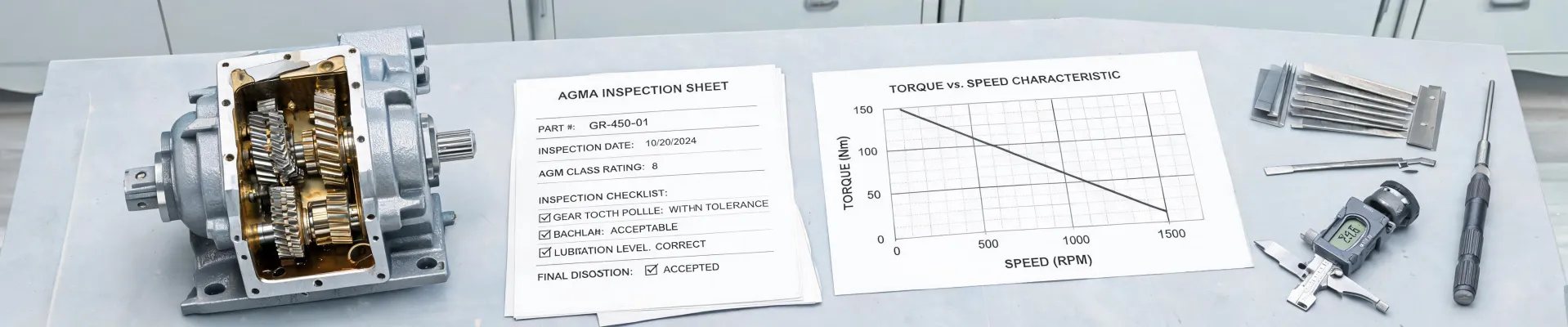
On a Monday in March 2024, the case packer on Line 3 sounded like it was grinding rocks. Maintenance stopped the line, pulled the guard, and found oil dripping from the worm gearbox. The motor was humming but not turning. The repair request on my desk said: 'Replace 1 HP, 56C frame, single phase AC motor and 20:1 right-angle worm gear reducer.'
I manage procurement for a 40-person packaging equipment company. I have kept every invoice for motion parts and MRO supplies for six years. That habit was the only reason I did not buy the wrong motor that afternoon.
The Quote That Almost Fooled Me
The first quote came from an online industrial parts house. It was $389 for a single phase AC motor and $749 for a worm gear reducer that the sales page called a direct replacement. Total: $1,138 plus freight. The second quote came from our local Boston Gear distributor. The same basic setup was $1,721. That included a Boston Gear 700 Series reducer and a $646 single phase AC motor. Both quotes were dated March 18, 2024. My first instinct was to toss the second quote. A $583 difference is real money when you are watching a yearly budget.
What stopped me was a question from our controls engineer. He was designing a new infeed adjuster and asked: how fast can a stepper motor turn? The online supplier sent a link to a generic FAQ that said around 1,000 rpm. That was not useful because his machine had a load attached.
The Boston Gear application engineer called back within the hour. He explained that a stepper motor can often spin at 1,200 to 2,000 rpm with no load, but usable speed drops to a couple hundred rpm once you add friction and inertia. If we needed more speed with torque, he said, we should look at a servo motor or a different mechanical ratio. Then he asked about our infeed screw and cycle time. That was the first clue that I was comparing two different levels of service, not just two prices.
Why the Stepper Motor Question Mattered
That question mattered because it exposed the hidden difference between the quotes. The online supplier had a catalog. The Boston Gear distributor had people who could read a catalog and connect it to our machine.
Everything I had read about sourcing said not to pay extra for a logo when the specs are the same. In practice, the specs were not the same. The cheap quote did not include a dimensional drawing, a service factor, or a lubricant specification. The Boston Gear quote included a part number, a PDF spec sheet, and a person who answered the phone.
I know a lot of procurement people hate hearing that. To be fair, there are applications where a lower-cost replacement makes sense. We buy those for light-duty conveyors and non-critical lab equipment. This case packer fed the whole packaging line. An unscheduled stop cost about $1,800 per hour in lost and delayed production. That made the $583 price gap look smaller.
My TCO Spreadsheet
I started putting together a TCO sheet, and I want to show you how simple it was.
The cheap option: $1,138 purchase price, $95 freight, and an unknown number of engineering hours to verify the direct replacement claim. If the motor mount or shaft keyway was off by a small amount, add adapter plates, bolts, and another service call.
The Boston Gear option: $1,721 purchase price, no freight because the local distributor stocked it, and application support that I had already used for free. The motor was a NEMA 56C TEFC single phase AC motor with the capacitor box in the same orientation as the old unit. The reducer was a 700 Series with the same center distance and mounting dimensions. The quote included a line item from the 700 Series catalog PDF that I could verify on bostongear.com.
There was also a lesson from my own records. In 2022, I bought a surplus single phase AC motor because the price was $845 and I was trying to hit a budget target. The shaft and frame fit, but the capacitor housing was on the wrong side. It hit the safety guard. The electrician had to relocate the capacitor and modify the guard. That extra work showed up as $612 in labor and replacement parts. The cheap motor was not cheap after I added rework.
That is what total cost of ownership means to me. Purchase price plus freight plus engineering time plus rework plus downtime. The cheapest invoice is not necessarily the cheapest order.
The Universal Joint Socket Test
There was one more small surprise. The maintenance lead told me he needed a 3/8 inch universal joint socket to reach the motor bolts on that case packer. It cost about $16. Without it, the motor swap was a half-day job. With it, the job took four hours.
Do not laugh. Universal joint sockets are one of those small tools that never show up in a motor quote but decide how long a replacement takes. I used to treat them as maintenance supplies and ignore them in the purchase decision. Now I include them in the plan.
The Verdict, 11 Months Later
I approved the Boston Gear order on March 22, 2024. Even after I clicked send, I kept second-guessing. What if the $583 difference only bought me a logo? The two weeks until the parts arrived felt tense.
The parts showed up when the distributor promised. The reducer had a real nameplate with oil type and torque rating. The motor lined up with the existing mounting holes. The swap went smoothly, and the line ran through the rest of 2024 without a motor failure.
Does that mean every Boston Gear quote is worth the premium? No. If the application were low-risk and easy to service, I might choose the lower-price supplier. I still get multiple quotes. I still watch every dollar. The difference is that I compare total cost instead of the first number on the quote.
So when someone around here starts talking about Boston kickin' into gear, I do not think of a slogan. I think of a distributor answering a stepper motor speed question, a reducer that mounted without adapters, and a $16 universal joint socket that saved us an afternoon. In my world, that quiet, smooth replacement is what cost control actually looks like.

Elena Markovic
Elena Markovic is an independent industrial motor and drive systems analyst covering induction motors, servo motors, stepper motors, and variable-frequency drives. She examines IEC 60034-30-1 efficiency classes, IEC 61800-9-2 drive-system losses, speed-torque curves, duty cycles, thermal limits, and feedback compatibility across operating envelopes. Her evidence-led guides help OEM engineers and plant teams select efficient motion packages, plan integration, and reduce commissioning risk.