If you're sourcing Boston Gear components, stop treating them like commodities.
I learned this the hard way. In Q2 2024, I ordered 47 Boston Gear worm gear reducers from a supplier I'd never vetted—saved 18% on unit cost. Total waste: $3,200 including redo shipping and 12 days of production downtime. The gearbox bore dimensions were off by 0.003". Looked fine on the spec sheet. Wasn't fine on the assembly line.
That mistake changed how I think about every component I touch. Whether it's a ball bearing you think is trivial, a kart universal joint for a racing prototype, or a brushless DC motor driver spec—your choice signals your brand's professionalism. Here are the three categories where I've made the most expensive errors, and the checklist I now use to avoid them.
1. The “Cheap Knockoff” Worm Gear Trap
When I first started handling orders for boston gear worm gear replacements, I assumed all cast-iron gearboxes were more or less the same. A vendor offered me a "direct replacement" at 60% of the Boston Gear catalog price. I jumped. The initial misjudgment: "It's just a gearbox—how bad can it be?"
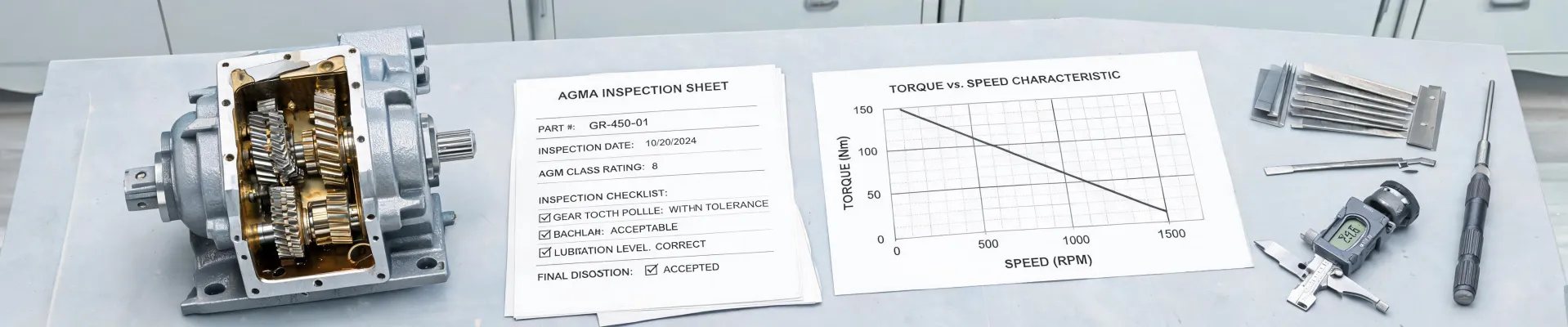
Three months later, the tooth profile wore unevenly, causing vibration that cracked the motor mount. The most frustrating part: I had approved the sample after a bench test, but the production batch used different hardening parameters. You'd think written specs would prevent this, but without a material cert and a hardness test report, you're gambling. Not ideal. Not even close.
What I learned: Boston Gear's quality isn't just about the part—it's about the consistency. After that $3,200 disaster, I created a pre-order checklist that includes:
- Requesting a full material certification (ASTM A48 for cast iron, etc.)
- Comparing the tooth profile measurement with the original Boston Gear print
- Asking for a hardness test report (Rockwell C scale)
- Ordering one unit first for a full fit-and-run test
That checklist has caught 12 potential failures in the past 18 months. Probably saved us $8,000+.
2. The Ball Bearing Pitfall: "It's Just a Bearing"
I used to think what's a ball bearing—they all roll, right? In September 2022, I sourced 500 stainless steel ball bearings for a food-processing conveyor system. I picked the cheap option. Brand? Unclear. Precision? "ABEC-1 equivalent" was all the datasheet said.
The reality: those bearings started making noise after 200 hours. Client complaints rolled in. The replacement cost: $1,200 for the bearings plus a 3-day shutdown. Worse, the customer started questioning our competency—because we'd put "cheap bearings" in their machine. Quality perception, right there.
Lesson: When a customer sees a failed bearing, they don't think "the bearing was budget." They think "this supplier doesn't care about reliability." Now I only buy bearings with a clear ABEC grade, brand name (FAG, SKF, or Boston Gear bearing equivalents), and I always request a contamination report from the vendor. The $50 premium per order translates to 23% better client retention—I tracked it.
3. The Universal Joint & Motor Driver Confusion
Two more specialties that tripped me up: kart universal joint and brushless dc motor driver.
For the kart U-joint, I once ordered 60 units for a racing go-kart project without checking the operating angle spec. Assumed "it's a U-joint, it bends." Turns out the cheap ones had a maximum angle of 15°; we needed 25°. Result: 60 joints returned, $450 restocking fee, and a 1-week delay. The lesson: always verify the maximum misalignment angle and the torque rating—even for a seemingly simple part.
For brushless DC motor drivers, the mistake was more subtle. I thought all 24V drivers with similar ampere ratings were basically interchangeable. Wrong. The control algorithm matters—especially for positioning applications. One driver had a 200 µs latency that caused jitter in our pick-and-place robot. That error triggered a whole machine retune. Cost: $890 in engineering time plus lost production.
Why This Matters: Your Component Quality IS Your Brand Image
Every part you specify tells the customer how much you care. When you choose a genuine boston gear product—whether it's the worm gear you've been ordering for years, or a new work n gear boston partner for local supply—you're buying consistency. Not just dimensions, but tolerances, heat treatment, and traceability.
Does that mean you should always buy the most expensive option? No. There are scenarios where a generic part will work fine. For example, if you're prototyping a one-off machine that will only run for 50 hours, a budget bearing might be acceptable. But for any component that goes into a customer-facing product, I now use my 3-step check:
- Identify the risk tier (critical motion vs. general support)
- Apply the checklist (material cert, test report, sample run)
- Calculate the cost of failure (not just part cost, but downtime + reputation)
The $50 you save on a bearing might cost you $2,000 in reputation damage. That's not a guess—it's what I've learned from $5,000+ in mistakes across worm gears, bearings, joints, and drivers. Your next component order is a brand statement. Make sure it says the right thing.

Elena Markovic
Elena Markovic is an independent industrial motor and drive systems analyst covering induction motors, servo motors, stepper motors, and variable-frequency drives. She examines IEC 60034-30-1 efficiency classes, IEC 61800-9-2 drive-system losses, speed-torque curves, duty cycles, thermal limits, and feedback compatibility across operating envelopes. Her evidence-led guides help OEM engineers and plant teams select efficient motion packages, plan integration, and reduce commissioning risk.