-
The Day I Wasted $3,200 on a Linear Actuator Motor
-
How a Simple Mistake Turns Into Expensive Chaos
-
Why the Boston Gear Catalog PDF Saved Me—Eventually
-
What's a Stepper Motor? (And Why You Shouldn't Assume You Know)
-
The Time Certainty Premium: Why I Now Pay More for Guaranteed Delivery
-
Three Takeaways for Anyone Ordering Motion Control Components
The Day I Wasted $3,200 on a Linear Actuator Motor
It was September 2022, and I'd been handling motion control procurement for about four years. I remember the date because my boss had just approved a $15,000 rush order for a packaging line retrofit, and I was trying to juggle three urgent requests at once. Not ideal, but workable—or so I thought.
I needed a linear actuator motor for a pick-and-place station. The spec looked straightforward: 24V DC, 200mm stroke, 10mm/s speed. I pulled a model number from a supplier's website, double-checked the voltage, and hit order. Two days later, the shipment arrived. Wrong mounting flange. Completely wrong.
That one mistake snowballed: the actuator didn't fit the existing bracket, so we had to machine a new one—adding $890 in rework costs and a one-week delay. The worst part? The correct flange was listed in the Boston Gear catalog PDF, which I hadn't bothered to cross-reference. I skipped the easy step, and it cost us real money and credibility.
How a Simple Mistake Turns Into Expensive Chaos
Here's what happened in detail. The linear actuator I ordered had a foot-mounted flange, but our machine used a face-mounted configuration. This wasn't a compatibility issue—it was a specification mismatch that any experienced engineer could have caught in five minutes. But I was rushing, and I trusted the supplier's website description without verifying against our actual hardware.
The consequences stacked up quickly:
- $600 for the actuator itself (non-returnable because we modified it)
- $290 for a custom adapter plate (rush machined, premium rate)
- 1 week of downtime while waiting for the adapter
- $0 of trust from the maintenance team (priceless, but negative)
And the kicker? The correct actuator—with the right flange—was listed at the same price. This wasn't a problem of availability or cost. It was a problem of me not taking five minutes to check the right source.
Why the Boston Gear Catalog PDF Saved Me—Eventually
After that disaster, I created a pre-order checklist that I still use today. The first item? Pull the spec from a reliable reference—like the Boston Gear catalog PDF.
The Boston Gear catalog includes:
- Dimensional drawings for every mounting style (foot, face, flange, and more)
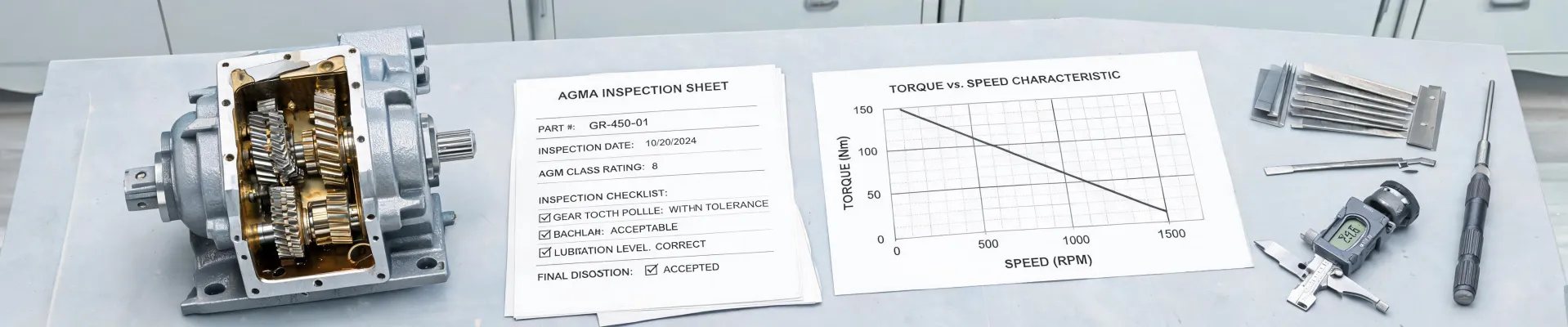
- Torque and speed curves for servo and stepper motors
- Compatibility notes for common gearboxes and couplings
- Application examples that show how components work together
Using that catalog turned my hit-and-miss ordering into a systematic process. Instead of guessing which motor to pair with a gearbox, I could look up the high torque stepper motor specs, match them to the load requirements, and pick a speed reducer with the right ratio—all from one source. It's not glamorous, but it works.
To be fair, I still make mistakes. But now I catch them before the order goes in, not after the invoice arrives.
What's a Stepper Motor? (And Why You Shouldn't Assume You Know)
One thing I learned from studying the catalog: don't assume you already know what a component does. I'd used stepper motors for years, but I couldn't have explained the difference between holding torque and running torque off the top of my head. The catalog forced me to slow down and actually read the technical specs.
What's a stepper motor? It's a brushless DC motor that moves in discrete steps—typically 200 steps per revolution (1.8° per step). Unlike a servo motor, which uses feedback to maintain position, a stepper motor operates on a open-loop control system: you send a pulse, the motor moves one step, and it holds that position until the next pulse.
This makes stepper motors ideal for applications where you need:
- Precise positioning without complex feedback loops
- High holding torque at standstill
- Low-speed torque (good for linear actuators and small conveyors)
But they have limitations. If you push a stepper motor beyond its torque curve—like driving a heavy load too fast—it can lose steps, meaning the motor moves but the position changes unexpectedly. That's when you discover the difference between a cheap stepper and a high torque stepper motor that's rated for your actual load.
This gets into engineering territory, which isn't my expertise. I'm not a motor designer. What I can tell you from a procurement perspective is: check the torque-speed curve before you decide. If the spec sheet doesn't include one, the motor might not meet your needs at the required speed.
The Time Certainty Premium: Why I Now Pay More for Guaranteed Delivery
Here's the part that still makes me wince. After the actuator debacle, I needed a spur gear set for the same packaging line. I found a supplier offering a cheaper alternative—$320 vs. $450 for the Boston Gear equivalent. The catch? 5-7 business day lead time, and the supplier admitted they couldn't guarantee it.
I was tempted. We'd already blown our budget on the rework, and saving $130 looked attractive. But I remembered the September 2022 disaster and decided to pay the premium for a 3-day guaranteed delivery.
Best decision I made that quarter. The gears arrived on time, fit perfectly, and the line was running by Friday afternoon. The alternative—gambling on the cheaper option—could have delayed the entire project. At that point, missing the deadline would have cost us $15,000 in lost production, not to mention the credibility hit.
In my opinion, paying extra for certainty is often the rational choice. The risk of a delay is rarely worth the potential savings, especially when you're up against a hard deadline.
Three Takeaways for Anyone Ordering Motion Control Components
I've made more mistakes than I care to admit, but I've also learned what works. Here's my short checklist, born from $3,200 of wasted budget:
- Always cross-reference with a reliable catalog. I use the Boston Gear catalog PDF because it's comprehensive and includes dimensions, torque curves, and compatibility notes. It's not marketing fluff; it's engineering data.
- Don't assume the cheapest quote is the cheapest total cost. Factor in rework risk, delay risk, and the cost of missed deadlines. The premium option often comes with application engineering support—people who can answer questions before you order, not after.
- Build in a buffer for the unexpected. Even with the best checklist, things go wrong. My rule of thumb: always allow at least one extra day for internal review before placing a rush order. That day saved me twice last year alone.
This worked for us, but our situation was a mid-size facility with predictable maintenance schedules. Your mileage may vary if you're dealing with high-volume production or custom application. The fundamental lesson—check your specs, prioritize certainty over cheap—applies to most contexts.
I still keep a copy of that Boston Gear catalog on my desk. It's dog-eared, coffee-stained, and full of my notes. But it has saved me way more than it cost (the PDF is free, by the way).

Elena Markovic
Elena Markovic is an independent industrial motor and drive systems analyst covering induction motors, servo motors, stepper motors, and variable-frequency drives. She examines IEC 60034-30-1 efficiency classes, IEC 61800-9-2 drive-system losses, speed-torque curves, duty cycles, thermal limits, and feedback compatibility across operating envelopes. Her evidence-led guides help OEM engineers and plant teams select efficient motion packages, plan integration, and reduce commissioning risk.