-
The comparison framework I used
-
Dimension 1: Part number accuracy & selection
-
Dimension 2: Small stepper motors & brushless DC motor drivers
-
Dimension 3: Sizing support—"what size VFD for 5 HP motor?"
-
Dimension 4: Hidden line items—freight, lead time, returns
-
Dimension 5: Long-term accountability
- Which approach should you choose?
-
Bottom line
I've spent the last six years managing a roughly $280,000 annual motion control budget for a 35-person automation integration shop. We buy gearboxes, spur and worm gears, small stepper motors, brushless DC motor drivers, servo motors, linear actuators—you name it. I've compared quotes from 40+ vendors, tracked every order in our procurement system, and audited the numbers quarterly like it was my own money.
The comparison I keep coming back to isn't "Boston Gear vs. some other brand." It's more practical: buy a complete drivetrain package through Boston Gear, or piece it together yourself from separate suppliers? I've done both, across five dimensions, using actual order data from 2019 through 2024. Here's what roughly $1.6 million in cumulative spending taught me.
The comparison framework I used
I didn't compare unit prices. I compared total cost of ownership (TCO)—meaning purchase price, engineering hours, lead time risk, rework probability, and support responsiveness. That last one's the trickiest to quantify, but it's also where most of the surprises live. I built a TCO spreadsheet early on, and I've refined it after every project since.
Five dimensions, A vs. B:
- Part number accuracy & selection
- Motor + driver integration
- Sizing support (the engineering questions)
- Hidden line items—freight, lead time, returns
- Long-term accountability
Dimension 1: Part number accuracy & selection
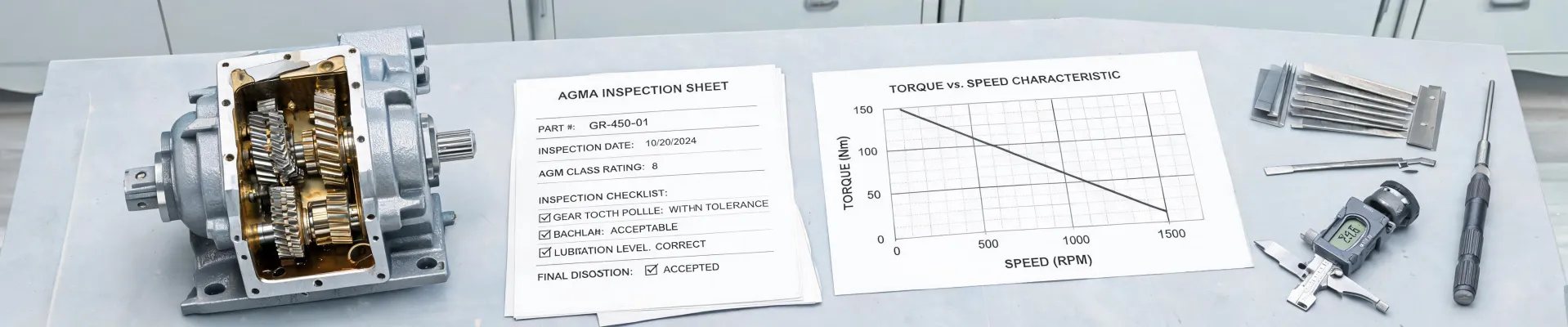
I didn't expect to be impressed by a part number system. But Boston Gear's part number breakdown PDF is genuinely useful, and it's one of the main reasons we still use their catalog. The numbering scheme encodes gear ratio, mounting type, shaft configuration—so once you're familiar with it, you can catch a wrong part number before it turns into a wrong shipment.
With piecemeal sourcing, you're at the mercy of whatever the reseller's search bar thinks you meant. Three different vendors, three different catalogs, zero shared logic. That costs time even when nothing actually goes wrong.
Here's the counterintuitive finding: Boston Gear's "complicated" legacy numbering saved us money. In 2023, we logged seven misordered parts from separate-component suppliers and zero from Boston Gear. Every misorder cost us roughly $85 in return freight and rework labor. That's $595 of very avoidable spend, on orders I almost didn't think twice about.
Verdict: Boston Gear wins. Not because their parts are inherently better, but because the part number breakdown system makes us less likely to screw up.
Dimension 2: Small stepper motors & brushless DC motor drivers
This is where I learned my biggest lesson. We had a customer who needed a small stepper motor for a compact linear actuator—under 1 N·m, nothing exotic. A different project needed a brushless DC motor driver with a small gearbox. I priced both routes.
The piecemeal route: a $38 stepper motor from one supplier, a $55 stepper driver from another, a $29 power supply from a third. The Boston Gear route: a matched small stepper motor + driver set, with their application team in the loop. The price gap was about $60.
Seeing our two approaches side by side—same application, different integration levels—made me realize I was looking at the wrong number. The $60 gap was nothing compared to what happened next. When our engineers tuned and debugged the mismatched pieces, we burned 3 to 4 hours of engineering time. At our blended rate, that's $300 to $400 of cost that never appears on a purchase order.
So the "cheap" combo ended up costing more. I wish I had tracked that specific metric from the very beginning—it took me two years of invoices to see the pattern. Now I quote integrated sets as the default for any customer who can't afford to lose a week to debugging.
Verdict: Boston Gear wins on integration. The motor and driver are tested as a set, and that alone is worth more than the small price premium.
Dimension 3: Sizing support—"what size VFD for 5 HP motor?"
We get asked this all the time, and it's a perfect example of support value. The simple rule of thumb is a 5 HP VFD handles a 5 HP motor. But the full-load amperage (FLA) on the motor nameplate is what really matters, and per NFPA 70 (NEC Article 430), branch circuit protection should be sized at 125% of the motor's rated full-load current. Also, per NEMA MG-1, a motor used on VFD power should be rated for inverter duty—something that trips up people repurposing older rebuilt motors.
When we source through Boston Gear, their application engineers walk through these numbers with us. They caught a situation where a customer's 5 HP motor was drawing more than the nameplate suggested because of an old rebuild. That one phone call saved us a field failure.
The piecemeal approach? You get a forum thread or a well-meaning customer service agent reading from a script. I don't have hard data on the hours we spent double-checking external sizing advice, but anecdotally, it's two to three hours per tricky project. Multiply that by 40+ projects a year and it's not nothing.
To be fair, some people don't need this help. If you've been sizing VFDs for 20 years, you can skip this whole section. But for a procurement manager—and for many small shops—a supplier that answers the question correctly the first time is worth real money.
Verdict: Boston Gear wins for most buyers. The only people who "win" with piecemeal sourcing here are the ones who already know the answer—in which case, they don't need to pay anyone for sizing advice.
Dimension 4: Hidden line items—freight, lead time, returns
This is my home turf. I've had two lifetimes' worth of "the low-priced quote wasn't actually low" moments.
Real example from Q2 2024: We compared a Boston Gear distributor's quote against a discount supplier for a stainless steel ball bearing and a worm gear reducer. The discount supplier's unit prices were 18% lower. But then the freight arrived—in three separate shipments, because the items came from different warehouses. Total freight: $94. The Boston Gear order came in one box: $22 freight. And one item from the discount supplier was the wrong series; return shipping was on us, $36.
That "18% cheaper" vendor ended up costing us slightly more than Boston Gear before we even unpacked a single component. Prices as of Q4 2024 by the way—market moves fast, so verify current freight and return policies before you budget.
Granted, not every piecemeal vendor runs like this. And Boston Gear won't always win on unit price. But across our order data, the TCO gap was consistent.
Verdict: Boston Gear wins on predictability. Piecemeal can win on unit price, but it tends to lose on surprises.
Dimension 5: Long-term accountability
This is the hardest dimension to put a number on. When a component fails at a customer site, who do you call? If everything came from one source, the answer is obvious. That one phone call is worth more than any line-item savings.
And here's where the "small customer" thing comes in. We were a small customer for years. Some vendors treated our $200 orders like annoyances. Others—including several Boston Gear distributors—took them seriously. (Note to self: never forget which.) Today our orders are bigger, but our loyalty hasn't moved at all.
Verdict: Boston Gear's distributor network wins if you value a supplier that answers the phone whether you're ordering $200 or $20,000.
Which approach should you choose?
I'm not going to say "always buy from Boston Gear" because context matters. That's lazy advice and it doesn't respect your situation.
Buy the integrated package when:
- You need a working system, not a pile of parts.
- You're on a deadline and can't absorb debugging cycles.
- You're less than fully confident about part numbers, motor-driver matching, or VFD sizing.
- You want one accountable source when something goes wrong in the field.
Piece it together when:
- You have an experienced engineer who's already done this exact integration.
- You have hard unit-price targets and the time to shop carefully.
- You're replacing an identical existing component—no sizing, no support needed.
There's also a middle path: use Boston Gear's catalog PDF for part number lookups, and lean on their application engineering for sizing questions, even if you buy elsewhere. That's a little unusual, but good procurement is about using every honest resource. Their selection tools are worth bookmarking no matter who gets your purchase order.
Bottom line
After six years and roughly $1.6 million in cumulative spending, I believe the integrated route wins on total cost of ownership most of the time. Not because Boston Gear parts are the cheapest—they often aren't. Because everything around the parts (part number accuracy, matched motor-driver sets, sizing help, predictable freight, one accountable supplier) is worth real money.
And if you're old enough to remember the Boston Gear name—the longtime Boston Gear campus in Quincy, MA, the brand's history going back to 1877 in Boston—you already understand something important: this company has been proving its staying power for over a century. When I place an order that needs to survive on a factory floor, knowing the supplier will still be there in five years is part of the cost calculation too.
That's the comparison in a nutshell. Do the math on your own last 20 orders—I think you'll find some surprising patterns.

Elena Markovic
Elena Markovic is an independent industrial motor and drive systems analyst covering induction motors, servo motors, stepper motors, and variable-frequency drives. She examines IEC 60034-30-1 efficiency classes, IEC 61800-9-2 drive-system losses, speed-torque curves, duty cycles, thermal limits, and feedback compatibility across operating envelopes. Her evidence-led guides help OEM engineers and plant teams select efficient motion packages, plan integration, and reduce commissioning risk.