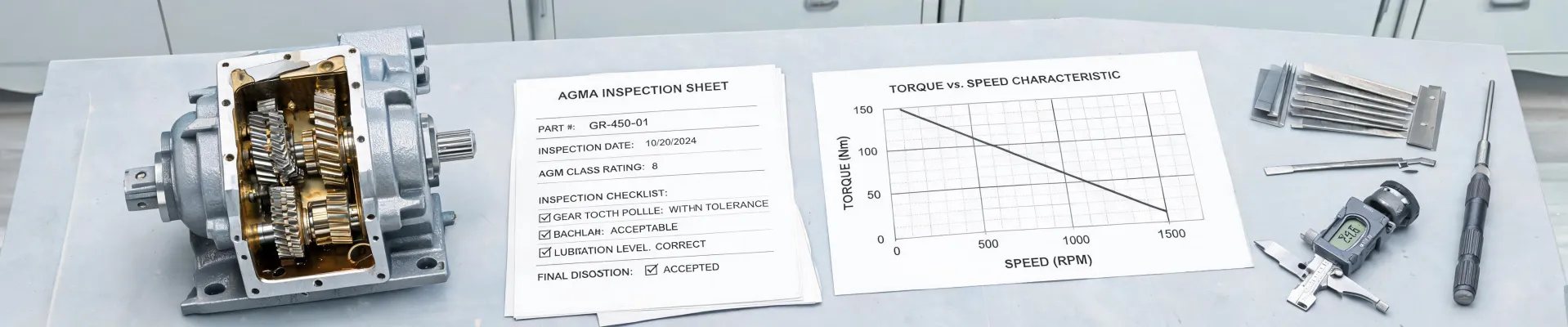
If you've typed 'boston-gear' into a search bar looking for gearboxes, you know the name. If you searched for 'work n gear boston' or 'ski gear boston,' you're probably looking for work boots or snowboards. This is not that article. Boston Gear—the brand—makes power transmission components: gearboxes, motors, bearings, linear actuators, and the sort of parts that keep factories moving. And I have a strong opinion about why it still deserves a spot on your BOM.
I believe the efficiency of your motion control sourcing process matters as much as the components themselves. That's why I still specify Boston Gear for many standard applications: the catalog is broad, the documentation is consistent, and the brand's history makes my risk review easier.
There. I said it out loud. Now let me explain why.
In my current role, I write and enforce quality standards for a motion control distributor. I review about 200 unique part numbers each year, and I've rejected more than my share of first deliveries because specs didn't match. In 2024, about 7% of first shipments from new suppliers had something that didn't match the approved drawing. I am, by nature, skeptical. You should be too.
Spec Clarity Is a Competitive Advantage
When I evaluate a supplier, I don't look for flash. I look for consistency. A product can be excellent, but if the datasheet is vague, I can't approve it for customer use. Full stop.
That's where Boston Gear's 700 series catalog comes to mind. You can find dimensions, ratios, weights, and installation details without sending a sales engineer three emails. That's rare.
What most people don't realize is that 'catalog availability' is not about paper. It's about engineering time. Every hour your team spends chasing a dimension is an hour not spent on application design. And in a world where lead times and labor costs keep moving up, that's a real cost.
The most frustrating part of component sourcing is the same problem recurring: a supplier changes a dimension slightly without updating the part number. You'd think a part number change would mean a drawing change, but it doesn't always. When that happens with a legacy product, the catalog's consistency is what saves you. I've caught that type of discrepancy more times than I can count.
I remember a recent spec review where we needed a worm gearbox with a specific input flange. The documentation was clear enough that our engineer confirmed compatibility in about twenty minutes. That's the kind of efficiency I can plan around.
Broad Catalog Means Fewer Handoffs
Let me set up a typical scenario. You need a small motor for a conveyor, a stepper motor for a registration feature, and a gearbox to connect them. If you can source most of that from one qualified supplier, you get one BOM and one set of documentation. If you split it across three vendors, you own three qualification cycles, three delivery schedules, and three support contacts.
That's the part that doesn't show up on the unit price. The $50 you save on an off-brand motor disappears when you spend four hours checking shaft diameter and mounting holes against your gearbox.
This is also where I see people mix up motor types.
Brushless AC, Single-Phase Induction, or Stepper?
A brushless AC motor is great for continuous duty and long life, but it usually needs a compatible drive. A single-phase induction motor is simpler and cheaper for a fixed-speed pump or fan, but it doesn't offer the same control range. And a stepper motor? A stepper motor moves in fixed increments under open-loop control. You tell it how many steps to take, and as long as you don't overload it, it doesn't need an encoder to hold position. People ask me 'what's a stepper motor?' all the time. It's the right solution for applications that need simple positioning and holding torque, not necessarily high speed.
The lesson is not that one motor type is better than another. It's that choosing the right one requires clean specifications. A broad catalog helps because you can compare options side by side without creating a Frankenstein assembly from four different suppliers.
Another thing vendors won't tell you: when a distributor says 'available from stock,' it often means the part exists somewhere in the company network, not necessarily in the local warehouse. That's not a scam—it's just how the business works. But it means accurate lead time information is as valuable as the part itself. In my experience, Boston Gear's stock status and lead time are usually quoted with less guesswork. That's an efficiency gain you don't see until you're ten minutes from a production deadline.
Longevity Is a Quality Signal, Not Nostalgia
When I first started in this industry, I thought brand heritage was overrated. I focused on specs, price, lead time. Then I started running field failure audits and changed my mind.
In our Q1 2024 audit, we traced 18 reported failures across a six-month window. Fourteen were caused by spec mismatches between components, not by the components themselves. The most expensive issue wasn't a bad bearing or a broken gear. It was integration. That's why a broad, established catalog is a risk-management tool.
Boston Gear has been around long enough that its products appear in thousands of installed machines. That means the replacement part you order today is more likely to match what's already on your equipment. That's not nostalgia. That's practical reality.
I still kick myself for a drop-in claim I trusted years ago. A vendor told me their motor was a direct replacement for a Boston Gear speed reducer. It looked like one. It wasn't. We lost a week, paid expedite fees, and the customer let me know about it in very direct language.
Now I only trust the spec sheet. And if a vendor makes a broad claim like 'fits every brand,' I ask for written documentation.
But Isn't There Newer Tech?
Let me play devil's advocate. There are newer motor technologies, and some are genuinely better for high-end servo applications. There are also lower-cost components that work just fine. I'm not going to say every old design is superior, and I'd never claim any brand is the only reliable supplier.
But efficiency is not about the cheapest part on paper. It's about total cost from spec to commission. I've seen a $150 cost-saving decision turn into a $900 rework bill, one expedited order, and a missed launch. The 'budget vendor' choice looked smart until the shaft dimensions didn't line up. Net loss: way more than the money we saved.
Take a recent example. A customer saved $140 on a 'compatible' motor from a brand they'd never used. The shaft was 2 mm too long, which forced a redesign of their mounting bracket. Specialist time, new bracket, express machining: $1,100. The cheaper part was the most expensive part in the project.
That's why I take claims seriously. When we publish compatibility information, we make sure it's accurate. Per FTC guidelines, claims must be truthful and substantiated. That applies to us, and it applies to any manufacturer claiming universal compatibility.
FTC advertising guidelines require that claims be truthful and not misleading, substantiated with evidence, and clear about endorsements and testimonials. (Source: FTC Business Guidance, ftc.gov)
Bottom Line
So what do I actually believe? I believe the most efficient motion control supplier isn't the one with the most exotic technology. It's the one that lets you find, verify, and install the right part without burning engineering hours.
Boston Gear's catalog, documentation, and longevity help me do that. That's why it remains part of my standard recommendation list.
So if you're looking for 'ski gear boston' or 'work n gear boston,' you're in the wrong place. But if you're looking for a gearbox, a brushless AC motor, a single phase induction motor, or a stepper motor that matches its spec sheet, this is exactly the kind of conversation you should be having with your supplier.
Efficiency isn't a buzzword. It's the difference between a smooth launch and a late one.

Elena Markovic
Elena Markovic is an independent industrial motor and drive systems analyst covering induction motors, servo motors, stepper motors, and variable-frequency drives. She examines IEC 60034-30-1 efficiency classes, IEC 61800-9-2 drive-system losses, speed-torque curves, duty cycles, thermal limits, and feedback compatibility across operating envelopes. Her evidence-led guides help OEM engineers and plant teams select efficient motion packages, plan integration, and reduce commissioning risk.