The packaging line stopped at 10:17 AM on a Tuesday. Not gradually, not with a groan—it just halted mid-cycle, a fault alarm echoing through the warehouse.
I was the office administrator at a food packaging company with about 60 employees. When I took over purchasing back in 2022, I thought the most stressful decision I'd make was which office supply vendor to renew. I did not expect to become an emergency industrial motor buyer. But the maintenance supervisor was out sick, the senior engineer was at a trade show in Atlanta, and somehow I was the person standing next to a dead machine with a service manual in my hand.
Later, I'd find out that every hour of downtime on that line cost us roughly $1,200 in lost production. I didn't know that at 10:17 AM. I just knew everyone was looking at me like I should have a plan.
I opened the manual, found the motor drawing, and typed the part number into the manufacturer's portal. The response: discontinued. The open web gave me results from four different countries, none useful. So I did what any non-engineer does when facing a motor problem.
I searched for the only motor name I actually knew.
Searching "Servo Motor SG90" Got Me Exactly Nowhere
I had seen "servo motor sg90" in a hobby robotics tutorial once. Tiny motor, three wires, a little plastic horn—maybe $3, nine grams of brass and plastic. I figured it was a starting point.
It was not.
People think a servo motor is a servo motor. The words are the same, but the universe is not. The SG90 is a hobby actuator with a couple of kilogram-centimeters of torque. An industrial servo motor is a closed-loop machine with an encoder or resolver, a separate drive unit, and torque measured in tens of Newton-meters. One fits in the palm of your hand and runs off 5 volts. The other needs a 3-phase drive and weighs more than a toaster. (Ugh, I lost a full afternoon scrolling through RC plane listings and Arduino tutorials before I understood how off-target I was.)
That was my first lesson in motor buying: search terms matter more than intuition. Add "industrial" or "NEMA" to any motor term, or you'll get hobby parts.
Wait, It's a Brushless DC Motor?
The manual's spec sheet described the machine's motor as a brushless DC motor with resolver feedback. I read the sentence three times. My mental picture of a DC motor came from a middle school science class: a spinning armature, copper brushes, carbon dust. That's a brushed DC motor.
A brushless DC motor does away with physical brushes entirely. Electronic commutation through a controller switches the current to the windings instead. That means fewer wear parts, better efficiency, and longer service life—which is why industrial equipment moved to them years ago. The motor I needed would cost more than I expected, but I now understand why: the engineering inside is genuinely different.
To be clear, I'm not an engineer and I'm not pretending to be one. The practical point is simple: you can't swap a brushed motor for a brushless one without changing the drive electronics, and you can't swap a hobby brushless motor into an industrial machine. The frame size, shaft diameter, feedback protocol, mounting holes—everything has to match. The nameplate tells you what you need. Take a photo of it before you search anything. (I learned this after searching "brushless dc motor" and getting a page full of drone motors. Same words, completely wrong category.)
How Fast Can a Stepper Motor Turn? (And Why I Asked)
In the middle of that search mess, I found a promising lead: a used stepper motor with a gearbox, listed at about $220. I knew steppers were used in 3D printers and CNC machines. That sounded industrial enough. So I asked the question that grabbed me next: how fast can a stepper motor turn?
The answer, in practical terms, is faster than you'd think, but not as fast as you'd hope.
A typical 2-phase stepper motor takes 200 full steps per revolution. At a step rate of 1 kHz—1,000 electrical pulses per second—the motor spins at 300 RPM. At 4 kHz, 1,200 RPM. Some data sheets advertise speeds above that, too. But here's the catch: torque falls off as speed rises, because the motor's winding inductance limits how quickly current can build. Max speed is the edge of what's physically possible, not what's useful under load.
People think "max speed" on a datasheet is like a car's top speed—you can cruise at 80% all day. Actually, it's the opposite. The continuous torque rating is where the motor is designed to live. The max speed figure is just the boundary marker. (Roughly speaking, don't hold me to the exact cutoff for every model—but a stepper under load is useful well below 1,000 RPM in most applications.)
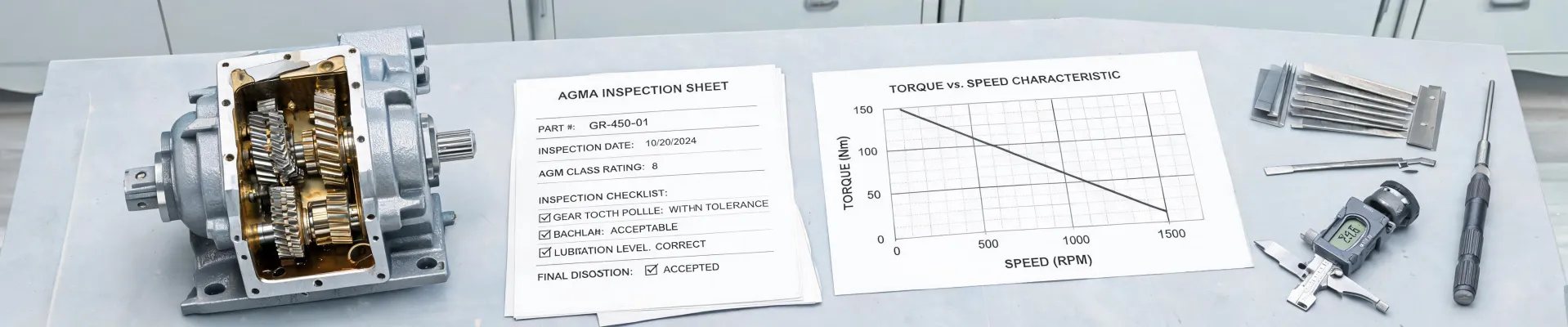
Our machine's motor ran continuously at 1,500 RPM through a 5:1 gearbox. A stepper motor would have been the wrong choice, and I almost bought one because of the price. It took understanding the torque-speed curve to see why—and why the original spec sheet was not arbitrary.
The Call That Changed My Mind: Boston Gear Charlotte
The breakthrough came from an old-fashioned thing: a phone call.
I changed my search to include a location. "boston gear charlotte" pulled up a motion control distributor about two hours away that carries the Boston Gear product line. I called, read the nameplate specs to a woman named Dana—I mispronounced "resolver" at least three times—and she routed me to their application engineer.
He asked questions I'd never have thought of:
- What's the load inertia at the output shaft?
- Is the motor operating continuous or intermittent duty?
- What voltage is the drive bus?
- What's the ambient temperature above the machine?
I could answer about half. But the point was clear: this was a person with engineering expertise who would rather talk me out of the wrong part than sell me the right one by accident.
"You shouldn't buy a motor from a photo and a price. Send me the nameplate, and I'll tell you what fits before you spend money."
He also sent me the Boston Gear 700 series catalog as a PDF—without making me create an account or sit through a demo video, which in 2025 felt almost suspicious. It covers speed reducers, worm gears, spur gears, bearings, and servo motors. Boston Gear has been around since the 1870s, and that catalog's depth reflects it.
We went with a Boston Gear servo motor and a matching gearbox. The engineer validated that the continuous torque and speed range met our spec. Total cost was about $2,100.
Meanwhile, I'd found a "compatible" generic motor online for $1,200. Same frame size, same connector, nearly half the price. I was strongly tempted. Then I read the reviews.
Multiple buyers reported the same story: "Worked for 40 minutes, then made a horrible noise." One said the shaft came loose after a week. The vendor couldn't provide a mechanical drawing or a torque curve. (I really should have checked the reviews before I even shortlisted it, but purchasing desperation is a real thing.)
The "savings" would have evaporated the first time that motor failed. In my opinion, that's the hidden price of the cheap option: downtime, rework, and damage to your credibility with your maintenance team.
The line was back up two days later. The Boston Gear motor has run since then without a problem—about 14 months as of today. I know that's not a long-term reliability study, and I'm not claiming divine intervention from the brand. But it's a lot better than 40 minutes.
What I'd Tell Another Non-Engineer Buyer
If you're reading this because you searched the same things I did—"servo motor sg90," "how fast can a stepper motor turn," "boston gear charlotte"—you're probably in the same position I was in: not an engineer, but suddenly responsible for an engineering purchase. Here's what I'd do differently, and what I'd do again.
- Start with the nameplate. Photo it before you search anything. Part number, torque, speed, frame size, voltage, connection type—all of it matters.
- Speed is meaningless without torque. A max RPM number doesn't tell you whether the motor can move your load. Ask to see the torque-speed curve.
- Hobby parts are a different universe. "Servo motor SG90" results are for RC planes and robot arms, not packaging lines. Filter them out and add "industrial" to your search.
- Call a local distributor. For us, that meant a Boston Gear distributor in Charlotte. The application engineer's questions were worth more than any product review I read.
- Cheap parts carry hidden costs. The $220 used stepper would have been days of lost production. The $900 savings on the generic motor would have lasted until the first machine cycle.
After that week, I created a "replacement parts cheat sheet" for the top ten critical components on our production line—a photo of each nameplate, a link to the right distributor, and a note on lead times. It took an afternoon, and the next breakdown will be a two-hour problem instead of a two-day one. That's what efficiency looks like when you're the person doing the buying.
One last thing. If you searched "boston gear" hoping for a Patriots jersey or a Red Sox cap: this is not that article. It happens to industrial buyers all the time—the search results mix us up with sports fans. (I once had to explain to our finance manager why I was looking at merchandise sites during work hours.) But if you searched "boston gear" because you need gearboxes, motor mounts, or a replacement servo motor, then you're in the right place. Just take a photo of the nameplate first.

Elena Markovic
Elena Markovic is an independent industrial motor and drive systems analyst covering induction motors, servo motors, stepper motors, and variable-frequency drives. She examines IEC 60034-30-1 efficiency classes, IEC 61800-9-2 drive-system losses, speed-torque curves, duty cycles, thermal limits, and feedback compatibility across operating envelopes. Her evidence-led guides help OEM engineers and plant teams select efficient motion packages, plan integration, and reduce commissioning risk.