-
Why This Comparison? A Buyer's Framework
-
What's a Stepper Motor? (And What Makes a Servo Motor Gearbox Different)
-
1. Torque and Speed: The Unexpected Answer
-
2. Precision: Open Loop vs. Closed Loop
-
3. Total Cost of Ownership: Purchase Price Is Only the Beginning
-
4. Maintenance and Reliability
-
So: Which One Should You Order?
-
A Note on Sourcing (and the Boston Gear Connection)
Quick note before we start: if you searched "work n gear boston" while looking for work clothes, this isn't that store. But if "gear" in the power transmission sense is what you actually needed—gearmotors, reducers, motion control components—you're in the right place. This article compares two of the most frequently ordered motion control options we source: stepper motors and servo motor gearboxes.
Why This Comparison? A Buyer's Framework
I'm the office administrator for a 140-person manufacturing company. I manage all the motion control and power transmission ordering—roughly $180,000 annually across 11 vendors. I report to both operations and finance, which means I get two questions daily: "Is it running?" from the plant manager, and "What did that cost?" from accounting.
When I took over purchasing in 2020, one question kept coming from our engineers: should we order a stepper system or a servo motor gearbox? At first I assumed that was an engineering decision and I'd just process whatever part number they gave me. Didn't take long to realize I needed to understand the difference myself. The spec sheets weren't helping anyone, and the wrong choice comes back as my problem—downtime, returns, budget overruns.
Here's the framework I use now: compare these systems on five dimensions—how they work, torque and speed behavior, precision, total cost, and maintenance. The right answer depends on what your machine actually does. Let's go through each.
What's a Stepper Motor? (And What Makes a Servo Motor Gearbox Different)
Let's answer the basic question first. A stepper motor is a brushless DC motor that moves in fixed increments. Send it a pulse, and it rotates a precise fraction of a turn—typically 1.8 degrees per step, so 200 steps per revolution. Send 100 pulses, it turns exactly 90 degrees. No sensor, no feedback loop. The motor's position is determined by counting pulses, and the math just works.
A servo motor is different. It spins continuously and relies on an encoder or resolver to know where the shaft is. The controller constantly compares the commanded position against the actual position and corrects in real time. Pair that servo motor with a speed reducer—the gearbox—and you've got what the industry calls a servo motor gearbox: high output torque plus closed-loop positioning.
Here's what I didn't understand as a new buyer: one isn't simply "better" than the other. A stepper motor is not a cheap, inferior servo. It's a different tool built for a different job profile.
1. Torque and Speed: The Unexpected Answer
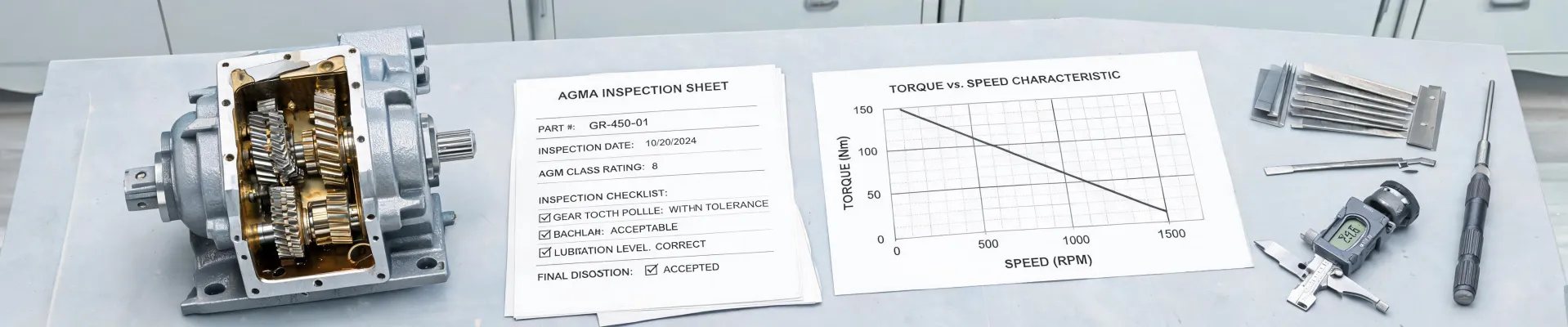
Most buyers assume the servo gearbox wins on torque. And it does, at higher speeds. But here's the nuance: a stepper motor produces its maximum torque at essentially zero speed. As RPM climbs, stepper torque falls off dramatically. A servo motor, by contrast, maintains near-constant torque across most of its speed range. That's the real difference, and it drives every practical decision.
We run a labeling machine that indexes at low speed with a constant, light load. A NEMA 23 stepper with a 5:1 gearbox handles it fine—well, handles it well enough; it's been running for two years without a hiccup. At about a third of the cost of the servo alternative.
We also have a conveyor infeed section that cycles rapidly all day, accelerating and decelerating constantly. We originally tried steppers there. They lost steps under acceleration. Every spreadsheet analysis said the stepper was cheaper, and my gut said this is the wrong application, but we tried it anyway (that's a $2,000 lesson in wasted labor and scrapped material). Swapped to a Boston Gear 700 series gearbox matched to a servo motor, and it's run reliably since.
So the practical rule: if your machine runs slow and the load is predictable, a stepper with a gearbox can deliver surprising torque. If you need speed plus torque—or the load varies mid-cycle—you want a servo motor gearbox.
2. Precision: Open Loop vs. Closed Loop
This is where understanding what a stepper motor really does matters. A stepper is open-loop: it assumes each pulse moved the shaft one step. In a clean, predictable environment, that assumption is solid. But if a jam happens, or the load suddenly changes, the motor can miss steps and never know it. The position drifts, and the machine keeps running—creating product waste that costs far more than the motor.
The servo motor gearbox, because of its encoder, doesn't have that blind spot. It senses any deviation and corrects immediately. If it can't correct, it faults out and stops the machine for human intervention. That's frustrating in production, but it prevents a thousand bad parts before anyone notices.
I'd rather explain one servo purchase to finance than explain a scrapped production batch to the plant manager. We had that exact event in 2023. Not my favorite month.
3. Total Cost of Ownership: Purchase Price Is Only the Beginning
Let's talk price. As of January 2025:
- A complete stepper system—motor plus driver—runs roughly $150 to $400 depending on NEMA size and torque rating.
- A servo motor with a matched gearbox starts around $600 to $1,200 for typical NEMA-compatible units, before the controller and cabling.
At first glance, that gap looks enormous. But purchase price isn't the whole story, and this is where I've learned to slow down.
Steppers are basically plug-and-play. Our technician can install and wire one in under an hour, no commissioning time. Servos need tuning: configure the driver, set gains, run through auto-tuning, iterate. That's easily half a day of labor. If I'm buying one unit for a stationary application, the stepper's total cost can genuinely be the lower figure.
The lowest quoted price is rarely the lowest total cost. That's true for motors, gearboxes, and every component in your plant.
(Side note on documentation: we once ordered a gearmotor from a new supplier because the quote came in 25% below our regular distributor. The unit worked fine, but the invoice was a handwritten receipt with no line items. Finance rejected it, and I ate $780 out of the department budget. Now I verify invoicing capability before placing any order.)
4. Maintenance and Reliability
I read every maintenance report because I'm the one ordering replacements. Here's what the data across our plant says.
Stepper motors: no brushes, no encoder, extremely simple. The failure mode we see most often is the driver overheating in a crowded enclosure during summer. Cheap fix, but it causes thermal shutdown mid-shift. Ventilation should be part of the installation decision.
Servo motors: modern units are brushless and quite reliable, but the encoder adds a failure point. We had one encoder fail on a high-vibration application after three years. The replacement part was about 15% of the motor cost, and the downtime hurt more than the part.
Gearboxes themselves—whether a Boston Gear 700 series inline reducer or any quality spur or worm gearbox—generally outlast the motor if you respect the torque rating and change the oil when the manual says to. We had a worm gearbox input seal leak once. The seal replacement was cheap; the cleanup and lost production weren't.
So: Which One Should You Order?
Here's the selection logic I use now. Adapt it to your application:
Order a stepper motor system when:
- Your load is relatively constant—no sudden jams or dramatic load shifts
- Output speed is low to moderate, roughly under 600 RPM after gearing
- You want simple wiring and minimal startup time
- The consequence of a missed step is just re-running a part, not scrapping a batch
Order a servo motor gearbox when:
- You need speed and torque in the same cycle
- Load varies, reverses, or accelerates quickly
- Absolute position certainty matters (closed-loop feedback is non-negotiable)
- The machine runs continuously, so reliability and efficiency dominate the math
And honestly—sometimes the answer is both. You can have a stepper on a simple indexing axis and a servo gearbox on the high-speed axis of the same machine. That's not indecision; that's matching components to function.
A Note on Sourcing (and the Boston Gear Connection)
As for where to source these—this is where brand matters more than I expected as a buyer. Boston Gear has been making power transmission components since 1877. That sounds like trivia, but in practice it means the catalog is broad enough that you don't need six vendors for six components. You can order Boston Gear motors, 700 series speed reducers, spur and worm gears, bearings, and linear actuators through the same supply channel. The cross-reference data on older machinery is genuinely useful when you're replacing parts on a 20-year-old machine.
We also source specialty items like universal joints from a distributor in Clayton, GA—they stock odd sizes the big catalogs don't. It's a smaller shop, but for a U-joint on our packaging line trimmer, the local knowledge beats the national supplier lead time every time. The "local is always faster" assumption comes from an era before modern logistics. Today, a well-organized remote distributor can beat a disorganized local one. But for true specialty parts, depth of knowledge still wins.
Last year, a new supplier quoted us 20% under the usual price on a motion control package. The spreadsheet said yes. But their email replies kept getting slower—two days, then four, then a week. Something felt off, so we walked. Turns out their quoted lead time of 12 weeks was equally out of step with the market's 4-6. The slow replies were a preview of slow delivery.
The Boston-area connection runs deeper than the name. The distribution network covers the Northeast well, and for B2B buyers, "will they answer the phone when a line is down" matters more than next-day shipping.
Bottom line: steppers and servo gearboxes are both legitimate tools. Understand the speed-torque profile of your application, add up the total cost including setup and downtime, and choose based on real operating conditions—not the spec sheet's flashiest number.
If you're still unsure, get your load data together (weight, speed, duty cycle) and ask your supplier to quote both options. An informed customer asks better questions and makes faster decisions. And if a supplier won't take ten minutes to explain the difference, that tells you exactly how they'll handle things when a part fails at 4:45 PM on a Friday.

Elena Markovic
Elena Markovic is an independent industrial motor and drive systems analyst covering induction motors, servo motors, stepper motors, and variable-frequency drives. She examines IEC 60034-30-1 efficiency classes, IEC 61800-9-2 drive-system losses, speed-torque curves, duty cycles, thermal limits, and feedback compatibility across operating envelopes. Her evidence-led guides help OEM engineers and plant teams select efficient motion packages, plan integration, and reduce commissioning risk.