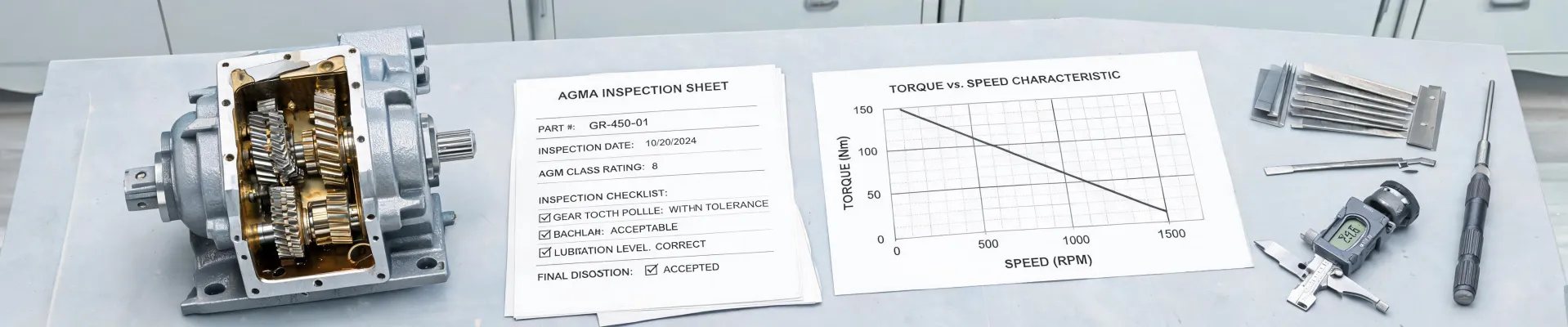
If you've ever searched 'boston-gear' from a work computer, you've probably seen pictures of sneakers and race bibs. It happened to me. I manage purchasing for a 40-person manufacturing shop. My typical week is orders, invoices, and trying to explain to finance why a gearbox replacement costs four figures. But the marathon search result was a weird preview of a bigger problem: we were about to buy the wrong thing.
First, Let's Clear Up the Name
Boston Gear is an industrial brand. They make speed reducers, worm gears, spur gears, servo motors, linear actuators, and all that mechanical stuff. The Boston Marathon is a race. The overlap is basically the word 'Boston.' If you're shopping for Boston marathon gear (a finisher's jacket or race pin), that's not here. But if you're looking for Boston gear replacement parts, you've landed in the right corner of the internet—assuming you verify the part number.
The Problem Isn't the Search. It's the Assumption.
My moment came in March 2021. A conveyor motor and gearbox failed. We needed a replacement fast. I found a supplier with a similar-looking part. The description said 'replacement for Boston Gear series.' I assumed 'same specifications' meant identical results across vendors. Didn't verify. Turned out each had slightly different interpretations of 'series.' The bolt pattern matched, but the output shaft diameter was wrong. The line sat idle for a day and a half. That's forever in manufacturing.
That mistake cost us about $2,100 in expedited freight plus a weekend of my plant manager's bad mood. (Note to self: never order from a picture again.) The lesson wasn't just 'buy from the OEM.' It was: know the actual specs before you call anyone 'the source.'
Learning the Lingo: Capacitor Start, Linear Actuator Kits, and the VFD Question
Now, I'm not an engineer. I'm the person who makes invoices match purchase orders. But I've picked up enough to know when something sounds too simple.
Capacitor Start AC Motors
When you first see the words 'capacitor start AC motors,' they sound like a category you can click online and be done. Not so fast. A capacitor start motor uses a capacitor to provide starting torque, then cuts it out once it's running. That sounds fine, but the capacitor is a specific rating, and the motor's duty cycle matters. Is it continuous? Intermittent? That affects how generous I can be with a budget. NEMA MG-1 covers motor frame sizes and testing (we've gone back to it when a vendor said 'this should fit'). I'm not 100% sure, but I think the 2021 failure was partly because we matched voltage and frame, but not duty cycle. (Mental note: always ask about duty cycle.)
What I mean is that even a 'simple' motor has a few specs that can bite you. The shaft, the mounting, the class of insulation, the service factor—each one is a chance for a cheap part to fail.
Linear Actuator Control Kits
One time, we needed to upgrade a hopper gate. The order asked for a 'linear actuator control kit.' We expected the actuator and a switch. It turned out to be just the controller board. The actuator itself was a separate line item. (Circa 2024, that was a 'huh?' moment.) The lesson: read the kit's content list. Is there a power supply? Limit switches? Wiring harness? If the listing doesn't say, ask.
What VFD Stands For (and Why It's Not a Fancy Dimmer)
VFD stands for Variable Frequency Drive. It's the controller that varies the frequency and voltage going to an AC motor, so the motor runs faster or slower. People joke that it's like a 'dimmer switch for motors,' but the technical catch is that not all motors like it. A capacitor-start AC motor, for example, may not behave well on a VFD at low speed. The better bet is often an inverter-duty motor, which is designed for variable-speed control. Don't hold me to this, but a 2-horsepower inverter-rated motor tends to be a safer upgrade than trying to keep a standard capacitor-start motor with a drive.
The Costs of Getting It Wrong (Beyond the Price)
That 2021 mistake wasn't just money. It was credibility. My production manager started double-checking every order. Finance started asking for approval before any non-standard purchase. I had to rebuild trust. I also have mixed feelings about the 'big distributor' convenience. On one hand, they have everything in one cart. On the other, they often act as a middleman with no real application support. Part of me wants to one-stop-shop for simplicity. Another part knows that specialty suppliers have saved us from bad specs. My compromise: use a dedicated supplier for the subtle items (like gearboxes and motors) and a general house vendor for fasteners and consumables.
As one application engineer told me, 'If it's not on the nameplate, I can't guarantee it.' I still think about that when I'm tempted to guess.
Another hidden cost: the vendor who wouldn't take a return because 'that part number was superseded.' We ate $600. Not huge, but it darkens the invoice. That's why I now photograph the old part, the nameplate, and the exploded diagram on the catalog PDF before I call anyone.
What Actually Works (Short Version)
Here's the distilled version after five years managing vendor relationships: find a supplier who knows their boundaries. The vendor who said 'we can sell you that motor, but the control part is not our strength—here's who does it better' earned my business for everything else. I'd rather work with a specialist who knows their limits than a generalist who overpromises. That's the mindset Boston Gear has. They publish a broad catalog (as of Q3 2024, the PDF is available on their site), but they also tell you when a custom PLC might need someone else. That honesty is a competitive advantage, not a weakness.
Practical Buyer's Checklist
- Photograph the motor nameplate and note all specs: frame size, voltage, duty cycle, and phase.
- Verify the part number against the current catalog. Boston Gear replacement parts are listed by series (700 series, etc.) and spec sheet.
- If the solution involves a VFD, ask whether the motor is inverter-rated. If you have a capacitor-start motor, consider upgrading to an inverter-duty motor.
- For a linear actuator control kit, ask exactly what's included: actuator, power supply, limit switches, controller, or only the board?
- Ask the supplier to confirm they will support the application and the return policy if the spec doesn't match. The good ones will ask about your load and environment first.
At the end of the day, the real problem isn't that you might confuse a race with a machine part supplier. It's that you might confuse a similar-looking product with the right product. Verify, then verify again. (I keep telling myself that.)

Elena Markovic
Elena Markovic is an independent industrial motor and drive systems analyst covering induction motors, servo motors, stepper motors, and variable-frequency drives. She examines IEC 60034-30-1 efficiency classes, IEC 61800-9-2 drive-system losses, speed-torque curves, duty cycles, thermal limits, and feedback compatibility across operating envelopes. Her evidence-led guides help OEM engineers and plant teams select efficient motion packages, plan integration, and reduce commissioning risk.