-
1. What's a stepper motor?
-
2. What does a servo motor controller do?
-
3. Are small DC motors different from stepper motors?
-
4. Is Boston Gear Works the same as Boston Gear?
-
5. I searched Boston Celtics gear near me. Did I land in the wrong place?
-
6. Do I need a gearbox or a gearmotor?
-
7. How do I know if a motor controller is compatible with my motor?
-
8. What's the best way to find a replacement for an old Boston Gear part?
If you've typed boston-gear, boston gear works, or boston celtics gear near me into a search bar today, you're not alone. I manage purchasing for a small automation shop—roughly 60 to 80 purchase orders a year, most of them motion control parts. When I took over in 2020, I knew enough to order a gearbox, but not enough to explain a stepper motor to anyone. I've learned by asking questions, reading datasheets, and making a few expensive mistakes.
Here are the questions I get most often, plus the ones I wish I'd asked earlier.
1. What's a stepper motor?
A stepper motor is a brushless DC motor that moves in fixed angular steps. A common one takes 200 steps per revolution, so each step is 1.8 degrees. You send pulses to the drive; each pulse advances the motor one step. Because the controller knows how many pulses it sent, it can position the motor without an encoder—that's why it's called open-loop.
It's tempting to think a stepper is just a small DC motor with better manners. But the control method is very different. A regular small DC motor spins continuously when you apply power; a stepper needs a drive that sequences current through its windings. It can hold position when energized, which is why steppers show up in linear actuators, feeders, 3D printers, and indexing machines.
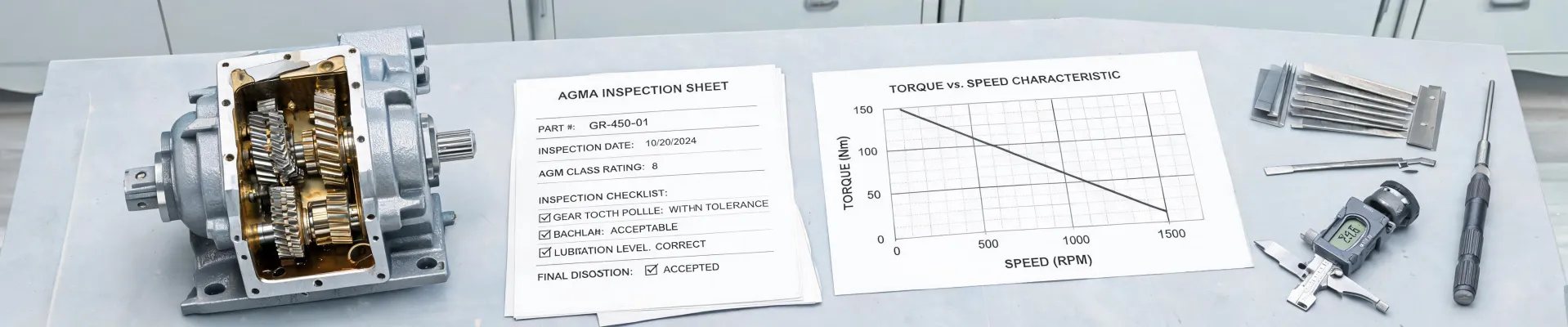
One thing I still see people miss: a NEMA 17 or NEMA 23 frame is just a mounting size, not a torque rating. A bigger NEMA number doesn't automatically mean stronger. Check the torque-speed curve. If I remember correctly, available torque drops off fairly fast at higher step rates for most steppers.
2. What does a servo motor controller do?
A servo motor controller is the part that compares what you want the motor to do with what the motor is actually doing. It takes a command—position, speed, or torque—reads feedback from an encoder or resolver, and adjusts current to the motor until the measured value matches the command. That closed loop is the main difference between a servo system and a stepper system.
I made a painful mistake here a few years ago. I ordered a servo motor and a separate controller without checking feedback type. The motor had a resolver; the controller expected an incremental encoder. It wasn't a happy marriage. We had to order a different controller and lost a week of production. Now I ask for a matched motor and controller kit, or at least a confirmation that the feedback signals are compatible.
Most buyers focus on torque and speed. The question they should ask is: what supply voltage, feedback, and communication protocol does this controller need? The phrase works with all servo motors is usually an oversimplification.
3. Are small DC motors different from stepper motors?
Yes, mostly in the way they are controlled. Small DC motors—brushed or brushless—are continuous rotation motors. Apply DC voltage and they spin. Speed can be adjusted with voltage or a controller, but the motor doesn't know where it is.
A stepper motor is technically a brushless DC motor with magnetic teeth that allow it to move incrementally. But from a purchasing standpoint, you don't order a stepper the same way you would order a small DC gearmotor. A stepper needs a stepper drive that supplies current pulses. A standard DC speed controller won't step it.
So when people search for small DC motors, I assume they want something simple: a fan, a pump, a conveyor drive, or a gearmotor. If they need positioning, I point them to a stepper or servo system.
4. Is Boston Gear Works the same as Boston Gear?
Yes. The brand we use today was called Boston Gear Works for a long time. Old nameplates, manuals, and some catalog pages still say Boston Gear Works. The current brand name is Boston Gear, and the product line includes gearboxes, 700-series speed reducers, spur and worm gears, motors, bearings, and linear actuators.
If you're searching for boston gear works on a distributor site and can't find anything, try removing the word works. If you have an old catalog number, that's even better. I've spent too much time searching for a part with the wrong name. It's one of those details every long-time maintenance person knows, but new buyers don't.
The company has gone through a few owners over the years, but the Boston Gear engineering history is still built into the product line. That's why application engineers can usually cross-reference legacy part numbers.
5. I searched Boston Celtics gear near me. Did I land in the wrong place?
Probably. If you're looking for a Celtics sweatshirt, a jersey, or a hat with the leprechaun logo, you want the NBA store or a local sports shop. Gear can mean fan merchandise, and Boston Celtics gear is a normal search during basketball season.
If you actually need motion control parts, the correct search is Boston Gear distributor near me. Boston Gear sells through distributors across the U.S., and the manufacturer's website has a locator. The product line doesn't change based on your ZIP code.
I've had a few funny search moments in this job, but I've never confused a gearmotor with a jersey. My expense report would not survive that.
6. Do I need a gearbox or a gearmotor?
A gearbox—also called a speed reducer—is a separate component that mounts to a motor shaft. It reduces speed and increases torque. A gearmotor is a motor and gearbox combined into one unit. Both are common in the Boston Gear catalog.
If you already have a motor and want to change output speed or torque, a separate gearbox might make sense. If you're designing new equipment or replacing the whole drive, a gearmotor is often easier to install and source.
There's a nuance that doesn't show up in most brochures: service factor and duty cycle. You can match bolt patterns perfectly and still have problems if the reducer is undersized for an impact-loaded conveyor. I can't calculate that for you, but a good application engineer can. If a supplier says this gearbox fits anything, ask for a service-factor check.
7. How do I know if a motor controller is compatible with my motor?
Start with motor type. A brushed DC motor needs a simple DC drive; a brushless DC motor needs a controller that handles Hall sensors or sensorless commutation; a stepper needs a stepper drive; a servo motor needs a servo drive matched to its feedback and electrical characteristics. There is no universal one-size-fits-all box.
Then check voltage, current, and feedback type. The controller's continuous current rating must match the motor's actual demand, not just the nameplate if the load is heavy. A controller that's undersized will go into overcurrent protection and look like a motor failure.
This is where a vendor's honesty matters most. I'd rather hear that's not the controller for this motor than get a vague promise that it will work. The supplier who tells me where a component won't work earns more of my budget. And I'm not a lawyer, but the FTC's advertising guideline is simple: claims should be truthful and substantiated. A vague universal compatibility claim deserves a follow-up question.
8. What's the best way to find a replacement for an old Boston Gear part?
Write down everything on the nameplate first: catalog number, ratio, frame size, and any date code. If you have a photo of the nameplate, take it before you make a call. The person on the other end can often identify the series faster from a photo than from a verbal description.
Then use the current Boston Gear catalog or contact a distributor. Many legacy numbers can be cross-referenced if the basic frame size hasn't changed. But be ready for the possibility that an exact model was retired. In that case, the envelope dimensions, shaft configuration, and mounting style are the useful details. That's enough for an application engineer to recommend a current equivalent.
One last lesson from a purchase order I wish I could redo: double-check the ratio before submitting. I once ordered a replacement reducer with the same frame but the wrong ratio because I read the tag wrong. It was a small thing, but it taught me to treat every nameplate like the invoice, because the machine definitely notices.

Elena Markovic
Elena Markovic is an independent industrial motor and drive systems analyst covering induction motors, servo motors, stepper motors, and variable-frequency drives. She examines IEC 60034-30-1 efficiency classes, IEC 61800-9-2 drive-system losses, speed-torque curves, duty cycles, thermal limits, and feedback compatibility across operating envelopes. Her evidence-led guides help OEM engineers and plant teams select efficient motion packages, plan integration, and reduce commissioning risk.