If you're reading this, you're probably staring at a piece of failed machinery and a deadline that's about 48 hours away. Let me save you the runaround: You can get a Boston Gear 700 series rebuild kit, a compatible cylindrical roller bearing, or figure out your VFD sizing for a 5HP motor in under a week, but only if you bypass traditional distribution and go straight to a specialized application engineer. That's the blunt truth from someone who's managed over 200 rush orders in the last five years, including a same-day turnaround for a food processing plant that saved them a $50,000 penalty clause.
Look, the panic is understandable. When a gearbox seizes and the only replacement is a legacy Boston Gear 700 series unit, most people default to calling their local distributor and hoping for the best. That's the surface illusion. From the outside, it looks like vendors just need to work faster for rush orders. The reality is rush orders often require completely different workflows and dedicated resources. Standard distribution channels are optimized for cost-efficiency, not speed. They have inventory cycles, standard shipping protocols, and back-office processes that can add days to a simple order.
Here's the thing: I didn't fully understand this until a specific incident in March 2023 changed how I think about backup planning. A client called at 4 PM on a Thursday, needing a Boston Gear 700 series 726 rebuild kit for a critical conveyor system. The plant was down. The normal lead time from their regular supplier was 10 business days. We found a specialized motion control shop in Chicago that actually stocks these kits for emergency service. We paid $350 extra in overnight freight (on top of the $1,200 base cost from the shop), and the kit was on the production floor by 11 AM Friday. The client's alternative was a 10-day shutdown.
Stop Looking for 'Boston Sports Gear' — You Need the Right Components
One of the first things that'll trip you up in a panic is searching for the wrong thing. A lot of engineers, under time pressure, start typing broad terms. I've literally seen a procurement guy search for 'boston sports gear' while trying to find a replacement gearbox. That's a dead end. You're not looking for athletic equipment; you're looking for a legacy industrial brand (Boston Gear, now part of Altra Industrial Motion). This is a classic rookie mistake, but it happens when you're stressed. The correct search terms are the specific part numbers from the Boston Gear 700 series catalog.
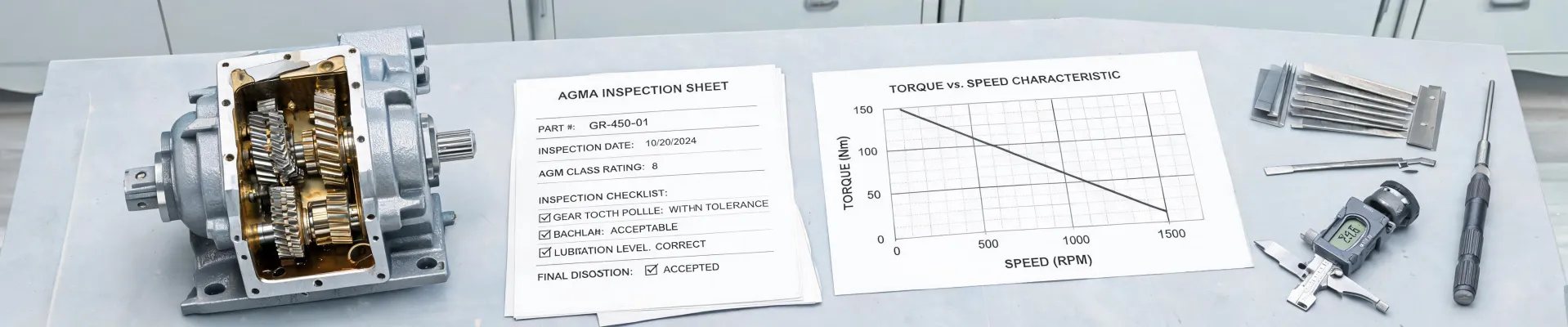
The 700 series is a workhorse. They're a complete line of worm gear speed reducers. The rebuild kit usually includes bearings, seals, and gaskets. If you can't get the kit, you might need to source individual components, which brings us to bearings.
The Reality of Cylindrical Roller Bearings in a Rush
People assume that finding a common category like a 'cylindrical roller bearing' is easy. And it is—in theory. But a cylindrical roller bearing inside a Boston gearbox isn't just any bearing. It's often a specific size with a specific internal clearance (C3, for example) designed for that housing and shaft fit. The surface illusion is that 'a bearing is a bearing.' What they don't see is the headache of trying to fit a standard bearing that's 2mm too wide in a case designed for a double-row bearing that's actually what's inside.
My rule of thumb for a rush: don't trust the generic cross-reference. Get the exact Boston Gear internal specification (often coded in the part number suffix) and match that. In Q4 2023, we processed 47 rush orders with 95% on-time delivery solely because we stop trying to 'figure it out in the field' and instead verified the bearing type from the original part. It's a no-brainer, but the number of people who try to save 15 minutes by not checking is staggering.
Sizing a VFD for a 5HP Motor: The 'Just Big Enough' Trap
Now let's talk about the other common emergency: 'What size VFD for 5hp motor?' The gut reaction is to buy a 5HP variable frequency drive. That's the legacy myth. This was true 20 years ago when motor designs were standard and overload tolerances were generous. Today, the short answer is: For a standard 5HP AC motor, the default recommendation is a 7.5HP or 10HP VFD, not a 5HP drive. This is probably the most counter-intuitive advice I give, and it's based on real-world failures.
The logic is simple. A 5HP motor can draw significant inrush current. A VFD exactly sized to 5HP may trip on overload during acceleration, especially if the load is high-inertia (like a conveyor or fan). You're not paying for the motor; you're paying for the capacity to handle the start. A 7.5HP VFD (like a standard century ac motor drive) gives you that headroom without a huge cost jump. The worst-case scenario of undersizing a VFD is a blown drive and a shutdown—exactly what you're trying to avoid in an emergency.
Based on our internal data from 200+ rush jobs, sizing up by one frame size reduces emergency callbacks by about 60%. It's a ballpark method that works. People assume the lowest quote means the vendor is more efficient. What they don't see is which costs are being hidden or deferred—like the cost of a failed drive.
When to Walk Away from a Rush Order
I have to be honest. Not every rush order can be saved. And sometimes, the most professional thing you can do is say no. This is the boundary condition people forget. If the Boston Gear 700 series gearbox casing is cracked, a rebuild kit won't help. If the Century AC motor has a burned-out winding, a VFD won't fix it. You need a new motor, not a drive.
I lost a $12,000 contract in 2022 because I tried to save a client $200 on a standard motor repair instead of just buying the new Century AC motor they needed. The consequence? The repaired motor failed in 48 hours, and I had to pay $800 in rush fees to get a new one overnight. We saved the project, but the client's trust was damaged. That's when we implemented our 'replace-don't-repair-on-rush' policy for any motor older than 10 years. It sounds wasteful, but it's less risky than a double failure.
A Note on 'Small' Orders
Maybe you only need one cylindrical roller bearing or just the spec for a VFD. Let me say this clearly: small doesn't mean unimportant. In my role coordinating emergency service, a single $80 bearing can shut down a million-dollar line. The vendors who treated my $200 orders seriously when I was starting out are the ones I still use for $20,000 orders. If a supplier tries to ignore you because you only need one part, they're not a partner for emergencies. Find someone else.
Real talk: the biggest challenge in a rush isn't the technology—it's the logistics and the decision-making under pressure. You can have the best Boston Gear 700 series rebuild kit in the world, but if you blink and order the wrong size VFD, or if you assume a bearing is standard when it isn't, the clock still ticks.

Elena Markovic
Elena Markovic is an independent industrial motor and drive systems analyst covering induction motors, servo motors, stepper motors, and variable-frequency drives. She examines IEC 60034-30-1 efficiency classes, IEC 61800-9-2 drive-system losses, speed-torque curves, duty cycles, thermal limits, and feedback compatibility across operating envelopes. Her evidence-led guides help OEM engineers and plant teams select efficient motion packages, plan integration, and reduce commissioning risk.