Here's the thing: ordering the wrong linear bearing size isn't a rookie mistake—it's a system failure. I learned this the hard way when I ordered what I thought was an LM8LUU bushing and ended up with a part that didn't fit the rail. The bearing itself was fine. The spec wasn't.
I'm an office administrator for a 120-person company. I manage all the MRO and motion control component ordering—roughly $180,000 annually across 8 vendors. I took over purchasing in 2020. That's when I found out that 'standard sizing' doesn't mean the same thing to every supplier.
What I ordered vs. what I needed
I needed a replacement linear bearing for a custom assembly on our packaging line. The old part was stamped 'LM8LUU.' Easy, right? I found a listing for LM8LUU linear bearings at a price that was $2.40 cheaper per unit than my regular vendor. Ordered 10. Total savings: $24. Felt good about it.
Then the parts arrived. They fit in the box. They looked right. But they didn't fit the 8mm rail. The inner diameter was off by about 0.1mm. Not visible to the naked eye. But try sliding that onto a hardened shaft—it binds, it scores, it fails.
The kicker? The bearing was technically 'LM8LUU' per the manufacturer. But their 'LUU' meant 'long, double-row, with a different internal clearance spec.' My original part was a standard clearance. That 0.1mm difference made it trash.
I ate the cost. $18.50 per bearing out of my department budget. And I had to explain to my operations manager why a simple replacement turned into a three-day delay while we sourced the right one from our regular distributor.
Why this matters beyond my small mistake
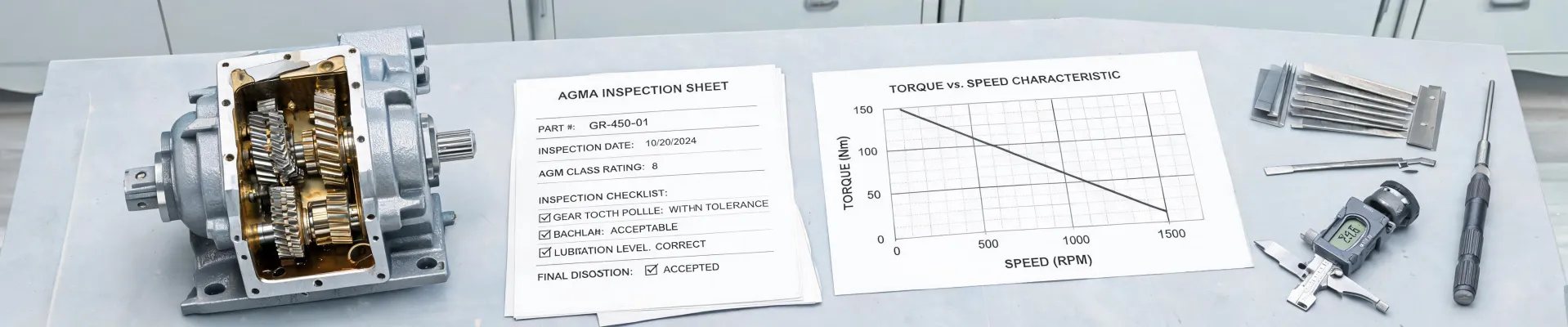
If you're specifying motion components—whether it's a Boston Gear 300 series gearbox, a replacement timing belt for your Plano system, or a brushless servo motor for a new build—part numbers are not enough. You need the full spec sheet.
This is where the Boston Gear catalog saved me later. When I started looking at their 300 series speed reducers for a different project, I noticed something: they list the exact mounting dimensions, shaft diameters, and tolerance classes right in the catalog PDF. Not just the model number. Not 'compatible with.' The actual dimensions. That's what you need.
- Model number alone: Tells you what someone else thought it was.
- Model number + spec sheet: Tells you exactly what you're getting.
- Model number + spec sheet + application context: Tells you if it'll work.
What I do differently now (and what you should do)
I still kick myself for not cross-referencing the spec before ordering. If I'd spent 10 minutes comparing the internal clearance spec to the original part, I'd have saved $185 and three days of headache. Here's my process now:
- Get the original part's exact dimensions. Measure it. Don't trust the stamp.
- Cross-reference the replacement with the manufacturer's official catalog. Boston Gear posts their 700 series and 300 series specs online. Use those.
- Verify the tolerance class. For linear bearings, LM8LUU can mean different clearance grades (C0, C1, C2, etc.). Same number, different fit.
- Buy from a distributor who stocks the OEM equivalent first. That's where having a relationship with a supplier matters. They already know what fits your old equipment.
Look, I'm not saying you should never buy a knock-off or a generic replacement. I'm saying if you don't know the exact spec you're replacing, you're gambling. And the house always wins—the house being the cost of downtime, reordering, and explaining to your boss why the $8 part now costs $200 in hidden expenses.
This was accurate as of early 2025. The motion control market changes fast, especially with supply chain shifts. Verify current catalog specs and pricing before you place an order. Most distributors, including the ones stocking Boston Gear, will pull the exact spec sheet for you in five minutes if you ask. That's the easiest insurance policy you'll ever buy.

Elena Markovic
Elena Markovic is an independent industrial motor and drive systems analyst covering induction motors, servo motors, stepper motors, and variable-frequency drives. She examines IEC 60034-30-1 efficiency classes, IEC 61800-9-2 drive-system losses, speed-torque curves, duty cycles, thermal limits, and feedback compatibility across operating envelopes. Her evidence-led guides help OEM engineers and plant teams select efficient motion packages, plan integration, and reduce commissioning risk.