I've been managing procurement for a mid-size packaging machinery builder for just over six years. My annual motion control budget is roughly $180,000, and I've documented every order in a cost tracking spreadsheet that I have no intention of ever making public. So when I say a particular mistake keeps showing up in our invoices, I'm not guessing.
The mistake starts with a question like 'How fast can a stepper motor turn?' I've heard it from engineers, from buyers, and from managers who wanted a one-line answer to put on a project plan. It sounds like a spec question. It's really a budget question.
The Wrong Question Sounds Right
The same thing happens with Volvo timing belt replacement. Someone wants to know how long it takes. But the real answer is 'it depends on what's connected to it, what the last mechanic did, and whether you're planning to keep the car another 100,000 miles.' The number isn't the problem. The context is.
Why Datasheet Speed Is the Wrong Starting Point
A stepper motor can spin at 3,000 RPM if it's turned on with no load attached. That metric sounds impressive. It's also almost useless in a real machine. At that speed, available torque drops toward zero. You're not buying a motor you can use; you're buying a motor that can spin a shaft with nothing on it.
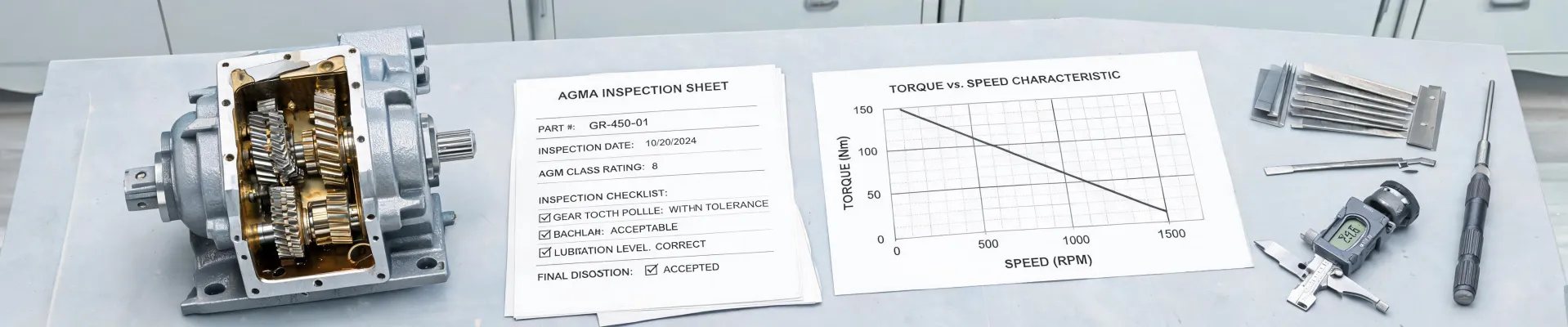
What you actually need is torque at the speed your process runs. That's usually stated in a torque vs. speed curve. That curve is the most underused document in motion control procurement. I've watched sales reps skip past it and buyers not ask to see it.
Speed Is Not Torque
When I say 'fast,' I do not mean a no-load speed. I mean the usable speed where the motor still has enough torque for the load. For a short-cycle indexing application, a properly sized stepper motor with a gearbox can do the job beautifully. But if you need continuous torque at a higher RPM, a 3 phase AC motor with a reducer is often cheaper, simpler, and more reliable than a stepper pushed to its edge.
I've lost count of how many times someone said 'we need a stepper because we need precision,' when what the machine actually needed was a gearmotor with an encoder. A 3 phase AC motor with a Boston Gear box can give you repeatable positioning at a lower total cost than an oversized stepper system. That's not a knock on steppers. It's a reminder that the motor is one component in a system.
Inertia Is the Hidden Budget Killer
The counterintuitive part is inertia. Two loads can have the same top speed and the same cycle time, but completely different inertia. High-inertia loads make motors look weaker than they are on paper. The motor isn't bad; the mismatch is.
When inertia is high, people often oversize the motor to compensate. Then they add a bigger gearbox, a bigger drive, a bigger electrical cabinet. The cost compounds. I've seen projects where the 'solution' was a motor twice as big as needed because nobody checked the reflected inertia.
Duty Cycle Changes Everything
Speed matters less than how long the motor has to hold that speed. A stepper can sustain a certain torque for a few seconds. The same motor, if you ask it to hold position for hours, will heat up. Heat is the enemy. The real limit on how fast can a stepper motor turn and how long it can keep doing it is thermal, not mechanical.
So the question shouldn't be 'what's the max RPM?' It should be 'what's the worst-case cycle, and how much heat does that generate?'
The Cost of Solving the Wrong Problem
This isn't academic. Two years ago, I approved a motor package based on a peak speed number. The machine failed during factory acceptance testing because it couldn't hold torque when the load was applied. The vendor said the motor met the stated speed. Technically, it did. Practically, we had to redesign the drive section.
I still kick myself for not asking for the torque curve before signing the PO. The rework cost us about $4,200—maybe $4,800 if you count the three days of lost assembly time. That's not a catastrophic number, but it was entirely avoidable.
I also remember the opposite. A few months later, I almost ordered a NEMA 23 motor because the sales rep said 'it'll handle it.' I asked to see the torque curve at our operating speed. At 2,000 RPM, the motor had about 15% of its stall torque. Dodged a bullet there. We switched to a 3 phase AC motor with a 10:1 Boston Gear box and never looked back.
The Real Cost Is Downtime and Rework
When a motion system is undersized, the symptoms aren't always dramatic. Sometimes the motor just runs hot. Sometimes the position drifts. Sometimes the machine trips a fault at 2 a.m., and the line stops until a technician finds the problem.
If you're running a single packaging line, one unplanned stop can cost more than the motor itself. I've seen a 'cheap' motor failure turn into a $1,200 service call when the total cost of the replacement part was $340. The lower-priced option was the more expensive choice.
The issue isn't quality—it's fit. An expensive motor that's the wrong size is worse than a reasonable motor that's properly sized. You cannot solve a system mismatch by spending more money on the same mismatched specification.
What I'd Do Differently (And What I'd Recommend)
I'm not saying you should ignore speed. I'm saying you should start with the load and the duty cycle, then work backwards to speed.
- Define the worst-case torque, not the average.
- Define the duty cycle: starts per hour, holds per cycle, ambient temperature.
- Define the inertia ratio between the motor and the load.
- Then, and only then, look at speed.
For moderate-duty industrial applications, Boston Gear boxes are the kind of component I can spec without losing sleep. Their published rating tables are conservative, and their online catalog makes it easy to compare gear ratios. If you're near the Boston Gear Charlotte office, talking to an application engineer in person has saved me more than once. They know their product line, and they don't try to sell you the biggest option.
For continuous high-torque applications, a 3 phase AC motor with a gearbox is often the better bet than trying to push a stepper to its upper RPM range. I've built a small checklist in our cost tracking system: torque at speed, reflected inertia, duty cycle, thermal rise, and total installed cost. That checklist has eliminated most of our avoidable rework.
When This Approach Might Not Work
I need to be honest about the limits of my experience. We're a mid-size builder with batch production and short cycles. If you're running a continuous process that never stops, or you have a high-precision application with very tight tolerances, this advice is not enough. That's when you should call an actual applications engineer, not rely on a procurement manager's shortcut.
The point is not to make every motor question feel complicated. It's to make sure you're solving the real problem. The next time someone asks how fast can a stepper motor turn, I'd ask them what they're doing with the last 20% of the torque curve. The answer will tell you more than any speed rating.

Elena Markovic
Elena Markovic is an independent industrial motor and drive systems analyst covering induction motors, servo motors, stepper motors, and variable-frequency drives. She examines IEC 60034-30-1 efficiency classes, IEC 61800-9-2 drive-system losses, speed-torque curves, duty cycles, thermal limits, and feedback compatibility across operating envelopes. Her evidence-led guides help OEM engineers and plant teams select efficient motion packages, plan integration, and reduce commissioning risk.