-
Prevention or cure: how I review Boston Gear motion control choices
-
Bost-Bronz cylindrical impregnated bearings vs. plain bronze
-
Speed reducers: right-sized vs. "it still turns"
-
Kart universal joints: the right part vs. the bargain bin
-
What happens when a linear actuator fails—and how to catch it first
-
When prevention is worth it, and when cure is acceptable
Prevention or cure: how I review Boston Gear motion control choices
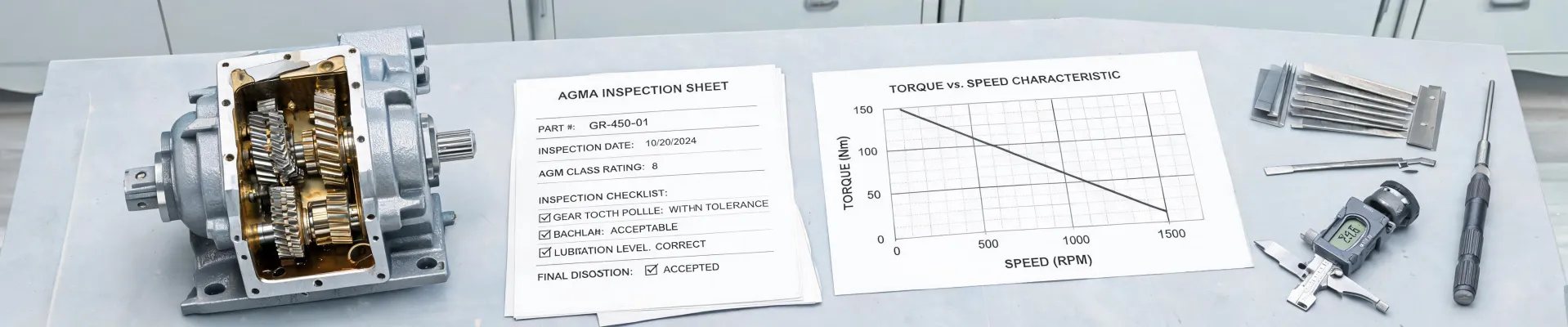
I didn't set out to be the person who rejects other people's work. But four years as a quality and brand compliance manager for a motion control operation means that's most of my job. I review 200+ unique production lots a year, verify part numbers, measure bores, and sign off before products get shipped to customers. I've rejected around 7% of first deliveries in 2024, mostly for packaging flaws and spec drift on vendor-supplied components.
The mental model I keep coming back to is prevention versus cure. It sounds obvious, but most companies don't act like it. They buy the wrong speed reducer, skip the better bearing, use a random universal joint instead of the right one, and then wonder why the linear actuator fails after eleven months. This post compares the preventive path with the cure-based path—from the quality side of a Boston Gear supplier operation.
Bost-Bronz cylindrical impregnated bearings vs. plain bronze
I started paying attention to porous bronze bearings when we audited a returned drive assembly in Q1 2024. The part was a Boston Gear Bost-Bronz cylindrical impregnated bearing. It looked fine, but the shaft was scored. That's unusual—Bost-Bronz bearings are designed to carry their own lubricant in the pores of the bronze structure. It wasn't a bearing quality problem. It was a mounting problem. The housing fit had too much interference, so the bore collapsed slightly and grabbed the shaft.
Here's the difference I compare: self-lubricated vs. externally-lubricated bronze bearings.
- Plain bronze bearing: no internal oil supply. The maintenance schedule is part of the design. Miss a grease cycle and you get metal-on-metal, wear particles, and a scrap shaft.
- Bost-Bronz cylindrical impregnated bearing: the oil is inside the sintered material. As the shaft turns, the heat draws the oil to the surface, creating a microscopic film even if external lubrication is minimal or forgettable.
Does that mean Bost-Bronz is always the right call? No. It means the self-lubricating characteristic is prevention. The cure-based alternative—plain bronze plus a strict lubrication checklist—works for a while, until it doesn't.
I can't tell you the exact oil content by volume for every Bost-Bronz grade. I've seen figures around 25%, but I'd have to check the catalog before putting money on that. What I can tell you from inspection records: the bearing failures we see in the field are usually mounting mistakes, not material failures.
Speed reducers: right-sized vs. "it still turns"
The most expensive speed reducer I ever rejected looked perfectly fine in the photo. The customer had bought a replacement reducer after a gearbox failure, but it was a frame size down, because the shaft height matched and the price was lower. The problem was torque. The original reducer had 30% more torque capacity. The new one ran for three weeks before the gear teeth started pitting.
What I tell engineers is to treat reducer selection as an endurance test, not a fit test. Mounting dimensions are easy. Torque, service factor, and thermal capacity are the dimensions that actually matter.
Prevention side:
- Measure actual load, not nameplate load.
- Add the service factor from the catalog.
- Check thermal capacity if the reducer runs long cycles.
- Buy from a Boston Gear supplier who can provide the efficiency data for the exact model.
Cure side: replace the reducer after failure, match only the shaft and mounting holes, and accept whatever internal service factor comes with it. Sometimes that works. Most of the time you're back on the line in six months doing the same job.
I'm not saying this from a clean record. On an $18,000 project back in 2022, we sized a reducer too close to the limit to save money, and the noise test failed. The redo cost more than the upgrade would have. Prevention beats cure, but only if you're honest about the load.
There's something satisfying about opening a returned reducer and finding the gear teeth clean and the oil still clear. That doesn't happen by luck—it happens because someone measured the load instead of guessing.
Kart universal joints: the right part vs. the bargain bin
A kart universal joint is a small part, but it's a great comparison. In go-kart steering or driveline use, people often grab the cheapest U-joint from a bin. It fits, it turns, and then it develops play fast.
What I check on universal joints:
- Bore tolerance. Too loose is play, too tight is binding.
- Pin retention. Pins that walk out produce sudden steering slack.
- Heat treatment on the cross. A soft cross wears at the trunnion and gets rough within a season.
On a weekend kart, the cheap joint might honestly be fine. On a kart that sees actual racing, even amateur, buy a name-brand unit from a motion control supplier and inspect it before installation. The cost difference is small. The difference in failure mode is not: one wears slowly, the other wears suddenly.
What happens when a linear actuator fails—and how to catch it first
Let's be honest about what happens when a linear actuator fails, because failures rarely happen at a convenient time. I've watched a lot of these come back to the shop. The sequence usually looks like this:
- The stroke slows down or jams mid-travel. The motor current spikes, the controller throws a fault, and the actuator sits half-extended.
- If it's a lifting application, the load can drop. If it's a positioning application, you make scrap.
- By the time the failure is visible, the internal limit switch or the leadscrew nut is already worn past usefulness.
The prevention side is a five-minute inspection checklist: cable gliding freely, mounting bolts tight, limit switches set correctly, and no binding in the push tube. I think that checklist has saved us around $8,000 in potential rework over four years. Maybe $7,500—I'd have to add it up to give you a real number.
The cure side looks simple: replace the actuator, remount it, set the limits again. But replacing one actuator means re-running cables, confirming the controller parameters, and testing full travel. If the actuator failed, it probably wore out a companion part too—a pin, a bracket, a coupling. You don't just swap the part; you inherit the aftermath.
When prevention is worth it, and when cure is acceptable
I'm not going to say every preventive choice is always justified. That's not how plant budgets work. But here's how I frame it with our customers:
Choose prevention when: the application is continuous, the failure cost is high, or the incident could injure someone. That includes speed reducers carrying heavy loads, industrial linear actuators, and bearings on expensive shafts.
Choose cure when: the machine is old and due for replacement, annual hours are minimal, or the replacement part is genuinely equivalent spec. A workshop kart universal joint might fall into this category—if you accept the shorter life and inspect it often.
One last brand note: if you're buying Boston Gear components, verify your distributor is an authorized Boston Gear supplier. I've seen repackaged stock sold as genuine parts, and it usually fails one of the checks above. Compare the part number, look at the packaging, and if a price seems too good to be true, request the certificate of conformance.
Five minutes of verification beats five days of correction. That's the whole article.

Elena Markovic
Elena Markovic is an independent industrial motor and drive systems analyst covering induction motors, servo motors, stepper motors, and variable-frequency drives. She examines IEC 60034-30-1 efficiency classes, IEC 61800-9-2 drive-system losses, speed-torque curves, duty cycles, thermal limits, and feedback compatibility across operating envelopes. Her evidence-led guides help OEM engineers and plant teams select efficient motion packages, plan integration, and reduce commissioning risk.