-
Your Boston Gear Questions — Answered
-
1. What does Boston Gear actually offer?
-
2. Why choose Boston Gear worm gears specifically?
-
3. Where can I buy Boston Gear parts, and are they interchangeable?
-
4. What are industrial stepper motors, and how do they differ from servo motors?
-
5. What is a linear actuator control kit, and when do I need one?
-
6. How do I choose the right stepper motor for my application?
-
7. Does Boston Gear offer application engineering support?
-
8. What's the one thing most people overlook when specifying Boston Gear parts?
-
1. What does Boston Gear actually offer?
Your Boston Gear Questions — Answered
If you're here, you're probably trying to figure out something specific about Boston Gear — worm gears, stepper motors, parts compatibility, or maybe the whole linear actuator control kit thing. I've been on the quality side of these decisions for over four years, reviewing hundreds of shipments and rejecting my fair share. So let me save you some time: here's what actually matters, and what you should watch out for.
1. What does Boston Gear actually offer?
Boston Gear is a legacy brand in power transmission — speed reducers, spur and worm gears, gearboxes, servo motors, stepper motors, bearings, linear actuators, you name it. Their 700 series catalog is pretty comprehensive. What I've learned after years of reviewing specs: they're strong on standard catalog items, and their application engineering support is solid if you have a motion control problem that isn't in the book. But they're not a one-stop shop for everything — nobody is. If you need ultra-high precision planetary gearboxes for a robotics arm, you might be better off with a specialist. Boston Gear knows this, and they'll tell you.
2. Why choose Boston Gear worm gears specifically?
Worm gears are great for high reduction ratios in a compact package, and Boston Gear has been making them for decades. The thing is, not all worm gears are equal — it took me about three years and a couple of embarrassing field failures to fully appreciate that. What sets theirs apart is consistent tooth geometry and heat treatment. I once rejected a batch of aftermarket 'compatible' worm gears because the lead angle was off by 0.5° — that's enough to cause noise and premature wear. Boston Gear's tolerances tend to be tighter than generic imports. If you value reliability over price, it's a no-brainer.
3. Where can I buy Boston Gear parts, and are they interchangeable?
Official distributors are your best bet — check the Boston Gear website for authorized dealers near you. As for interchangeability: their spur gears, worm gears, and bearings are designed to industry standards (AGMA, ISO), so they'll physically fit most generic housings. But I'd be careful. In Q1 2024, I reviewed a replacement scenario where a 'standard' Boston Gear spur gear had a keyway that was slightly larger than the customer's shaft — it worked, but it caused vibration. Moral of the story: measure twice, order once. And don't assume 'compatible with all brands' — it's a red flag when a vendor promises that.
4. What are industrial stepper motors, and how do they differ from servo motors?
Stepper motors move in discrete steps (typically 1.8° per step), so they're great for open-loop position control at low to medium speeds. Servo motors use feedback (encoder) to maintain torque and position at higher speeds. I've seen engineers choose steppers because they're simpler — and regret it when they need to push a load past 1,000 RPM. For applications like CNC mills or conveyor indexing, a Boston Gear stepper motor (with a suitable drive) works fine. But if you need smooth high-speed positioning, go servo. It's a classic case of knowing your boundary.
5. What is a linear actuator control kit, and when do I need one?
A linear actuator control kit typically includes a motor (often a stepper), a lead screw, a guide rail, and a controller/driver. You need one when you want precise linear motion — think pick-and-place machines, valve actuation, or adjustable workstations. Boston Gear offers kits that are pre-matched, which saves you the headache of sourcing components separately. I remember a project in 2022 where we spec'd a kit for a packaging line — plug-and-play saved us about three weeks of integration. But if your load is over 500 N, you might want to size the motor and leadscrew independently; the 'all-in-one' convenience has limits.
6. How do I choose the right stepper motor for my application?
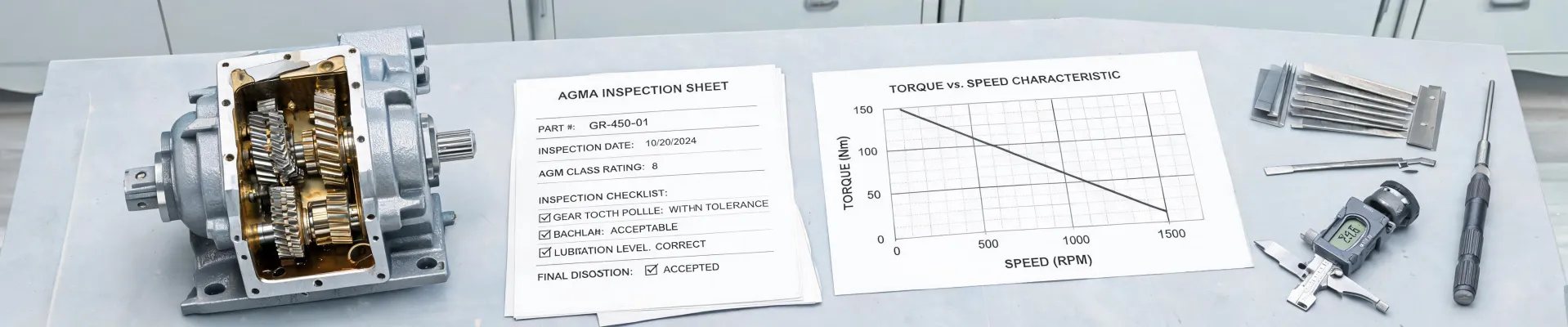
Start with torque requirements: holding torque, pull-in torque, and pull-out torque at your target speed. Boston Gear stepper motors typically list NEMA frame sizes (17, 23, 34) and torque curves. I once had a vendor tell me 'this motor will handle anything' — that's when you walk away. Instead, ask for the torque curve at your RPM range. If the curve drops off before your target speed, you need a larger frame or a different winding. Rule of thumb: leave at least 50% margin on torque for unplanned loads. That's a lesson I learned the hard way after 8,000 units of a product stalled on the line.
7. Does Boston Gear offer application engineering support?
Yes — and that's one of their real advantages. If you call and say 'I need a speed reducer that fits a NEMA 56C frame with a 20:1 ratio and a 500 in-lb output,' they can usually recommend a specific model. In my experience, their engineers are willing to discuss alternatives when they don't have an exact match — they'll say, 'We don't make that, but here's who does.' That honesty earned my trust for every other product they sold us. Frankly, I'd rather work with a specialist who knows their limits than a generalist who overpromises.
8. What's the one thing most people overlook when specifying Boston Gear parts?
Thermal capacity. Worm gears generate heat — if you run them continuously at high load, you might need a higher thermal rating or forced cooling. I ignored this early in my career and cooked a $2,000 gearbox in six months. Boston Gear's catalog includes thermal horsepower ratings, but a lot of engineers skip that line. Check it. Also, verify mounting orientation: some units ship with oil level specified for horizontal mounting; vertical mount needs a different fill. Little details like that will make or break your system.
Prices and specifications as of January 2025; always verify current model numbers and availability with an authorized distributor.

Elena Markovic
Elena Markovic is an independent industrial motor and drive systems analyst covering induction motors, servo motors, stepper motors, and variable-frequency drives. She examines IEC 60034-30-1 efficiency classes, IEC 61800-9-2 drive-system losses, speed-torque curves, duty cycles, thermal limits, and feedback compatibility across operating envelopes. Her evidence-led guides help OEM engineers and plant teams select efficient motion packages, plan integration, and reduce commissioning risk.