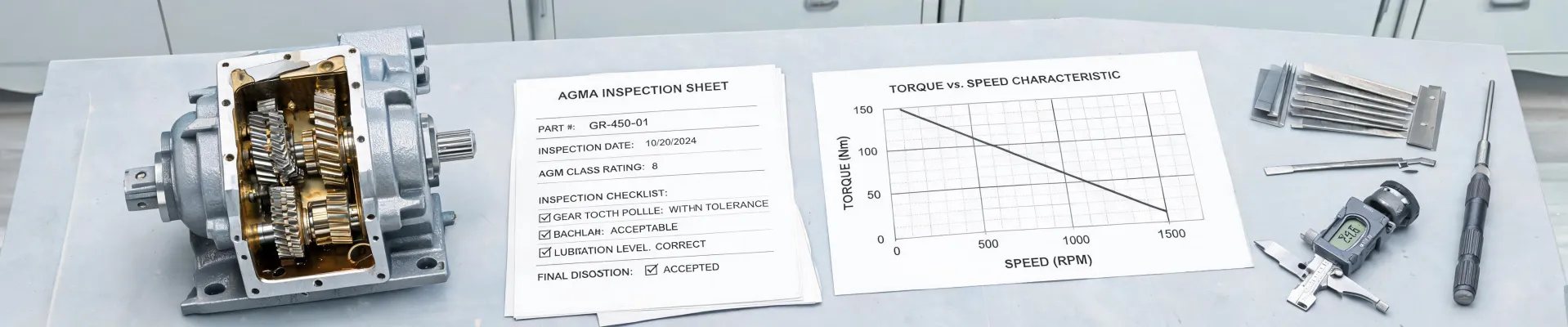
I review every power transmission part that leaves our shop—roughly 200 unique items a year. Maybe 190, I'd have to check the system. In Q1 2024, I rejected 11% of first deliveries because of material, dimension, or paperwork problems. The most expensive one was a $22,000 redo. The kicker? The part wasn't defective. It was wrong for the job.
A customer called about a six-month-old ball bearing that had seized in an idler pulley. Their message to our sales team was short: 'This thing is junk.' I understand why they said it. When a bearing fails, the bearing gets blamed. But when I pulled the failed unit, checked the shaft fit, and looked at how the load was applied, the bearing wasn't the problem. The replacement was.
What's a Ball Bearing, Actually?
A ball bearing is an anti-friction bearing that uses steel balls to keep two moving rings separated. Instead of sliding, the balls roll. That sounds simple, and it is. Put another way: 'ball bearing' is a category, not a specification. It's like saying 'car' when you actually need a 3/4-ton pickup with a trailer package.
I compared two 6205-2RS bearings side by side once. Same part number, same seal, same grease. One was in a conveyor pulley and ran for five years. The other was in a vertical auger and died in three months. Seeing them side by side made me realize the bearing wasn't the variable. The load was. One had a radial load. The other had an axial load it wasn't designed for.
That's the part most people miss. They ask 'what's a ball bearing?' but they don't ask 'what is this bearing supposed to support?' A bearing that's exactly right for a fan can be exactly wrong for a washdown conveyor. The balls, cages, seals, and internal clearance all matter.
A Universal Joint Coupling Isn't Just a Universal Joint Coupling
The same problem shows up with a universal joint coupling. It's a mechanical connection between shafts that aren't perfectly aligned. Simple enough. But if you think all universal joint couplings are the same, you'll buy one that has the right bore size and the wrong rating.
The 'a U-joint is a U-joint' thinking comes from an era when machines ran slower and duty cycles were lighter. That's changed. Today's drives run faster, with tighter cycles. A coupling rated for 1,000 rpm won't survive long at 3,000 rpm, even if the shaft size matches.
The operating angle is the part I see ignored most. A standard single universal joint at a steep angle produces a speed change within each revolution. That's geometry, not opinion. If the application needs a high-angle or double universal joint, swapping in a bigger standard U-joint doesn't fix it. It just fails later.
Boston Gear Distributors: The Difference Is the Questions They Ask
I see a lot of replacement parts that failed because someone cross-referenced a part number without checking the application. The Boston Gear brand has been around for over a century, and the 700 series catalog is full of ratings and dimensions for a reason. Those ratings follow industry standards like ABMA for bearings and AGMA for gearboxes. They aren't marketing numbers.
An authorized Boston Gear distributor should be able to do more than read you an interchange list. People think a distributor with a big inventory is automatically better. Actually, a distributor with real engineering support can charge more because their advice prevents rework. The causation runs the other way: the value comes from the support, not the shelf count.
If you search 'Boston Gear Charlotte' and find a local distributor, bring the failed part and the application data: motor HP, shaft size, speed, duty cycle, and environment. A good distributor will ask about operating angle for a universal joint coupling and radial versus axial load for a ball bearing. If they skip those questions because your order is a single unit, that's a red flag.
Personally, I'd rather take a small order from someone who needs help than a large order from someone who already knows everything. Small doesn't mean unimportant. The vendors who treated my $200 orders seriously when I was starting out are the ones I still recommend for $20,000 orders.
Timing Belt Kits: The 'It's Just a Belt' Trap
This same logic applies to timing belts. A timing belt synchronizes the crankshaft and camshaft, and if it breaks, the result can be serious engine damage. But the belt isn't the only component wearing out. The tensioner and idler are part of the same system.
That's why the Aisin timing belt kit makes sense: it includes the belt, tensioner, and idler as a set. I once ignored that advice and replaced only the belt. The old tensioner put the new belt out of alignment, and I had to do the job twice. They warned me. I didn't listen. The second 'failure' wasn't the belt's fault. It was mine.
The universal joint coupling, the ball bearing, the timing belt: they all look like component failures. Most of the time, though, they're system failures in disguise.
The Real Cost Is the Redo
When I reject a delivery, it's not because I enjoy being picky. It's because a wrong part is more expensive than a delayed part. In a Q1 2024 audit of returned items, nearly 40% were the correct part number for the order—but not the correct part for the application. That mismatch cost us a $22,000 redo, not counting the customer's downtime.
If you're buying one universal joint coupling or one ball bearing, the price difference between an okay part and the right part is usually small. The cost of installing it and watching it fail is not. Same for a timing belt: a kit is more expensive than a bare belt, but it's cheaper than a second labor job.
What to Do (Short Version)
Stop asking 'what's the part number?' and start asking 'what's the application?' The answer will tell you which part to buy.
- For a ball bearing: know the load direction, speed, and shaft fit.
- For a universal joint coupling: know the angle, torque, and speed.
- For a timing belt: replace the system, not just the belt. The Aisin timing belt kit is a good example of a complete replacement set.
- For any Boston Gear component: use an authorized distributor, ideally one near Charlotte where you can get face-to-face support.
The next time a bearing fails, don't ask 'what's a ball bearing?' Ask what that bearing was supposed to do. Answer that first, and the replacement might be the last one you need.

Elena Markovic
Elena Markovic is an independent industrial motor and drive systems analyst covering induction motors, servo motors, stepper motors, and variable-frequency drives. She examines IEC 60034-30-1 efficiency classes, IEC 61800-9-2 drive-system losses, speed-torque curves, duty cycles, thermal limits, and feedback compatibility across operating envelopes. Her evidence-led guides help OEM engineers and plant teams select efficient motion packages, plan integration, and reduce commissioning risk.