-
Is Boston Gear worth it, or am I paying for a brand name?
-
Why does “Boston gear” bring up Boston Celtics gear for women?
-
What should I check before ordering a 28BYJ-48 stepper motor?
-
How fast can a stepper motor turn?
-
What does a universal joint in car applications have to do with industrial gearboxes?
-
When is a servo motor worth the higher price?
At a 120-person automation and material-handling company, I manage roughly $80,000 a year in motion-control components. I’ve typed “boston gear” into a lot of search bars, and not every answer is the brand I need. Sometimes it’s Boston Celtics gear for women—hoodies, jerseys, and hats. That’s part of the reason I started this FAQ. The other part is that engineers and buyers mean different things by “gear.” So here are the questions I hear most often, answered the way I’d answer them in email: direct, and with cost in mind.
Is Boston Gear worth it, or am I paying for a brand name?
Sometimes. The real comparison is total installed cost, not list price.
In a 2023 audit, I looked at two quotes for a right-angle speed reducer: $820 from a Boston Gear distributor and $640 for an “equivalent.” The lower quote looked like an easy win until our application engineer noticed the mounting footprint didn’t match the existing Boston Gear 700-series base. Changing to that alternative meant an adapter plate, a new coupling, and extra drafting time. Once we added internal labor, the spread shrank to less than $60. And the risk stayed on us.
I still don’t buy Boston Gear every time. If the alternative is fully documented and the mounting dimensions are compatible, I’ll sign it. But I start with the Boston Gear catalog because it gives me dimensional data and ratings without a phone call. For a motion-control budget, an hour less of spec time is worth more than a small price difference.
Why does “Boston gear” bring up Boston Celtics gear for women?
Because search engines follow intent, not manufacturing terminology. Boston Celtics gear for women is licensed apparel. Boston Gear is an industrial brand that makes speed reducers, gearmotors, spur and worm gears, servo motors, stepper motors, bearings, and linear actuators.
People typing “boston-gear” with a hyphen usually land on the industrial side. People typing “Boston gear” without one can land anywhere. When procurement writes “Boston gear” on a purchase request, it can mean the manufacturer or a closet full of sweatshirts. Our rule? Give me a part number or a catalog link. One vague word creates confusion that no purchase order can fix.
What should I check before ordering a 28BYJ-48 stepper motor?
Before you order a 28BYJ-48 stepper motor, ask what it’s supposed to do. If the application is a light-duty indexer or a proof-of-concept test, the 28BYJ-48 is a reasonable low-cost starting point. If the application needs speed or holding torque, you probably want a NEMA stepper or a servo instead.
The 28BYJ-48 is a small unipolar stepper with a built-in gearbox. That gearbox gives more output torque than you’d expect from something that size, but it also limits speed. The datasheet looks simple, but the gear ratio matters. On a standard driver, the output moves in tiny increments, which means it can take thousands of steps to rotate one revolution. That’s not a defect; it’s the design.
From a cost view, the motor price is maybe one-third of the first-order cost. You also need a driver, a power supply, connectors, and test time. I’ve seen a $5 motor create a $200 integration task when nobody planned for the wiring. Cheap line items are fine; cheap assumptions are not.
How fast can a stepper motor turn?
It depends on voltage, coil inductance, driver, load, and step mode. Anyone who gives you a single RPM without those details is guessing.
For a common 1.8° NEMA 17 stepper, you might hit several hundred RPM with no load and a good driver. But usable torque drops as speed rises. I tested two similar-size motors for a conveyor adjustment last year. The cheaper one spun quickly on the bench and stalled at working load. The other, with a better driver and a slightly higher voltage, had less top-end flash but held position under load. Guess which one made it into the final design?
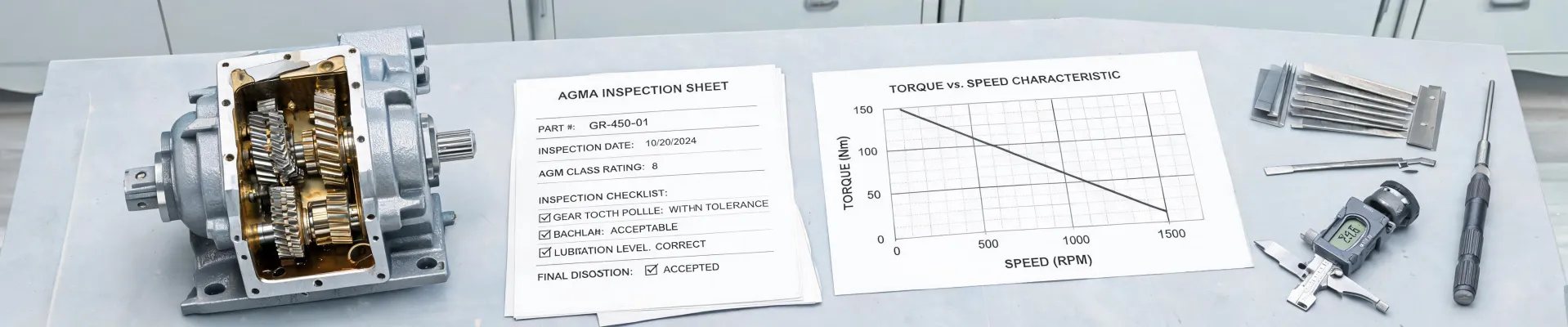
The quick math is RPM = (pulses per second ÷ steps per revolution) × 60. The part that doesn’t show up in that formula is torque. If a supplier says “maximum speed,” ask for the speed-torque curve. If they don’t have one, your quote is based on hope.
As of January 2025, I require a speed-torque curve on any new stepper motor quote. It took far too many stalled mockups to get me there.
What does a universal joint in car applications have to do with industrial gearboxes?
The universal joint in car driveshafts is the version most people picture. It transmits torque through an angle that changes as the suspension moves. Industrial equipment uses the same concept for line shafts, packaging machines, and other applications where two shafts can’t line up perfectly.
What surprises a lot of buyers is that “looks like the same part” is not a spec. A universal joint in car applications is tuned for constant-speed driving and periodic replacement. An industrial U-joint may face shock loads, washdowns, and continuous indexing. If you buy by shape, you may get a lower price and a future unplanned stop.
During a Q2 2024 spare-parts review, I found an untagged universal joint in a bin. It matched the bolt pattern and looked like the replacement we needed. It also had no rating and no source. We scrapped the part. In maintenance procurement, an untraceable discount is just a future outage waiting to be purchased.
When is a servo motor worth the higher price?
When a missed step costs more than the price gap between a stepper and a servo.
A stepper motor can hold position and work well in many machines. A servo motor with feedback can detect when the load doesn’t match the command. That feedback matters in a rotary index table, a labeler, or any process where a silent positioning error creates scrap.
We once compared a stepper solution and a servo solution for a rotary table. The stepper was about $1,100 less. We chose the servo because a misloaded part would cause a fault instead of quietly producing bad product. That decision protected our customer’s reputation and our rework budget. Quality, in this context, isn’t a luxury. It’s the difference between a quiet production day and a phone call you don’t want to answer.

Elena Markovic
Elena Markovic is an independent industrial motor and drive systems analyst covering induction motors, servo motors, stepper motors, and variable-frequency drives. She examines IEC 60034-30-1 efficiency classes, IEC 61800-9-2 drive-system losses, speed-torque curves, duty cycles, thermal limits, and feedback compatibility across operating envelopes. Her evidence-led guides help OEM engineers and plant teams select efficient motion packages, plan integration, and reduce commissioning risk.