I manage procurement for a 180-person packaging automation company, and I've overseen roughly $1.8M in motion-control purchases over the last six years. My job isn't to pick the most impressive motor. It's to pick the one that doesn't show up in next year's budget review as a problem. That's why my approach to servos vs. steppers is different from most spec-sheet comparisons.
Let's clear up one search question first. If you arrived here looking for ski gear boston, this isn't about ski jackets or rental equipment. Boston Gear is the motion-control supplier we've bought speed reducers, gears, and motors from for years. For engineers and buyers who need practical drive comparisons, this one is for you.
The comparison framework I use
Most articles start with torque curves. I start with four rows in a spreadsheet: upfront price, total cost of ownership, application fit, and failure risk. Those rows usually tell a different story than the spec sheet.
1. Upfront price vs. total cost of ownership
A complete stepper package often wins at the quote stage. A comparable industrial servo motor package usually costs more before you even add the servo drive. When I asked two distributors in Q4 2024 for a NEMA 23 stepper system and a NEMA 23 industrial servo motor system, the servo quote was roughly three times the stepper quote. Those exact numbers won't last, but the pattern is consistent.
Here's where the easy conclusion gets dangerous. People think a servo is more expensive because it is more reliable. I'd argue the opposite: a servo costs more because it has more capability. Capability costs money. A stepper is reliable when it is sized for the application. If it isn't, the low purchase price hides the total cost.
Verdict: Stepper wins the opening invoice. That doesn't mean it wins the project.
2. Torque, speed, and the speed-reducer twist
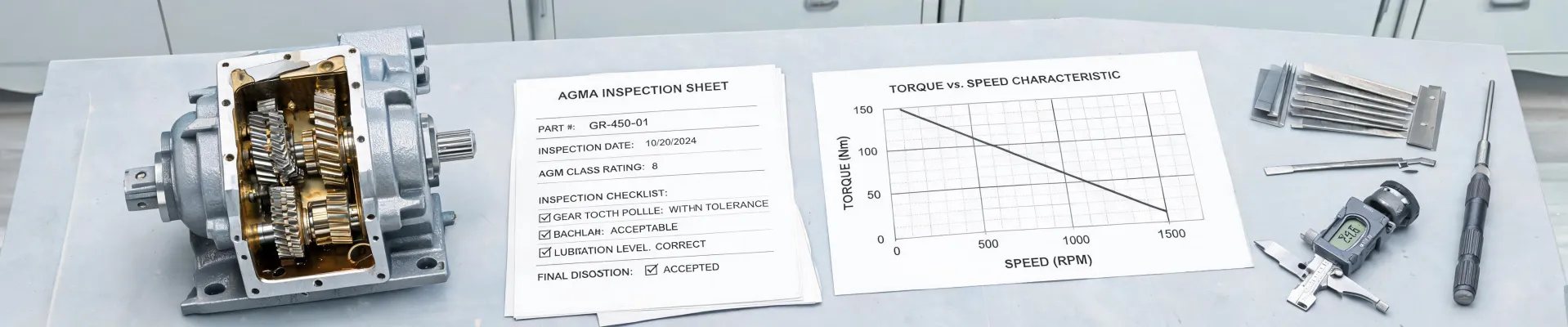
An industrial servo motor holds rated torque over a wider speed range. It can also deliver short bursts of peak torque for acceleration. A stepper motor produces strong torque at low speed, but the torque falls off as speed climbs. If you need fast moves, high acceleration, or changing loads, a servo isn't a luxury.
But here's the part that surprises people: a speed reducer can flip the comparison. Instead of insisting on a direct-drive servo, put a Boston Gear speed reducer between the stepper and the load. The output speed drops, but output torque increases. For high-torque, low-speed motions like conveyor indexing or rotary turrets, a stepper plus speed reducer can beat a servo on both purchase cost and energy cost.
We run several indexing axes with steppers through Boston Gear 700 Series speed reducers. They are not as fast as the servo axes, but they don't need to be.
Verdict: Compare the whole drivetrain, not the motor sitting on the bench.
3. What stepper motor size and specs matter most
Every time I see a purchase request that just says 'stepper motor,' I ask: what stepper motor? I'm not trying to slow down the process. I'm trying to avoid buying a motor that has no datasheet match for the load.
To answer the question 'what stepper motor do we need,' start with five numbers: holding torque, torque curve, frame size, shaft diameter, and current rating. The most common mistake I see is choosing by motor body size. A NEMA 17 can be right for a small indexing table; a NEMA 34 might be needed for a loaded conveyor; a NEMA 42 might belong on a rotary turret. You size to the torque and speed, not to the bolt pattern.
If a speed reducer is involved, the ratio changes the motor torque requirement. Use the output load torque, divide by the gear ratio, apply a service factor, and compare that number to the motor torque curve. This is where the Boston Gear official website became useful to me. The dimensional and rating data is organized, and the speed reducer catalog includes the electrical and mechanical data I need to verify a design. That seems obvious, but I wasted a week in 2023 on third-party listings before I learned to pull the original catalog data first. Inside our maintenance system, the category tag boston-gear points to the parts we've standardized on across several machines.
Verdict: The correct answer to 'what stepper motor?' is always based on calculated load torque and the actual torque curve, not on what another machine happened to use.
4. Integration time, maintenance, and silent failures
Stepper systems are simpler. Open-loop control means less wiring, no tuning, and no encoder feedback to troubleshoot. On a basic axis, a maintenance tech can install and commission a stepper in minutes. An industrial servo motor includes closed-loop control, which almost always needs drive configuration and tuning time. That setup time has a real labor cost.
Yet open-loop control is also the stepper's biggest risk. If the motor loses steps because of a jam, an aggressive acceleration move, or an undervoltage condition, the controller does not know. In packaging, a missed step can mean a filled but unsealed package going downstream. The resulting scrap is not visible on the motor invoice.
I learned this on a light but fast indexing arm. We installed a stepper because the budget was tight. Two or three times a shift, the axis lost position. The operator reset the line, and we threw away product. After the third quality incident, I was the one explaining why the low-cost option was not the low-cost option. We replaced that motion axis with a closed-loop servo drive, and the issue disappeared.
A servo also tells the PLC when the axis stalls. A stepper with no feedback doesn't do that until a downstream sensor catches the problem. If an operator is standing there, a stepper might be fine. If the line runs unattended, the feedback from a servo is worth something.
Verdict: Stepper has lower setup cost and simpler maintenance. Servo has lower operational risk when silent failure is expensive.
So which should you choose?
If you ask me, the answer to 'servo or stepper?' is never decided until you know the load, the duty cycle, and what happens when the axis fails. That's why I use the Boston Gear official website as a reference point before writing a purchase order. Boston Gear offers both speed reducers and motors, so I can spec a drivetrain where the input shaft matches the reducer, the face mount aligns, and the torque ratings line up.
- Start with a stepper if travel is short, speeds are low, loads are predictable, and someone will catch a position error quickly.
- Start with an industrial servo motor if speeds vary, loads change, acceleration matters, and missed steps would create costly scrap.
- Always calculate with the speed reducer included. A stepper through a Boston Gear reducer is often the best total-cost answer for high output torque at low speed.
Bottom line
Choosing between a stepper and an industrial servo motor is not a simple price comparison. Total cost includes integration, tuning, maintenance, scrap, and how the motor interacts with the mechanical system around it. The good news is that you don't need a different supplier for every piece. The Boston Gear official website gives you speed reducers, gears, motor options, and dimensional data in one place, and that consistency saves me time every time I have to quote a machine change.
One caveat: my experience is based on light-to-medium packaging automation work. If you are designing large machining centers or continuous duty equipment, your results may differ. The pricing and catalog information I have in mind was accurate as of Q4 2024, and the market is changing quickly. Verify current ratings, part numbers, and availability on the Boston Gear official website before you commit the budget.

Elena Markovic
Elena Markovic is an independent industrial motor and drive systems analyst covering induction motors, servo motors, stepper motors, and variable-frequency drives. She examines IEC 60034-30-1 efficiency classes, IEC 61800-9-2 drive-system losses, speed-torque curves, duty cycles, thermal limits, and feedback compatibility across operating envelopes. Her evidence-led guides help OEM engineers and plant teams select efficient motion packages, plan integration, and reduce commissioning risk.