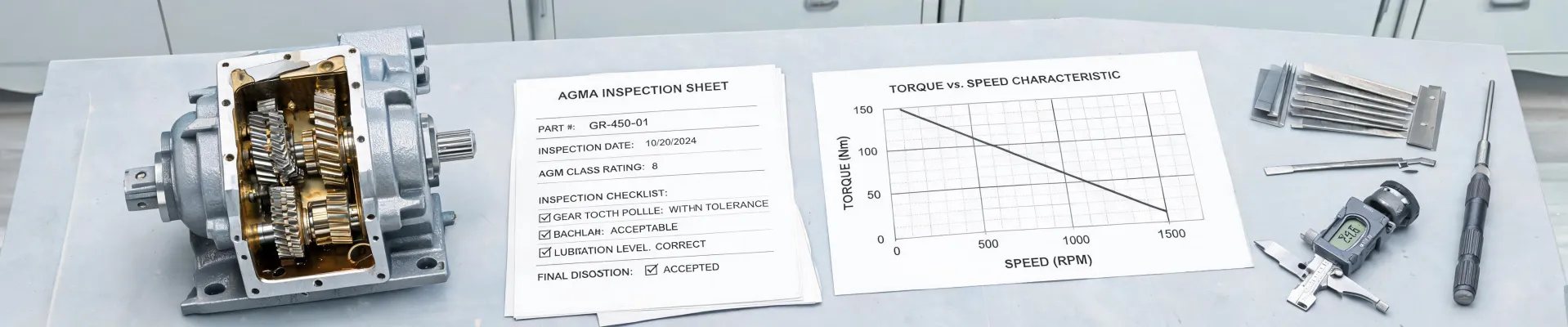
Every once in a while, someone searching for 'official Boston Bruins gear' lands on Boston Gear's website. Wrong Boston. Boston Gear makes speed reducers, gearboxes, and motors for industrial machinery. The Boston Bruins sell hockey sweaters. Different worlds. But that mix-up highlights a point I've come to appreciate in my purchasing role: the suppliers who know their boundaries are the ones you can trust. If a vendor tells you 'we can do that too' without blinking, I've learned to be suspicious.
I'm an office administrator for a 120-person manufacturing plant. I manage purchasing across about a dozen vendors—everything from office supplies to the furnace induction motor that runs our heat treatment line. Roughly $800,000 a year flows through POs I sign. When I took over this role in 2020, I thought my job was to find one reliable vendor for as many categories as possible. One invoice, one phone call, one relationship. Seemed efficient. Turns out, I was wrong.
The One-Stop Trap
In my first year, I consolidated most of our motion control purchasing with a general industrial supplier. They marketed themselves as a one-stop shop. Their catalog had everything from bearings to variable frequency drives. They even claimed they could spec a VFD for any application (which, honestly, should have been the first red flag). I believed it.
Then our furnace induction motor failed on a hot July afternoon. The line went down. I called the supplier, expecting a quick replacement—it was a standard motor, or so I thought. The salesperson had to escalate to engineering, then wait for a call back from the factory. Two days later, I had a quote. Two more days to ship. Meanwhile, a specialized motor shop could have identified the exact frame size and insulation class in ten minutes and had a drop-ship in 24 hours. The generalist's price was fine. The cost of downtime was not. That was lesson one.
The second came when we needed to service the gearboxes on our conveyor system. The same supplier offered 'gear oil' as a line item. But they couldn't tell me the difference between EP 150 and the Boston Gear 700 series oil specified in our maintenance manual. When I asked, they said it should be fine. 'Should be' isn't a specification. The Boston Gear 700 series oil, for example, is formulated for worm gear applications. It has a specific base oil and additive package to handle sliding friction and high temperatures. Using a generic gear oil might cut it in some gearboxes, but not in a speed reducer running 24/7.
When a Supplier Says 'Not Us'
After a few more near-misses, I split the business. I kept our general supplier for basic MRO items. For motion control—gearboxes, reducers, 3 phase AC motors—I switched to a Boston Gear distributor. The first thing I noticed? They asked about application details. Load profile. Duty cycle. Ambient temperature. Not just 'what's the part number?' They actually understood why the specs mattered.
Two months later, I called them about a new ventilation fan. I didn't really know what's a VFD—variable frequency drive—but I knew we needed one to control the fan speed. I asked if they could help me size it. The answer surprised me. 'That's outside our specialty,' the rep said. 'We can give you the basics, but if you're dealing with a furnace environment, talk to a VFD specialist. Here are two companies we trust.'
What's a VFD? It stands for variable frequency drive, and it controls motor speed by changing the frequency of the power going to a 3 phase AC motor. In theory, any motor can run on a VFD. In practice, the drive has to be matched to the motor's voltage, current, torque, and duty cycle. A furnace induction motor has different starting requirements than a simple conveyor motor. That's why you want someone who's done it hundreds of times.
I'll be honest: at first, that response annoyed me. I wanted one phone call to get a quote for a drive and a motor. But then I thought about the FTC advertising guidelines (ftc.gov) that we use to vet vendor claims—claims have to be truthful and substantiated. A claim like 'we can spec any VFD correctly' is easy to make and hard to back up. This distributor knew their limits. That honesty, backed by the right knowledge, earned my trust more than any 'yes we can' ever could.
Why Specialization Beats Convenience
From the outside, a one-stop shop looks like efficiency. One PO, one shipment, one net-30. The reality is that your needs are spread across fluid power, electrical, mechanical, and more. No one can be an expert at all of them. The generalist vendor isn't necessarily incompetent—they're just trying to cover too much ground with a thin layer of knowledge. When it's time to replace a worm gear that's been vibrating for weeks, I want someone who knows exactly which housing material and tooth profile goes with our existing gearbox. That's not a commodity purchase.
I made another mistake in 2024 during a vendor consolidation push. Management wanted fewer suppliers. I moved all our motor orders to a national distributor that promised lower prices and quicker turns. The first shipment included a 'direct replacement' 3 phase AC motor that had a different mounting flange. It bolted in but didn't line up with the shaft coupling. Three hours of rigging labor to discover what a specialist would have caught by looking at the nameplate. The invoice was cheaper, but the total cost was absurd. The $2,400-per-hour downtime number made it personal.
Now, a skeptic might say I've overcorrected. 'You're asking us to juggle multiple vendors and more invoices. That costs time too.' I hear that. My accounting team has complained about the extra POs. But look at the math: the time I spend coordinating a few specialists is nothing compared to a production line sitting still because someone sent a motor with the wrong flange. We've cut emergency purchases by 60% since we stopped forcing everything through one source.
The Bottom Line
So no, Boston Gear does not sell official Boston Bruins gear. It doesn't claim to. What it does make—speed reducers, worm gears, spur gears, motors, and the lubrication to keep them running—it makes with enough focus that a buyer can rely on it. That boundary isn't a weakness. It's proof that the vendor knows what they actually are.
If you're searching for sports apparel, hit the NHL shop. If you're buying power transmission components for a plant, find a supplier who understands your equipment and will tell you when something is outside their lane. Ask them what's a VFD if you're not sure, but expect them to recommend someone who specializes in drives if that's not their core. That's not them losing business. That's them earning the next order.

Elena Markovic
Elena Markovic is an independent industrial motor and drive systems analyst covering induction motors, servo motors, stepper motors, and variable-frequency drives. She examines IEC 60034-30-1 efficiency classes, IEC 61800-9-2 drive-system losses, speed-torque curves, duty cycles, thermal limits, and feedback compatibility across operating envelopes. Her evidence-led guides help OEM engineers and plant teams select efficient motion packages, plan integration, and reduce commissioning risk.