-
My unpopular take: most "urgent" motor orders don't need a maxon
-
Argument #1: The maxon motor datasheet is the most valuable thing maxon sells — and you don't have to buy the motor to use it
-
Argument #2: For liftgate replacements, "upgrade" is often the wrong instinct
-
Argument #3: The counterintuitive one — hybrid steppers are the better emergency answer more often than servos
-
Argument #4: "VFD-compatible" on a motor listing is not the same as "works with your VFD"
-
The obvious objection: aren't you just discouraging people from buying maxon?
-
So here's the bottom line
My unpopular take: most "urgent" motor orders don't need a maxon
I've been the person on the phone at 6:40 PM on a Thursday, listening to a plant manager explain that Line 3 is down and they need a replacement motor on-site by Saturday morning. I've approved the overnight freight, the hand-carry courier, the $800 domestic markup on what should've been a $300 part. So when I say you probably don't need a maxon motor for every rush situation, I mean it from a place of having learned that lesson the expensive way.
Here's the thing about being a procurement lead at an industrial automation integrator: everyone above you wants the safe answer. The safe answer is "buy the Swiss one." It's harder to argue with Swiss-made precision than it is to argue with a spreadsheet. But after handling somewhere north of 200 rush orders over the last eight years — everything from automotive fixture swaps to packaging line changeovers — I can tell you that buying a maxon when you needed a commodity servo is not just a waste of budget. It's a waste of the days you didn't have to waste.
Bottom line: the right motor for an emergency isn't the most expensive one. It's the one that fits on the first try. And that's the whole article.
Argument #1: The maxon motor datasheet is the most valuable thing maxon sells — and you don't have to buy the motor to use it
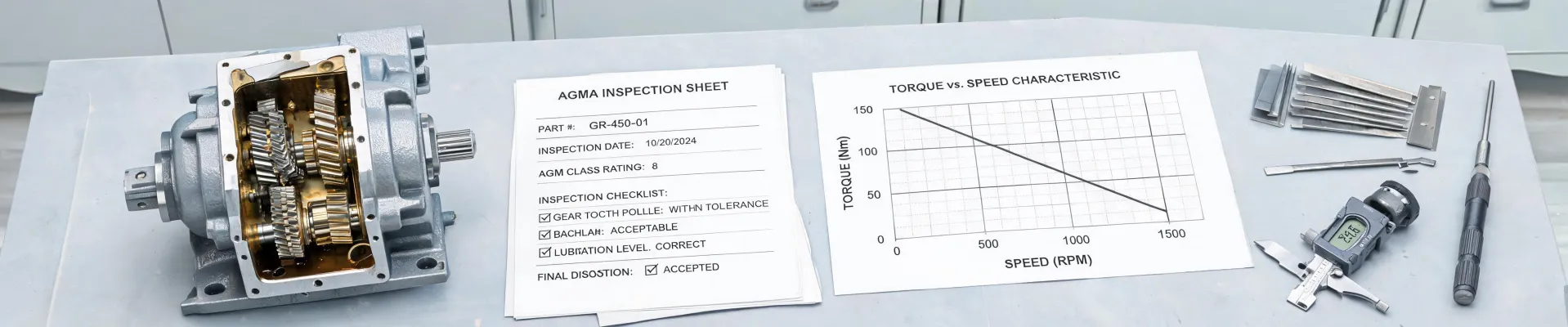
This is the part where I lose some people. If you've ever pulled a maxon motor datasheet for a RE-series or an EC-i brushless, you know what I'm talking about. Full torque-speed curves. No-load current at multiple voltages. Thermal resistance. Ball bearing load ratings. The kind of numbers that let you actually calculate whether a motor will survive your duty cycle instead of guessing.
Most suppliers give you a two-page PDF and a phone number. maxon gives you a spec sheet you can design against. And here's the trick: you can use that datasheet as your benchmark even if the final purchase is from another vendor. Pull the maxon spec that matches your load profile, then shop the actual replacement against those numbers. If a competitor's unit is within 10% on continuous torque and matches the flange, you've got a legitimate drop-in alternative. If it's off by 30% on thermal continuous current, that's your red flag — walk away.
I'll be honest: I don't have hard data on how many engineers actually do this cross-comparison (I suspect it's fewer than should). But based on the rush jobs I've coordinated, the teams that pull a maxon motor datasheet first tend to come back with better-fitting replacements on the second attempt. The teams that buy on price alone come back with surprises.
Argument #2: For liftgate replacements, "upgrade" is often the wrong instinct
This one is specific but it comes up constantly. A maxon liftgate motor replacement sounds like an upgrade. It isn't always. A liftgate system — whether it's on a delivery truck, a medical device, or a powered hatch on industrial equipment — was designed around a specific motor's torque curve, duty cycle, and shaft geometry. If the OEM motor is a mid-tier brushed DC unit and you swap in a high-end maxon with a different output shaft keyway, you haven't upgraded. You've created a machining project.
I watched this happen in early 2024. A client needed a liftgate actuator replaced before a Friday shipment. Someone on the team ordered the maxon equivalent "because it's better." It arrived Thursday. The flange bolt pattern was close but not identical. We spent the next six hours on the phone with a machine shop and paid $600 for emergency adapter plate fabrication. The motor was great. The fit was a deal-breaker.
What I recommend instead: match the mounting interface first, then the electricals, then the brand. If the original was a maxon, great — order the exact replacement or maxon's documented equivalent and use the datasheet to confirm the shaft and flange. If the original was a generic liftgate pump motor, a maxon might still be the right answer if the load profile is punishing. But it's the second question you should ask. The first is always: does it bolt on without modification?
To be fair, there's a reason people default to maxon here — their liftgate and pump motor line has a reputation for surviving thousands of cycles in harsh conditions. If you're replacing the same motor for the third time in two years, that's a signal the original spec was undersized, and stepping up to a maxon-grade unit makes sense. Just budget the adapter plate while you're at it.
Argument #3: The counterintuitive one — hybrid steppers are the better emergency answer more often than servos
Here's where I expect pushback from the automation crowd. When someone says "I need a servo," what they usually mean is "I need controllable motion." But if you're in a rush and the application is low-speed positioning, indexing, or a short-stroke linear move, a hybrid stepper motor with a decent driver will get you running faster and with less tuning than a servo of similar frame size.
Why? Steppers are open-loop by default — no encoder wiring to debug, no servo gain tuning, no commissioning tool that requires a laptop and a piece of software nobody on-site has installed. In an emergency, those hours matter. A hybrid stepper can typically be wired and stepping within an hour if the driver is compatible. A servo swap on an unfamiliar system can eat half a shift in parameters alone.
Where I'd steer you away: if your load has high inertia, rapid accelerations, or significant back-driving forces, a stepper will lose position and you'll spend the rest of the week chasing missed steps. In those cases, a real servo — possibly a maxon if the duty cycle is brutal — is the correct call. My experience is based mostly on packaging and light assembly applications in the 1–15 Nm range. If you're working with high-payload robotics or CNC axes, your calculus is different and I'm not the person to argue servo vs. stepper for you.
Argument #4: "VFD-compatible" on a motor listing is not the same as "works with your VFD"
This is the one that burns the most people, and it's directly relevant to the what motors are compatible with vfd question that pops up whenever someone is trying to get a line back up.
NEMA MG 1 Part 31 defines inverter-duty motor requirements — insulation class, winding temperature rise under PWM supply, bearing current mitigation. If a motor isn't rated inverter-duty, it may run on a VFD but its insulation life is effectively a guess. That's not a marketing opinion; that's the standard. Most decent suppliers will list "inverter duty: yes" or a specific insulation rating. If the listing is silent, assume it's not rated and plan accordingly.
The other half of the problem is the VFD itself. A motor "compatible" with a 480V VFD from one brand isn't automatically compatible with a 480V VFD from another — cable length limits, carrier frequency ranges, and grounding requirements all vary. I wish I had tracked every failed VFD-motor pairing I've seen, because I'd have a pretty convincing chart by now. What I can say anecdotally: mismatch faults and insulation failures are overrepresented in rush replacements compared to scheduled ones. When you're in a hurry, you're more likely to skip the compatibility check that would've caught the problem.
Practical rule: if you're replacing a motor on a VFD-driven line in an emergency, pull the nameplate and the VFD manual before you order anything. Check insulation class, check the VFD's rated motor parameters, and check whether the original motor was inverter-duty. If nobody on-site can find the VFD paperwork, that's your sign to call the drive manufacturer's support line before you commit to a part number.
The obvious objection: aren't you just discouraging people from buying maxon?
No — and this is where I want to be precise. I'm discouraging people from buying maxon as a reflex. There's a real difference.
When I do recommend a maxon, it's often for one of these reasons: the duty cycle is genuinely punishing (continuous operation above 60% of rated torque), the application can't tolerate position drift (medical, optical, precision metrology), or the total cost of failure is high enough that a 20% price premium is trivial next to the downtime (semiconductor handling, aerospace ground support). In those situations, the maxon motor datasheet gives me the confidence to sign off. I want the torque curve, I want the bearing L10 life, and I want the insulation data — because I'm going to be the one explaining the decision if the line goes down again.
What I'm not going to do is put a maxon on every rush order because it feels safer. That's not safer. That's slower and more expensive, and it trains the team to stop thinking about fit.
So here's the bottom line
The next time you're staring down a deadline and someone says "just buy the maxon," ask three questions first. Does it physically fit the existing mounting and shaft interface? What's the actual duty cycle — is it a liftgate that cycles 40 times a day, or a packaging axis that runs continuously? And is the existing drive system (VFD or otherwise) compatible with the replacement's specs, not just its nameplate voltage?
If the answers are yes, punishing, and yes — buy the maxon. You'll sleep better. If the answers are "close but not quite," moderate, and "no idea," you're not in a maxon situation. You're in a "find the datasheet and match the interface" situation. That's a different emergency, and it's the one most rush orders actually are.
Trust me on this one: the most expensive motor is the one that doesn't fit when it arrives.

Hiroshi Endo
Hiroshi Endo is an independent precision linear actuation analyst covering ball screws, linear guides, electric actuators, rodless actuators, and positioning stages. He uses ISO 3408-3 acceptance concepts and evaluates lead accuracy, backlash, repeatability, stiffness, critical speed, buckling load, duty cycle, and travel-life limits. His technical guides help automation engineers match motion components to payload, speed, precision, mounting, and maintenance requirements without overstating catalog performance.