I've spent four years standing between incoming motors and our production line. In that time I've rejected roughly 14% of first deliveries — most of them because the vendor's spec sheet said "within tolerance" and my gut said "that's going to bite us in month three."
But I'm not here to talk about rejection rates. I'm here to make an argument that makes procurement managers uncomfortable:
The unit price on a motor quote is the least important number in the entire transaction.
Not the most negotiable number. Not the number you should benchmark against three competitors. The least important one. Because a motor is not an item you buy — it's a component you live with for the next five to ten years, and the invoice you sign at delivery is only the first of several.
Evidence #1: What actually happens when a linear actuator fails
Q2 2024, we had a palletizing line running a belt-driven actuator we'd sourced on price. The quote came in at about $1,180 versus $3,900 for the alternative. Procurement booked the savings and moved on.
By week 14, the actuator started drifting. It didn't fail — that's the part nobody warns you about. It lost about 1.2 mm of repeatability on the return stroke, which was just enough to push our gripper past the fixture tolerance. The line kept running. It kept producing. It quietly made bad pallets for nineteen shifts before our downstream vision system flagged the pattern.
When a linear actuator fails, people picture a hard stop — the machine halts, an alarm goes off, maintenance walks over. That's the good version. The expensive version is the progressive one: screw nut wear, feedback drift on the encoder or limit switches, grease migration, a bearing that starts singing a note it shouldn't. By the time anyone notices, you've already shipped the problem.
We spent six weeks chasing it. Engineering hours, downtime, rework on 3,400 units, one customer return that cost us a contract renewal. The combined figure landed just under $41,000.
We saved $2,700 on the quote. The failure cost us fifteen times that. And the replacement we eventually installed wasn't even the most expensive option on the table — it was the one with a documented duty cycle that actually matched how we run the machine.
Here's something vendors won't tell you: "rated life" in a motor datasheet is a bench number. It's measured at rated voltage, rated load, room temperature, and a duty cycle that probably doesn't resemble yours. Your dust, your ambient heat, your voltage sag at 6 a.m. on a Monday — none of that is in the datasheet.
Evidence #2: Industrial stepper motors and the torque curve nobody reads
Industrial stepper motors are where I have the most arguments with colleagues, because the quote comparison looks so clean. A NEMA 23 frame stepper is cheap. A servo with comparable holding capability is not. On paper, the stepper wins by a factor of three or four.
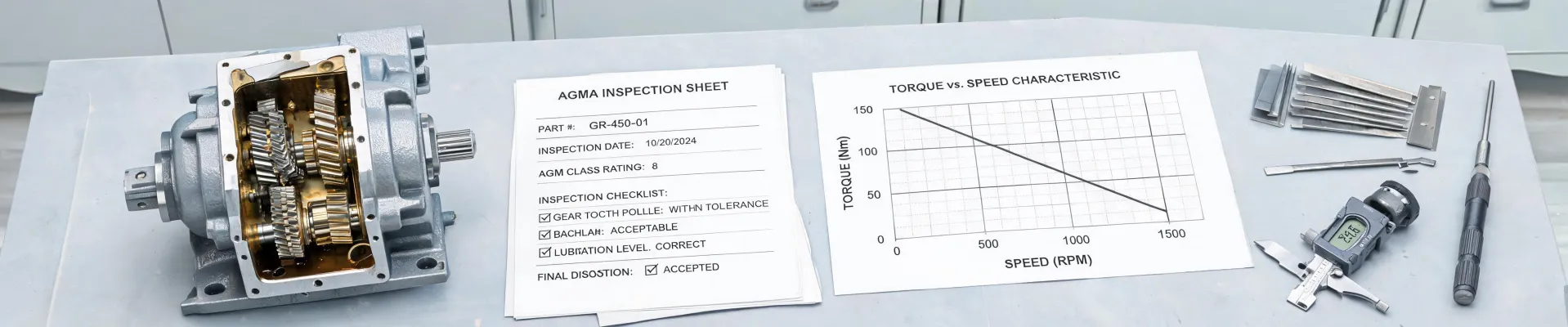
Then you look at the torque-speed curve, and the physics stops being polite. Holding torque drops as speed climbs. An open-loop stepper doesn't announce when it loses a step — it just arrives one step short and keeps going. Your part ends up 0.8 mm off, the vision system catches it four stations later, and now you're scrapping a finished assembly instead of a blank.
What you actually pay for in a properly specified drive isn't the holding torque number. It's the margin above it. It's the inductance you didn't have to fight, the resonance band you didn't have to damp with a rubber coupler, the heat you didn't have to solve with a fan and a bigger enclosure. Every one of those workarounds has a BOM line attached, and none of them appear on the motor quote.
I have a sister plant that builds industrial sewing equipment, and their maintenance lead put it better than I could. Their machines run sewing machine servo motors up to about 4,000 stitches per minute. His line: "The cheap servo looks identical during slow embroidery. It's at full speed, on the needle-stop, that it starts arguing with you." They replaced three units in eighteen months before switching drive families. The price difference per motor was under $200. The line stoppages weren't.
Evidence #3 (the counterintuitive one): the datasheet is a cost item
This took me the longest to accept, because it sounds like something a marketing department would say.
When an engineer gets a vague datasheet, they don't stop designing. They add margin. A 20 mm frame becomes a 25 mm frame. Natural convection becomes forced air. A standard coupling becomes a custom one because the shaft tolerance was listed as "nominal." Every one of those hedges gets priced into the machine, not into the motor.
A datasheet that actually specifies thermal time constant, continuous torque, the test conditions behind the temperature rise, and the IP rating with its IEC 60529 basis removes that hedging. It lets an engineer select at the edge of the envelope instead of padding 40% on top of it. That's a real cost reduction — it just shows up in the engineering budget and the enclosure BOM instead of the procurement spreadsheet.
This is where maxon motor dc lines genuinely earn their reputation, and I say that as someone who audits suppliers for a living rather than someone who buys the badge. Their catalogs go down to per-winding parameters. The maxon motor price on a quote will sit higher than a commodity equivalent — noticeably so. What you're paying for is the ability to stop guessing, and guessing is expensive at scale.
For reference, IEC 60034-1 defines how rotating machine ratings and performance should be stated, and NEMA MG 1 covers the equivalent territory on the North American side. When a supplier's datasheet can be read against those standards without a phone call, that's not a nice-to-have. It's engineering hours you didn't spend.
"Fine, but my budget doesn't allow for it"
I've heard this a hundred times and it's a fair objection, so let me be precise about what I'm not saying.
Total cost thinking does not mean buying the most expensive option every time. It means putting the risk into the comparison before you sort by price. If a machine runs 200 hours a year at ambient conditions and a failure just means a maintenance ticket, a commodity industrial stepper motor is the correct answer and I'll sign off on it without blinking.
The mistake is applying 200-hour logic to a 20,000-hour continuous line. That's not frugality — that's transferring cost from the capex column to the downtime column, where it's harder to see and much harder to explain to your plant manager at 2 a.m.
The framework I use is boringly simple. Add up: unit price, integration and commissioning time, expected downtime cost per hour times expected failure frequency, spare parts inventory, and the engineering cost of a redesign if the part is discontinued in year four. Then compare. Roughly half the time, the cheapest quote stays the cheapest. The other half, it doesn't even come close.
I'll admit I haven't always followed my own advice. We had a line down in 2023 with a two-hour window to place an emergency order, and I skipped the life-cycle test because there was no time to run one. I went on the strength of the previous batch. In hindsight I should have pushed back for a day. That decision cost us about $9,000 in expedited freight and a partial re-qualification, which is a cheap lesson as these things go.
The bottom line on maxon motor price
If you put a gun to my head and asked whether maxon motors are worth the money, I'd say: they're worth it on the applications where a failure has a multiplier attached — continuous duty, cleanroom or washdown environments, anything where a service call means a stopped line rather than a stopped hobby.
On a hobby machine or a low-duty prototype, they're overkill, and I'd tell you to buy something cheaper and put the savings into a better encoder.
The point isn't the brand. The point is that any supplier evaluation that sorts by unit price and stops there isn't a cost analysis — it's a guess with a spreadsheet wrapper around it. Run the numbers through the full life cycle. Then buy the cheap one, if the math says so.
Just make sure the math says so, and not your purchasing department's deadline.

Sofia Alvarez
Sofia Alvarez is an independent industrial clutch and brake systems analyst covering electromagnetic, pneumatic, tooth, spring-applied, fail-safe, and disc designs. She relates ISO 13849-1 safety-function design to static and dynamic torque tests, engagement energy, stopping time, response delay, thermal capacity, duty cycle, wear allowance, and safe-state behavior. Her evidence-led articles help machine builders and plant engineers size holding and stopping functions, plan controls, and verify maintenance intervals.