I still have the original quote saved in a folder called lessons. Three motors, 24V, roughly the same frame size, and the lowest price came in about 31% under the next option. I remember staring at the spreadsheet and thinking: same specs on paper, why wouldn't I take the cheaper one?
That was me doing my job, or so I thought. I run purchasing for a 180-person manufacturer. I manage about $2.3 million a year in vendor spend across roughly 40 suppliers, and I report to both operations and finance. Motors aren't my background — vendor relationships are. So when the maintenance lead handed me a spec sheet and said "get quotes," I treated it like every other buy: line up the numbers, pick the winner, move on.
What I didn't realize is that the number I was comparing wasn't the number I was buying.
The quote that looked like a win
We needed replacements for three liftgate units on our service vans and one small positioning motor on an assembly cell. Not exotic. The existing setup had been running for years — a couple of Century AC motors on the older conveyors, a maxon motor on the precision side, and a little NEMA 8 stepper motor in the feeder on one of the cells.
I built a comparison table. Product type — check. Voltage — check. Torque — close enough that I squinted and moved on. Price — big gap. I picked the cheap column.
I didn't think I was cutting a corner. I thought I was being smart with the budget. There's a difference, and it took about eleven weeks to find out which one I was actually doing.
What the unit price doesn't show
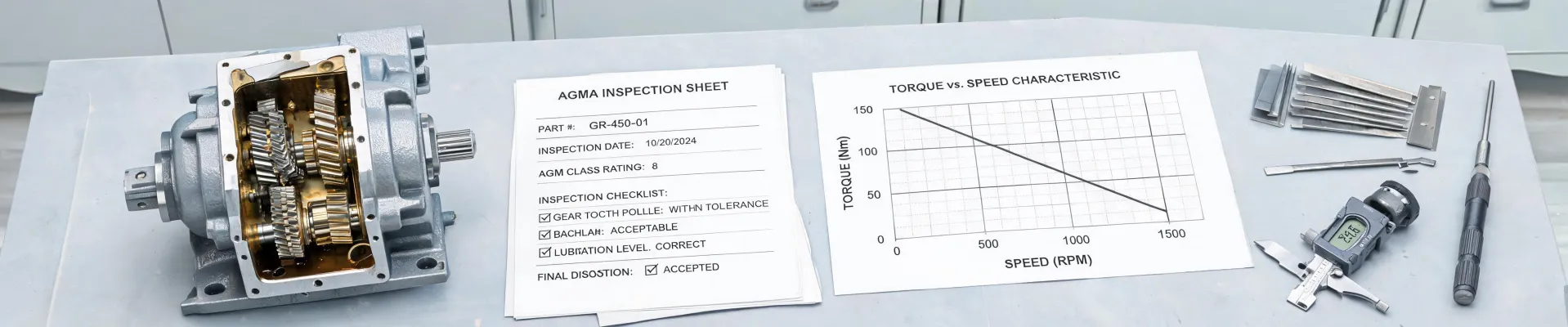
The cheap motor arrived with a one-page PDF. That was the documentation. The other quote came with a full catalog, thermal curves, load tables, and a controller pairing chart. I skimmed it, assumed it was marketing, and moved on.
Here's something vendors won't tell you: the first quote is a starting position, not a final number. "Standard lead time" often includes buffer time the vendor uses to manage their own production queue — it isn't a promise about your order.
And here's what I now understand from our maintenance lead: when a motor fails at 7 a.m. on a Tuesday, what saves the day isn't the motor. It's the documentation. If you can't find the torque curve, the wiring diagram, or the exact controller-mismatch rule, you're guessing on the floor, with production waiting.
The part I didn't want to learn
A good chunk of my problem was that I didn't really understand how these motors get controlled. On the AC side, speed is set by a variable frequency drive. The drive changes the frequency, and synchronous speed follows the math: 120 × frequency ÷ poles. At 60 Hz on a 4-pole motor, that's 1,800 rpm. The drive also holds a roughly constant voltage-to-frequency ratio so the motor doesn't lose torque as it slows down. None of that is complicated once someone explains it.
But it does matter when you swap a motor. If the replacement has a different winding profile, the VFD parameters the drive integrator set up months ago no longer line up. Nobody tells you that in a comparison spreadsheet. The cheap motor fit. It just didn't match.
The small stuff bit me too. I treated "NEMA 8" as if it meant a category of interchangeable parts. NEMA 8 is a frame size — it tells you the mounting face. It doesn't tell you step angle, holding torque, or driver compatibility. Those come from the data sheet, and the data sheet was the thing I wasn't reading.
Even on the precision side, where I eventually started pricing a maxon DCX motor, the lesson repeated. The maxon motor price on a quote isn't one number — it moves a lot depending on winding, gearhead, encoder, and controller. I learned to ask for the configuration list before I compare anything, or the comparison is fiction.
People assume premium motors cost more because of branding. In my experience, the causation runs the other way: the motors that hold up, ship with documentation you can actually use, and behave predictably batch to batch are the ones that earn a premium. The badge is how you learn to recognize them, not why they charge.
What it actually cost us
The cheap BLDC on the cell burned out in week eleven. The AC units were fine — they're simple and they've always been fine. The problem was the precision positioning motor, the one where the VFD and drive parameters no longer lined up.
Here's my rough accounting from my own records: the expedited replacement ran about $470 — maybe $520, I'd have to pull the invoice. The Saturday technician call was around $600. We lost something like 14 hours of cell time, which I put at roughly $2,100 in throughput. Against a unit-price difference of maybe $260 per motor, on three motors, so a "saving" of around $780.
You can do the math faster than I did. We were several times underwater on what looked like a straightforward win, and we had a second failure on another unit two months later. That one I'd have skipped if I'd checked what the data sheet actually said about continuous duty under our load profile.
Looking back, I should have asked for the documentation package and the controller compatibility list before I compared prices. At the time, I thought all of that was sales material. It wasn't. It was the specification, and I ignored it.
The five checks I run now
Five minutes of verification beats five days of correction. That line sounds like something I read on a poster, but I wrote it on a sticky note after the second failure, and I mean it.
Before I sign off on any drive-system purchase, I run five checks. Not because the vendor is untrustworthy — because I am the one who has to explain the outcome to operations and finance.
- Documentation completeness. Does the quote include a usable data sheet, torque/speed curves, and controller pairing information — or just a price and a picture? If it's just a price and a picture, I ask.
- Control compatibility. If the motor is driven by a VFD or a servo drive, who confirms the parameters — and can they put that in writing? A name and a signature, not a verbal "it'll be fine."
- The frame-size trap. NEMA 8, NEMA 17, NEMA 23 — that's footprint, not performance. Compare step angle, holding torque, and driver before I call anything interchangeable.
- Total landed cost. Unit price plus expedite risk, plus spare lead time, plus install labor. If the number on the sheet is the only number I'm looking at, I'm not looking at enough.
- Written confirmation. Not because anyone is dishonest, but because verbal agreements evaporate. The vendor who couldn't put a delivery window in writing is the vendor I've stopped calling.
I won't pretend the checklist fixes everything. It doesn't cover the wiring quirks of a drive someone installed in 2019, and it doesn't stop a supplier from being short-handed. But it moves the surprises from the floor to the paperwork, and the paperwork is where I work.
The price on the quote is not the cost of the motor. I wish someone had told me that before I got clever with a spreadsheet. The cheap column looks better right up until it doesn't — and by then, you're not comparing prices anymore. You're comparing downtime.
Prices and figures in this piece come from my own purchase records, 2024–2025. Your quotes will vary by vendor, specification, and order timing. Verify current documentation and pricing before you commit.

Kofi Mensah
Kofi Mensah is an independent power transmission sourcing and quality analyst covering motors, reducers, bearings, couplings, chains, belts, brakes, and motion-control components. He uses ISO 2859-1:2026 AQL-indexed lot sampling while examining calibration traceability, drawing tolerances, material records, operating limits, energy use, lead time, and total lifecycle cost. His procurement guides help OEM and MRO teams qualify alternatives, compare technical offers, and manage compatibility, delivery, and replacement risk.