-
The Argument, Up Front
-
What the 28byj-48 Taught Me About 'Standard' Specs
-
maxon BLDC Datasheets Are Excellent. That's Not the Same as Sufficient.
-
The Bearing Argument (This One Surprises People)
-
The Time We Specified 'Standard IP Rating' and Learned a Lesson
-
To Be Fair, Not Everything Needs Three Weeks
-
What I'd Actually Recommend
-
The Point, Restated
The Argument, Up Front
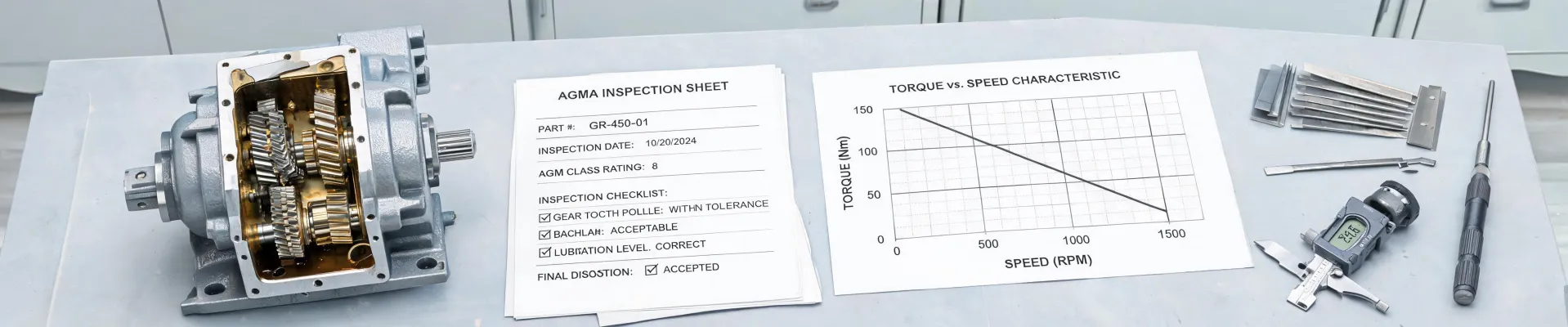
If you're signing off on motor purchases based on datasheet specs alone, you're not saving time—you're just delaying the invoice. I've been doing incoming inspections and supplier audits for the better part of a decade, and the pattern hasn't changed: the teams that skip verification don't avoid the cost of quality. They just pay it later, with interest.
I'm not talking about bureaucratic box-checking. I'm talking about a three-week verification window that has caught bearing failures, torque shortfalls, and at least one IP-rating mismatch that would've cost us six figures in field service. That's the argument I want to make here.
What the 28byj-48 Taught Me About 'Standard' Specs
In my first year as a quality inspector, I approved a 2,000-unit order of 28byj-48 stepper motors based on the datasheet. Holding torque was listed at 34.3 mN·m. What actually arrived measured closer to 28 on our test bench. The vendor's response: "That's within industry standard."
It wasn't within our standard. We'd specified 34.3 with a ±5% tolerance. They'd read "standard" as ±15%. We rejected the batch, they redid it at their cost—but the redo pushed our assembly line back eleven days. That's the hidden bill nobody puts in the spreadsheet.
Now every contract we sign includes a tolerance table with actual numbers, not adjectives. Sounds obvious. It took a $6,200 rework and a very uncomfortable call with our production manager to make it obvious.
maxon BLDC Datasheets Are Excellent. That's Not the Same as Sufficient.
I want to be careful here because I actually respect maxon's documentation—their maxon bldc motor datasheets are among the most detailed in the industry. Speed-torque curves, thermal derating, bearing life estimates under specified load conditions. You can spec a motor from those pages and get pretty close.
But "pretty close" is doing a lot of work in that sentence.
We ran a maxon EC-i 40 through our standard drive chain validation last spring. On the bench, it hit rated speed and drew rated current. In the actual drive chain application—with back-driving torque from the load and ambient temps running six degrees above the test cell—it derated faster than the datasheet curve suggested. Not a maxon problem, to be fair. A problem with us assuming bench conditions equalled field conditions.
That's the gap a verification protocol closes. Not because the manufacturer is lying—because your application isn't their test bench.
The Bearing Argument (This One Surprises People)
Here's the counterintuitive part: across our last four years of incoming inspections, the single largest predictor of drive chain failure wasn't the motor. It was the bearing.
How a ball bearing is made—raceway grinding tolerance, cage material, lubrication fill volume—determines whether a motor actually reaches its L10 life rating or just gets close on paper. I'm not a metallurgist, so I can't speak to steel grades with any authority. What I can tell you is this: we've rejected bearing lots from suppliers whose motors passed every electrical test we ran. The electricals were fine. The bearings weren't.
If your incoming inspection stops at "does it spin and draw the right current," you're testing the easy 70% and ignoring the 30% that fails in year two.
The Time We Specified 'Standard IP Rating' and Learned a Lesson
We were sourcing a derivative of the maxon air s motor e-mtb platform for a light-assist application. Our engineering team wrote "standard IP rating" in the requirements doc. Engineering meant IP54. The vendor read "standard" as IP20.
That's a 30-point gap in dust and water protection. The units passed bench testing because our bench doesn't have dust. They failed in the field within eight weeks. I said "standard." They heard "whatever's normal for this product class." Two reasonable readings of the same two words.
We now write IP ratings as two digits and a test standard. No adjectives. Ever.
To Be Fair, Not Everything Needs Three Weeks
I get the pushback. If you're breadboarding a proof-of-concept with 28byj-48 steppers, buy the cheapest batch that arrives this week and move on. The stakes don't justify the process. I've done exactly that on internal prototypes.
The calculus changes when you're committing to 5,000 units for a production line, or specifying a maxon bldc motor into a drive chain that runs 16 hours a day. At that scale, three weeks of verification is cheap insurance. The math is pretty simple: our verification cycle costs roughly $4,000 in labor and test time. A single field failure on a production unit has cost us, on average, $11,000 in service, replacement, and downtime. The break-even is one prevented failure per cycle.
What I'd Actually Recommend
I'm not going to hand you a 47-point checklist. Ours is twelve points, and honestly, six of them catch 90% of the problems. Here's the short version I give to new inspectors:
- Measure the two specs that matter most in your application—not the full datasheet. For us it's holding torque and thermal derating under load.
- Pull a sample and run it in the actual drive chain, not on a bench. Back-driving torque reveals things a free-spin test won't.
- Ask for bearing batch traceability. If the supplier can't produce it, that's the finding.
- Write every requirement as a number and a tolerance. Ban the words "standard," "typical," and "normal" from your RFQs.
This was accurate as of early 2025. Motor specs and supplier lead times shift, so verify current datasheet revisions before you lock a BOM.
The Point, Restated
Five minutes of checklist beats five days of rework. Three weeks of verification beats three months of field failures. That's not caution talking—that's arithmetic.
The teams that skip verification aren't faster. They're just paying on a different schedule, and the late fees are worse.

Hiroshi Endo
Hiroshi Endo is an independent precision linear actuation analyst covering ball screws, linear guides, electric actuators, rodless actuators, and positioning stages. He uses ISO 3408-3 acceptance concepts and evaluates lead accuracy, backlash, repeatability, stiffness, critical speed, buckling load, duty cycle, and travel-life limits. His technical guides help automation engineers match motion components to payload, speed, precision, mounting, and maintenance requirements without overstating catalog performance.