There's No Magic RPM Number
Ask ten engineers "how fast can a stepper motor turn?" and you'll get ten different answers. That's because the question is incomplete. The real question is: how fast can your stepper motor turn under your specific load?
I'm a motion control procurement specialist who's handled around 300 orders for industrial stepper motors over the past six years. I've personally made about $12,000 worth of mistakes by assuming one answer fit all. Today I want to walk you through the three most common scenarios I've seen — and the checklist I now use to avoid repeating those errors.
Before we dive in, a quick disclaimer: I'm not a motor design engineer. I can't speak to winding optimization or microstepping harmonics. What I can offer is a practical, buying-and-selection perspective that's saved our team a lot of rework.
Scenario A: Light Load, Low Torque (Think Small Conveyors or Pick‑and‑Place)
In this camp, the stepper motor is driving almost nothing — maybe a belt carrying lightweight parts, or a rotary index table with minimal inertia. Here, raw speed is the limiting factor, not torque.
Most standard NEMA 17 or 23 steppers in this scenario can run comfortably at 2,000–3,000 RPM, provided you have a decent driver (not a cheap A4988 clone). I once ordered 50 units of a 1.8° step motor rated for 3.5 A and paired them with a generic driver. On the bench they spun up to 3,200 RPM no problem. In the field, with a 2‑kg payload on a short belt, they stalled at 2,100 RPM.
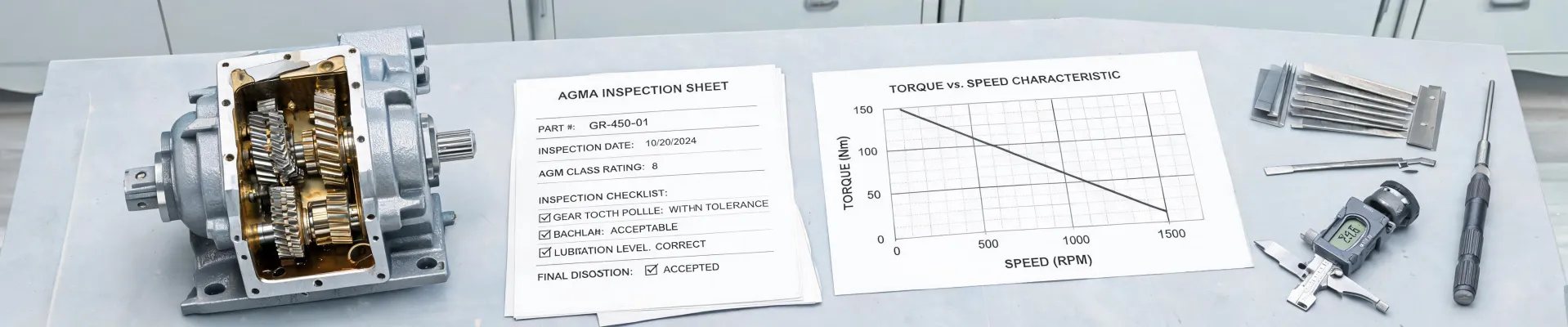
What I learned the hard way: the motor's no-load speed curve is meaningless. Ask for the torque‑speed curve at your working voltage. One vendor — let's call them Vendor X — quoted a motor at $87 that looked perfect. Another quoted $112 but included actual torque‑speed charts. The $112 motor hit 2,800 RPM under load; the $87 one needed a 50% speed reduction. Net cost of my mistake: about $1,400 in replacements and downtime.
"The vendor who lists all performance data upfront — even if the total price looks higher — usually saves you more in the end." That's the transparency = trust rule I now live by.
Scenario B: Moderate Load, Accuracy Matters (Positioning Tables, Indexers)
This is where most industrial applications live. You need moderate speed — typically 300–1,200 RPM — but also enough torque to accelerate a load and hold position against external forces. Speed isn't the goal; usable speed at a given load torque is.
Here's the counterintuitive piece: trying to spin faster often forces you to a larger frame size, which costs more and may actually lower system reliability.
I had a project in September 2022 where we needed to drive a 4‑kg indexing table at 800 RPM. My first instinct was to pick a NEMA 24 with a 2:1 timing belt reduction to run the motor at 1,600 RPM (where torque drops off). The motor was cheap, but the belt added complexity and backlash. After two failed prototypes, a senior engineer told me: "Just get a NEMA 34 direct drive. It'll run at 800 RPM easily and you'll never worry about detent torque."
The NEMA 34 cost $220 vs. $140 for the NEMA 24 + belt. But the total installation was simpler, saved 4 hours of assembly, and zero rework. Total cost of that lesson: $90 extra on motor, plus $450 in wasted prototype materials.
Decision rule I now use: If your load torque at target speed is more than 60% of the motor's rated holding torque, go up one frame size. Don't try to recuperate speed via gearing unless you absolutely need the gear ratio for resolution.
Scenario C: High Speed, Low Duty Cycle (Fast Positioning or Inspection)
Sometimes you really need raw speed — say >3,000 RPM — for short bursts. Think flying saws, high‑speed inspection cameras, or light pick‑and‑place at 400+ cycles per minute. Standard steppers can't maintain torque that high. You have two real options:
- Closed‑loop steppers (with encoder feedback) that can push 4,000–5,000 RPM short‑term because they don't lose steps.
- Servo motors if you need sustained high speed (5,000+ RPM) with high torque.
I once chased a speed requirement that matched neither. A customer wanted 4,500 RPM intermittent on a 2‑kg arm. I spec'd a NEMA 23 closed‑loop system rated for 5,000 RPM no‑load. The vendor said, "It'll work, but you'll see about 40% torque at that speed." I went ahead anyway. The system could accelerate, but the settling time was awful — it took 200 ms to stabilize. The customer rejected it.
That order — 10 units, $2,800, plus $700 in expedited shipping — was a total loss. The lesson: when you need both speed and torque, a stepper is usually the wrong choice. A servo with a gearbox would have been cheaper in the long run.
"I'm not a servo expert, so I can't speak to tuning. But from a procurement perspective, I can tell you this: if your application requires sustained high torque above 4,000 RPM, stop looking at steppers. You'll only waste time and money."
How to Determine Which Scenario You're In
Here's the simple checklist I created after my third rejection in Q1 2024:
- Estimate your load torque at target speed. If you can't calculate it, measure it — or at least bracket it (light / moderate / heavy).
- Find the published torque‑speed curve for each candidate motor at your operating voltage (not just the datasheet's max).
- Apply a 20% safety margin. If the curve shows 0.5 Nm at 1,000 RPM and you need 0.4 Nm, it's borderline. Go up a frame or add a reduction.
- Ask the vendor: "What's the worst‑case speed under my load?" If they can't answer, that's a red flag. Transparency matters.
If you're still unsure, I usually recommend ordering a single unit first and testing with your actual load. Yes, it adds a week to your timeline. But I've caught 47 potential errors using this pre‑check list over the past 18 months — saving roughly $6,200 in reorder costs.
Bottom line: stepper motor speed isn't a fixed number; it's a function of your system. The best vendor is the one who shows you where the limits are — before you commit.

Elena Markovic
Elena Markovic is an independent industrial motor and drive systems analyst covering induction motors, servo motors, stepper motors, and variable-frequency drives. She examines IEC 60034-30-1 efficiency classes, IEC 61800-9-2 drive-system losses, speed-torque curves, duty cycles, thermal limits, and feedback compatibility across operating envelopes. Her evidence-led guides help OEM engineers and plant teams select efficient motion packages, plan integration, and reduce commissioning risk.